
Unbiased headlines. Facts, not spin.
Every story is an unbiased news briefing written from 110+ sources across the spectrum — sources linked so you can verify it yourself.
 economy
Major Story (7/10)
August 16, 2026 at 08:42 AM
economy
Major Story (7/10)
August 16, 2026 at 08:42 AM
German Companies Slash US Investment to Three-Year Low as Tariff Whiplash Continues
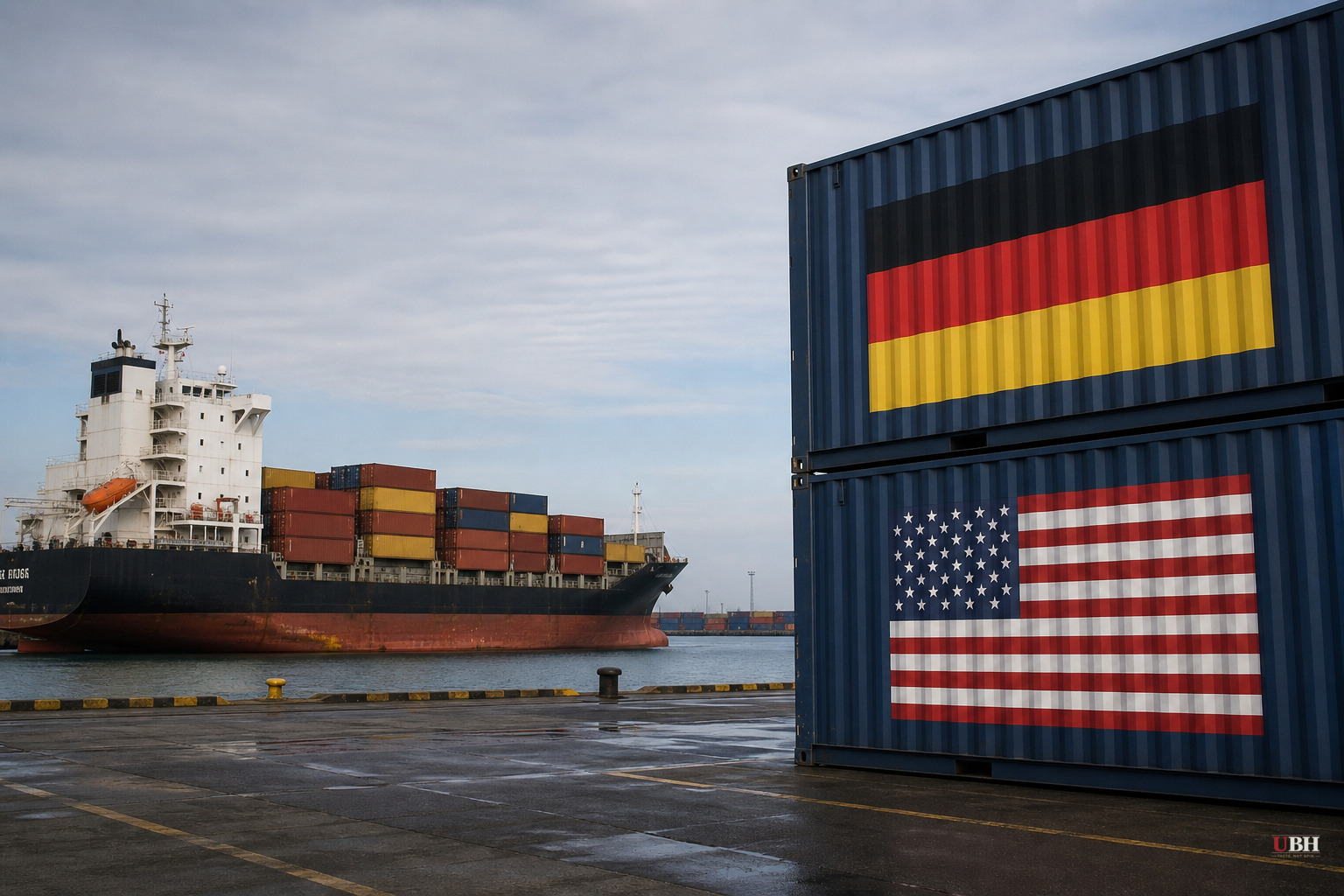
German companies invested €4.3 billion ($5 billion) directly into the United States during the first half of 2026. That's the lowest first-half total since 2023, according to calculations by the German Economic Institute (IW) based on Bundesbank data and reported by Reuters.
Compare that to the first half of 2024, when German firms poured in roughly five times that amount. The drop works out to nearly 80%. Compare it to the year before that, the decline is closer to two-thirds. Go back further, to the five years before COVID, and first-half investment averaged €15.8 billion. The 2026 number is barely a quarter of that.
IW researcher Samina Sultan told Reuters the trend has been building since President Trump returned to office in January 2025. This isn't a one-quarter blip. It's now been going on for a year and a half.
Why companies are hesitating, not fleeing
German companies that already have factories, offices, and operations in the US haven't packed up and gone home. Reinvestment of earnings from existing US operations stayed unusually high through 2025, according to the IW data. Direct-investment loans did too.
Sultan told Reuters that pattern "suggests that the U.S. remains an attractive market overall." Companies with skin in the game are still betting on America long-term.
What's dried up is new equity capital. Fresh projects. New plants. New expansions. That's the category that's collapsed, and it creates new jobs and new factories on American soil, not just maintains existing ones.
The legal chaos behind the numbers
The uncertainty isn't abstract. Area Development laid out just how much the legal ground shifted under investors' feet in the first half of 2026 alone.
On Feb. 20, 2026, the US Supreme Court ruled 6-3 in Learning Resources Inc. v. Trump that the International Emergency Economic Powers Act does not give a president unilateral authority to impose tariffs. That invalidated a broad swath of tariffs the Trump administration had leaned on.
The administration didn't stop there. It moved to new legal authority, imposing 10% and 12.5% tariffs on goods from 60 trading partners, including the EU and China, based on a 1930s-era forced-labor import law, according to Area Development. The same day, it announced a separate temporary 10% global tariff under Section 122 of the Trade Act of 1974, which took effect four days later.
Two dozen states and two private importers sued in the US Court of International Trade to block the new global tariff. In May 2026, the court ruled the tariff unlawful, but only for the plaintiffs who sued, leaving everyone else still paying it while the government appealed. The Federal Circuit granted a temporary stay of that ruling on May 12, 2026.
That's four major legal reversals inside about three months. A company trying to plan a supply chain around any of this has to guess which version of tariff policy will still be standing by the time its equipment clears customs.
A fair reading of the administration's position
There's a legitimate case for what the administration is trying to do here. Tariffs are a tool to pressure trading partners into better deals and to pull manufacturing back onto American soil, and the EU's 2025 agreement, which included a $600 billion investment pledge to avoid steeper duties, shows the leverage strategy can produce concessions.
The problem this data highlights isn't the existence of tariffs. Companies can price in a known 30% tariff, as Area Development put it. What they can't price in is a tariff that changes by the time the shipment arrives, or gets struck down by one court and reinstated by another within the same month.
Where the money is going instead
Crypto Briefing noted that surveys from 2025 show German companies increasingly eyeing Asia, particularly China, as an alternative destination for capital that used to flow to the US. Nearly 30% of US-bound projects have reportedly been postponed rather than cancelled outright, according to the same reporting, suggesting a wait-and-see posture rather than a permanent write-off.
Is this capital paused, or is it gone for good? The IW's own data suggests companies with existing US footprints still see America as attractive. But every dollar of new equity capital sitting on the sidelines, or heading to Shanghai instead of South Carolina, is a factory, a supply chain, and a set of jobs that isn't getting built here in 2026.
The Federal Circuit's review of the Court of International Trade ruling remains unresolved. Until that appeal, and the broader legal fight over presidential tariff authority, gets settled, foreign companies deciding where to put their next billion dollars have no way of knowing what the rules will look like next quarter, let alone next year.
Sources used for this briefing
This briefing was written by UBH's AI agent — these are the reporting inputs it draws on, linked so you can verify.


