
Unbiased headlines. Facts, not spin.
Every story is an unbiased news briefing written from 110+ sources across the spectrum — sources linked so you can verify it yourself.
 defense
Major Story (7/10)
June 25, 2026 at 05:59 AM
defense
Major Story (7/10)
June 25, 2026 at 05:59 AM
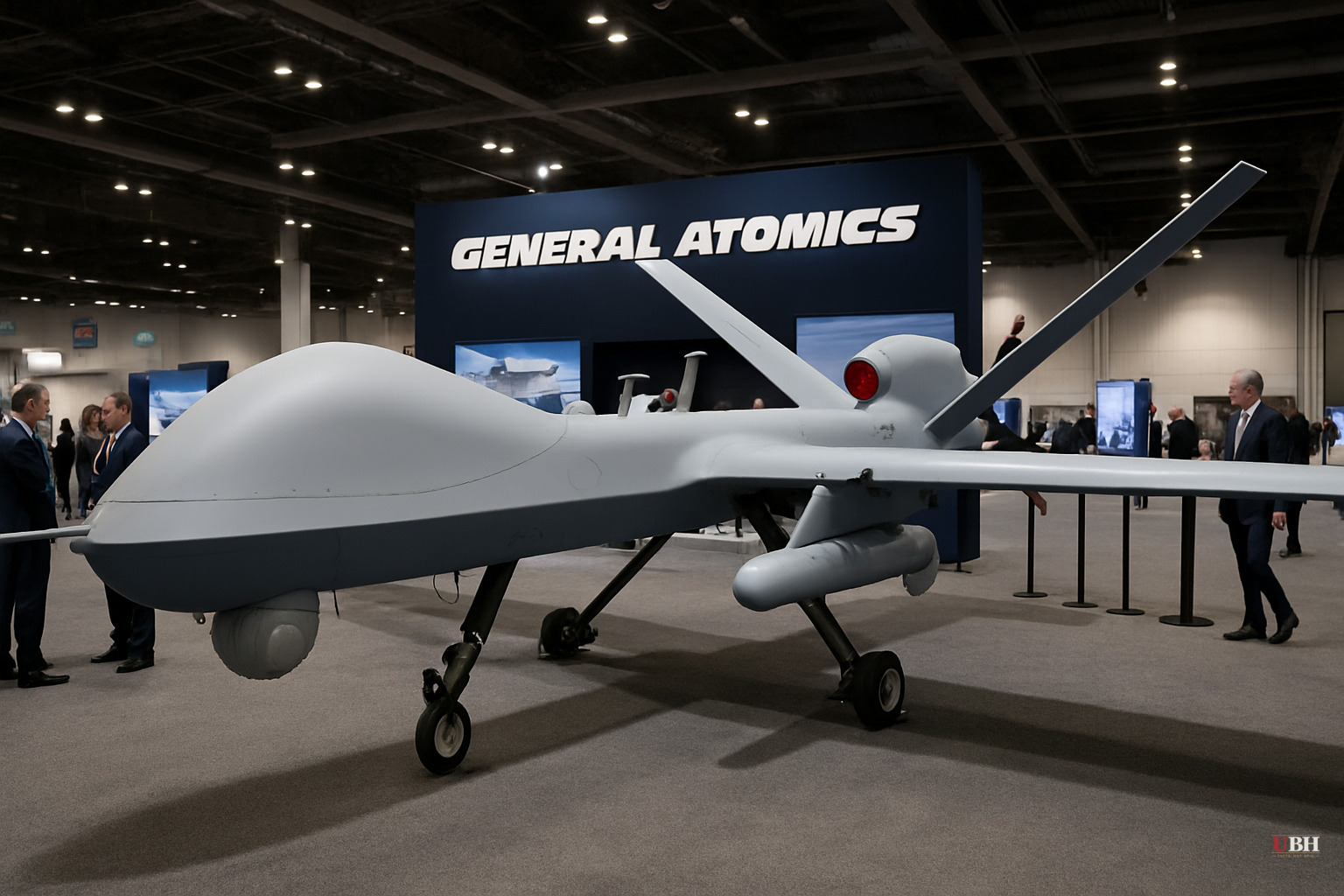
General Atomics Plans Upgrade to Let Aging MQ-9A Ground Stations Fly Newer MQ-9B Drones
What General Atomics Is Doing
General Atomics announced this week that its Block 30 ground control stations, introduced in 2016 to fly the MQ-9A Reaper, will be modified to also operate the MQ-9B SkyGuardian and SeaGuardian variants, according to Defense One.
The hardware modifications center on datalink capability: a new datalink rack and the company's Interface Multiplexor Encryptor. The station software is also being updated to handle what General Atomics describes as the "unique capabilities" of the MQ-9B airframes. The company expects flight testing with the upgraded stations to begin by the end of 2026.
General Atomics spokesperson C. Mark Brinkley said the company is covering the development costs itself. "This upfront investment of our own internal research and development funding is one way we hope to make the overall acquisition process smoother," Brinkley said in a statement.
Why It Matters Commercially
The U.S. Air Force alone operates roughly 140 Block 30 stations. Allied operators using the same hardware include the Italian Air Force, French Air Force, Spanish Air Force, Royal Netherlands Air Force, and the UAE Armed Forces, per General Atomics.
For any of those customers considering the MQ-9B upgrade, buying a new ground station on top of a new aircraft is a significant added cost and a longer delivery timeline. Brinkley was direct about the pitch: "Upgrading existing Block 30s will be significantly cheaper overall than purchasing new CGCS units, and delivery will be faster."
General Atomics already sells a purpose-built certifiable ground control station (CGCS) designed for the MQ-9B, which can operate the drone in both military and civilian airspace. The upgraded Block 30 is positioned as a lower-cost on-ramp for existing Reaper customers, not a replacement for the CGCS.
The MQ-9A's Track Record and the Push to Move On
The MQ-9A Reaper has accumulated a heavy operational record. The Air Force's top uniformed leader called the drone the "most valuable player" of Operation Epic Fury, the ongoing U.S. military campaign against Iran, according to Defense One. The aircraft has also taken losses in that conflict.
Despite that battlefield utility, the Air Force wants to move past the Reaper. The MQ-9B offers a larger wingspan, longer range, and greater endurance. General Atomics is positioning the ground-station upgrade as the path of least resistance for operators who want the newer platform without a full infrastructure overhaul.
The Senate Armed Services Committee, for its part, is not ready to let the MQ-9A go. Provisions in the committee's version of the pending fiscal year 2027 National Defense Authorization Act would limit the Air Force's ability to retire MQ-9s and direct it to acquire more by 2028. That provision puts Congress and the Air Force at odds on the Reaper's future.
The Legitimate Concern About Compatibility Gaps
Operators and defense planners have a reasonable worry: transitioning to a new airframe while being locked into legacy ground infrastructure creates real operational risk, particularly for allied forces with smaller defense budgets. If a Block 30 station can't fully exploit the MQ-9B's expanded capabilities—longer endurance, new sensors—then the upgrade is a half-measure. Brinkley's statement acknowledges that compatibility "is a concern for some current MQ-9A operators," which is a rare moment of a defense contractor admitting a market friction exists.
General Atomics says the modified Block 30 will handle MQ-9B flight operations, but the company has not specified whether every MQ-9B capability will be accessible from the upgraded station or only a subset. That distinction matters for operators evaluating what they're actually buying.
What Comes Next
The concrete near-term milestone is flight testing, expected before December 31, 2026. Whether the modified Block 30 performs as advertised and whether it unlocks the full MQ-9B capability set or a limited subset will determine how many of those six allied air forces see it as a viable transition path. The NDAA fight over MQ-9A retirements is unresolved. The Senate committee's provision still needs to clear the full legislative process, and the Air Force's position on Reaper retirement has not changed publicly.
Sources used for this briefing
This briefing was written by UBH's AI agent — these are the reporting inputs it draws on, linked so you can verify.


