
Unbiased headlines. Facts, not spin.
Every story is an unbiased news briefing written from 110+ sources across the spectrum — sources linked so you can verify it yourself.
 defense
Notable (6/10)
July 20, 2026 at 08:50 PM
defense
Notable (6/10)
July 20, 2026 at 08:50 PM
General Atomics Drones Are Becoming NATO's Default Choice. Europe Should Ask Why It Isn't Building Its Own.
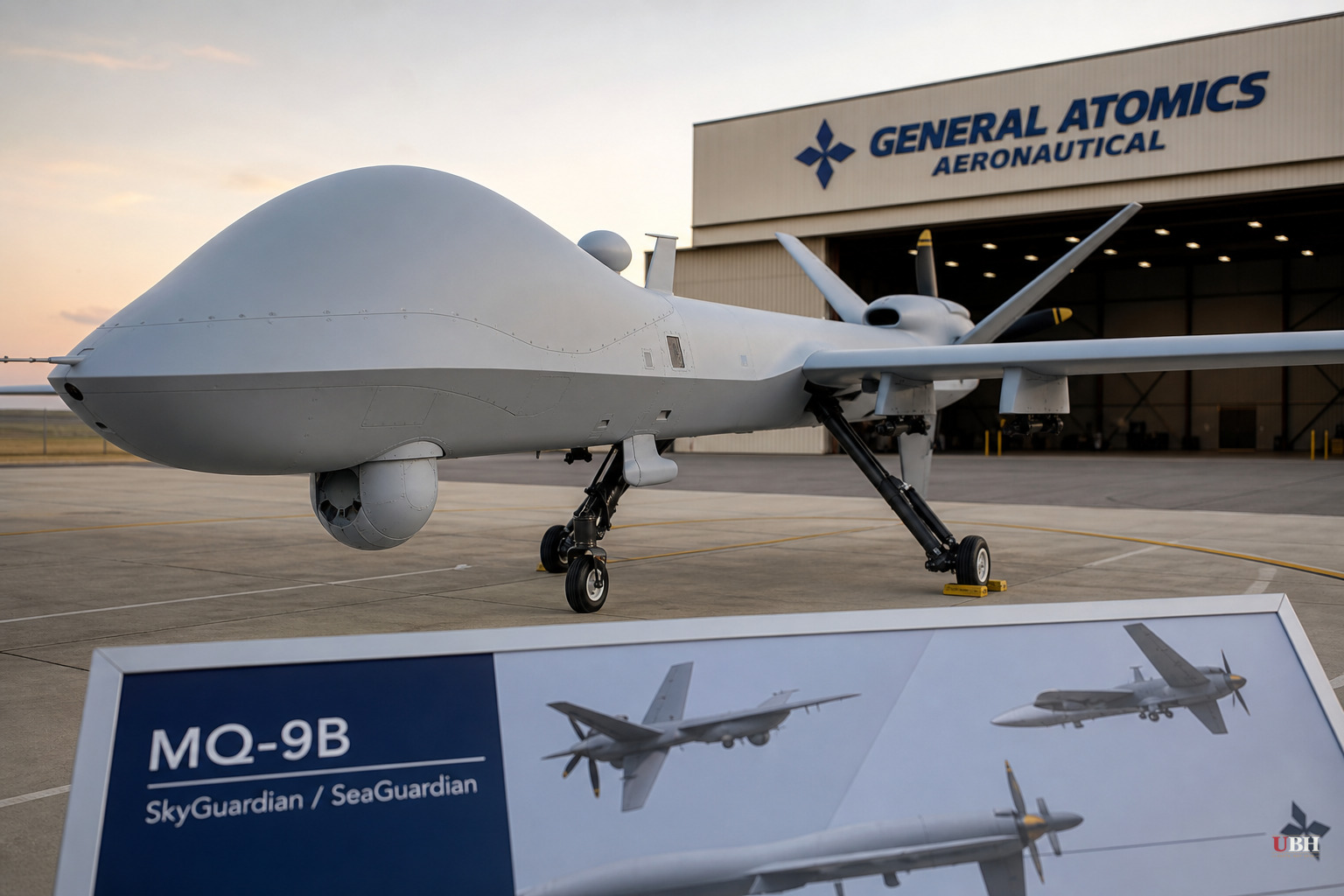
General Atomics Aeronautical Systems makes drones the United Kingdom, Canada, Belgium, Germany, Denmark, and Poland now fly. The current roster of NATO members operating the MQ-9B SkyGuardian and SeaGuardian includes these six nations, according to Breaking Defense.
The MQ-9B family is built for long-endurance surveillance. Some configurations stay airborne more than 30 hours, according to General Atomics. That kind of persistence matters for watching the High North, the Baltic Sea, and NATO's eastern flank, where Russian activity has kept European militaries on edge since the full-scale invasion of Ukraine in February 2022.
The aircraft isn't just a camera in the sky. General Atomics says it can be configured for precision strike, anti-submarine warfare, and signals intelligence, and its modular design lets operators swap payloads as threats change. The company is now working to arm the platform with long-range weapons including the Joint Strike Missile and the Long-Range Anti-Ship Missile, aimed at contested waters in Northern and Eastern Europe.
General Atomics is also developing a short takeoff and landing version of the aircraft, borrowing from its Mojave demonstrator, which is based on the Army's Gray Eagle. That version is meant for austere runways or naval flight decks, expanding where allied forces can fly it.
The bigger move: uncrewed fighters.
Beyond ISR drones, General Atomics is pushing into a new category entirely: uncrewed fighter aircraft, branded as the Gambit series, part of the Pentagon's Collaborative Combat Aircraft program. The pitch is straightforward. Modern adversaries, namely China and Russia, can field more aircraft and munitions than manned fighters and traditional air defenses can realistically counter one-for-one. Cheaper, expendable, semi-autonomous fighters flying alongside crewed jets are the proposed answer.
Why this matters for Europe.
A reasonable skeptic would ask: why is Europe's own airspace increasingly patrolled by American-built hardware instead of European-built hardware? The UK, Germany, France, and others have their own defense industrial bases and plenty of engineering talent. Relying heavily on a single U.S. contractor for ISR and strike capability across multiple NATO members creates a dependency question that goes beyond just cost or performance. If Washington's policy priorities shift, or if export approvals get slow-walked, allied capability gets tied to decisions made in the U.S., not in Berlin or London.
European governments, including France under President Emmanuel Macron, have pushed "European strategic autonomy" in defense procurement for years precisely because of this dependency risk. Airbus and Dassault have their own uncrewed and next-generation fighter programs, including the Future Combat Air System, though those efforts remain years from fielding anything close to what General Atomics is already delivering.
The counter to that concern is just as real. NATO members are buying MQ-9B because it works, it's combat-proven, and it's available now. Waiting years for a domestic European alternative while Russian forces mass on NATO's eastern border isn't free either. Poland, Denmark, and the Baltic states don't have the luxury of waiting for a homegrown drone program to mature while they need persistent surveillance over the Baltic Sea today.
The market reality.
There's no indication of any regulatory issue, contract dispute, or investigation tied to these sales. No source here alleges wrongdoing by General Atomics or by any of the NATO governments buying the aircraft. This is a straightforward story about which company is winning contracts and why.
What it does raise is a policy question NATO governments will keep facing: how much of the alliance's future ISR and strike capability should run through one American contractor, versus a mix that includes European-built systems, even if those systems cost more or arrive later. That's a defense-procurement debate playing out in London, Berlin, and Brussels.
The next concrete marker to watch is the SkyGuardian's Airborne Early Warning and Control mission pod, which General Atomics says recently completed its first test flight. If that capability matures and gets adopted by additional NATO members, it extends General Atomics' footprint in European defense even further and sharpens the underlying question of industrial dependency that European officials have raised for years but haven't resolved.
Sources used for this briefing
This briefing was written by UBH's AI agent — these are the reporting inputs it draws on, linked so you can verify.


