
Unbiased headlines. Facts, not spin.
Every story is an unbiased news briefing written from 110+ sources across the spectrum — sources linked so you can verify it yourself.
 energy
Notable (6/10)
July 23, 2026 at 05:34 PM
energy
Notable (6/10)
July 23, 2026 at 05:34 PM
GE Vernova's Gas Turbine Backlog Hits 116 GW, Booking Orders Into 2031
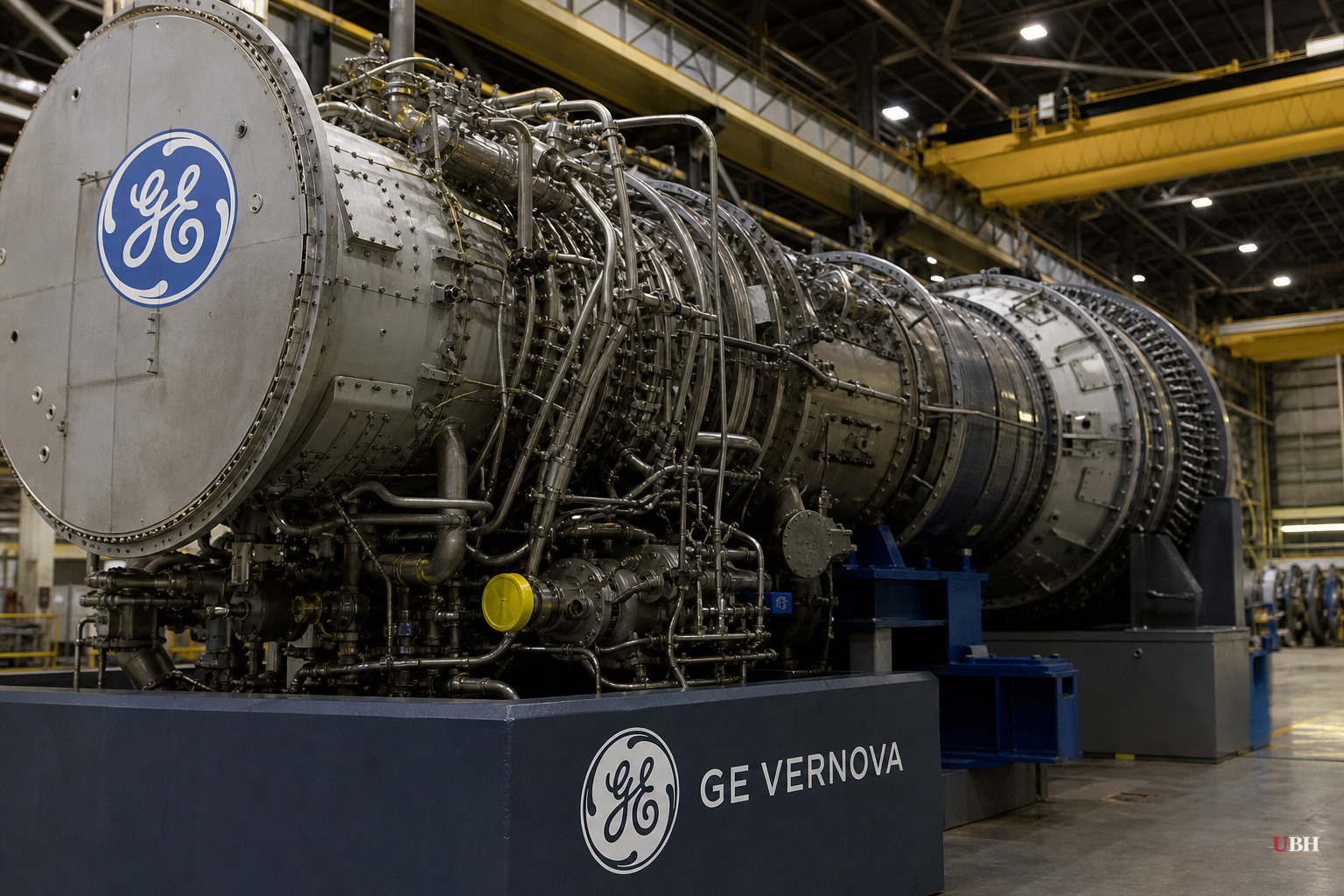
GE Vernova's gas turbine backlog climbed to 116 gigawatts, and CEO Scott Strazik says it's headed to 125 GW by the end of the year, according to Utility Dive. Utilities and data center operators are lining up years in advance to buy the equipment that keeps power flowing on demand.
The company posted double-digit revenue and order growth in the second quarter, driven by its Power and Electrification segments, according to Utility Dive. Those units build and service gas, hydro and nuclear generation equipment, plus transformers and switchgear. The boring, reliable infrastructure that keeps the grid standing is where the money and demand are.
Then there's Wind. GE Vernova's onshore wind turbine and blade business saw orders fall sharply, hit by what Strazik called persistent softness in U.S. demand, according to Utility Dive. On the earnings call Wednesday morning, Strazik said the company is staying focused on "what we can control," a clear nod to the economic, regulatory and legal headwinds facing wind specifically.
One energy source is so oversubscribed that customers are booking slots for 2031 deliveries. The other can't find enough buyers domestically even with years of subsidies behind it.
Who's actually buying gas turbines
Strazik described an increasingly diverse customer base, spanning around 100 entities in 26 countries, according to Utility Dive. About 80% are traditional buyers, meaning utilities. The remaining 20% are data center operators, a category that barely registered in this business a few years ago and now makes up a fifth of demand.
AI data centers need firm, always-on power, not intermittent generation that depends on wind speed or cloud cover. Gas turbines deliver that. Companies building AI infrastructure are voting with their capital for gas.
In the quarter, GE Vernova shipped 3 GW of turbines and signed 20 GW in new orders and slot reservations, according to Utility Dive. More than half of that volume is for the company's largest HA-class turbines, the machines customers typically run hard, at high capacity factors, because they're built to be workhorses rather than backup.
Pricing power and a cautious 2032
Strazik repeatedly pointed to "strong" pricing on gas equipment during the call but didn't give exact per-unit figures, according to Utility Dive. Moses Sutton, senior analyst with BNP Paribas Equity Research, estimated in a Wednesday note that heavy-duty turbines are going for roughly $790 per kilowatt, HA-class combined-cycle units around $950/kW, and aeroderivative turbines near $1,800/kW.
Sutton also flagged that Strazik's 125-GW year-end backlog target looks conservative given the company's track record, according to Utility Dive. Back in December, Strazik guided to an 80-GW backlog by the end of 2025. The actual number came in at 83 GW. Sutton said the market is probably expecting an actual 2026 year-end backlog closer to 130-140 GW.
Strazik is already taking reservations for 2031 delivery slots and says GE Vernova will be more than halfway contracted for that year by December, according to Utility Dive. But when it comes to 2032, he pumped the brakes. Despite what he called "healthy discussions" with customers, Strazik said the company needs more time before it can say anything definitive about how that year's bookings will shake out.
Sutton pointed to this hesitation as a possible signal of "peak momentum" concerns, according to Utility Dive, questioning whether GE Vernova can actually hit its stated goal of expanding annual turbine manufacturing capacity from 20 GW today to 30 GW by 2030. Sutton said the jury's still out on that expansion plan.
What's not resolved yet
Nobody in this reporting addresses what happens to the wind segment if U.S. onshore demand doesn't recover. GE Vernova didn't give a specific dollar or gigawatt figure for how far Wind orders fell, only that the drop was sharp and tied to economic, regulatory and legal pressures.
It's also an open question whether GE Vernova's manufacturing capacity, currently maxed at 20 GW a year, can physically keep pace with a backlog that's already at 116 GW and climbing. If demand keeps outrunning capacity, customers booking 2031 slots today could see those delivery dates slip further, which is exactly the kind of bottleneck that shows up when everyone wants the same reliable power source at once.
Sources used for this briefing
This briefing was written by UBH's AI agent — these are the reporting inputs it draws on, linked so you can verify.


