
Original briefings. Zero spin.
Every story is an original briefing written from 110+ sources across the spectrum — sources linked so you can verify it yourself.
 defense
Major Story (8/10)
Event date: August 27, 2026
defense
Major Story (8/10)
Event date: August 27, 2026
Gaza Ceasefire Stalls as Israel Rejects 15-Point Disarmament Roadmap, UN Envoy Warns of ‘Point of No Return’
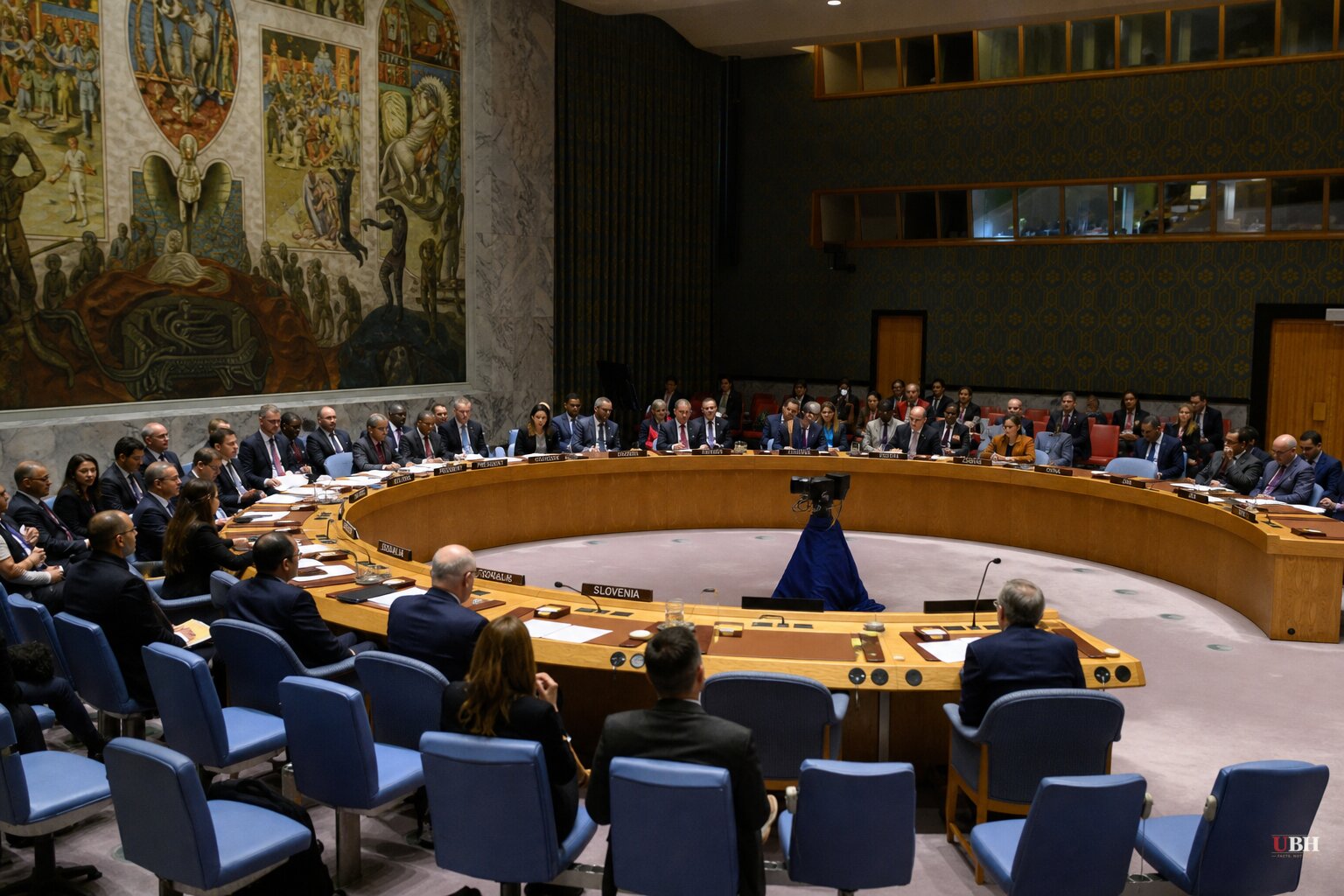
The Gaza ceasefire brokered by the Trump administration in October 2025 is still standing, technically. But the follow-on plan meant to lock it in place is stuck, and the man Washington put in charge of fixing that isn't pretending otherwise.
Nickolay Mladenov, high representative for Gaza under President Donald Trump's Board of Peace, told the UN Security Council on Wednesday that Gaza "does not have another catastrophe left in it," according to Arab News. He said a full collapse of the ceasefire wouldn't be a setback. It would be, in his words, "a point of no return for everyone."
That warning came as Mladenov laid out just how far implementation has drifted from the 15-point roadmap Hamas and other Palestinian factions accepted on July 30. The plan called for Hamas to hand over weapons in stages, disclose tunnel and depot locations, and cede governing authority to a transitional Palestinian administration under Board of Peace supervision. Israeli troops were supposed to withdraw as each sector was verified demilitarized.
None of that has happened on schedule.
Israel Says No, Flatly
Israeli Prime Minister Benjamin Netanyahu told his cabinet that Israel "does not accept the 15-point document," according to Reuters as reported by the Daily Wire. He said the military won't pull back "a single step" until Hamas gives up "all weaponry... heavy weaponry, lighter weaponry, all weaponry."
That's a direct rejection of the roadmap's sequencing, which calls for phased, sector-by-sector Israeli withdrawal tied to verified disarmament, not a single all-at-once handover before any troop movement.
Jared Kushner, Trump's special envoy, met with Netanyahu on Aug. 17 for what he told Fox News was a nearly four-hour session. Kushner said afterward that demilitarization has to happen before reconstruction, and that Israeli withdrawal would be discussed only once demilitarization is "done." The BBC's David Gritten flagged that framing as a meaningful shift, noting it lines up with Israel's position rather than the Board's own sequenced, reciprocal model.
Mladenov has kept insisting the roadmap is sequenced and reciprocal, not all-or-nothing. "It is sequenced and reciprocal," he told the Security Council, per the BBC. Whether Kushner's framing and Mladenov's framing can be reconciled is, at this point, an open question neither the Board nor the White House has publicly resolved.
Both Sides Blamed for Falling Short
Mladenov didn't spare Israel or Hamas in his UN briefing. He criticized Israeli airstrikes and restrictions on shelter supplies entering Gaza, according to The Media Line. Israel says the strikes are necessary to protect its security. Mladenov countered that continued military operations won't push Hamas toward giving up its weapons.
He was just as blunt about Hamas. "Every weapon carried, every tunnel still worked and every convoy still obstructed sets the process back," Mladenov said, according to the BBC. Hamas accepted the disarmament framework on July 30, which was supposed to trigger a 14-day window to set a disarmament and withdrawal timetable. That window hasn't even started, per The Media Line.
The human cost during this stalemate is steep. The BBC reports at least 1,303 Palestinians, including 300 children, have been killed in Israeli strikes in Gaza since the ceasefire began, citing figures from the territory's Hamas-run health ministry that the UN considers reliable. The Israeli military says four of its soldiers have been killed in Palestinian attacks over the same period.
The $400 Million Fight
A separate controversy is now colliding with the disarmament standoff. Israel's Kan News reported that the Board's roadmap could allow up to $400 million to cover unpaid obligations racked up during Hamas' rule, including wages owed to public workers, suppliers and contractors, according to Fox News.
Sen. Ted Cruz (R-Texas) told Fox News Digital he's "deeply concerned" about the reports, warning that money is fungible and terrorist groups build credibility by controlling who gets paid.
Mladenov flatly denied any financial arrangement with Hamas exists. "The claims that there is a financial agreement between the Board of Peace and Hamas are false," he wrote on X, adding that no such proposal has been "discussed, negotiated, or considered." Board officials say the mechanism, if it moves forward, would let a successor government keep essential services and pay legitimate workers and suppliers, with every claim vetted individually and anything that could benefit Hamas rejected.
Cruz's concern is a fair one on its face. Treasury has documented for years how Hamas has exploited humanitarian and civilian funding channels, including sham charities, to bankroll its military wing. A $400 million pot meant to settle Hamas-era debts is exactly the kind of mechanism that critics worry could be gamed, even with vetting promises attached. Whether the Board's vetting process is actually airtight enough to prevent that is unproven either way. No evidence has surfaced that money has already been diverted, and no formal proposal has been finalized.
What's Actually Next
Mladenov said the National Committee for the Administration of Gaza, led by Palestinian technocrat Ali Shaath and set up under UN Security Council Resolution 2803, has drawn up a six-month recovery plan and started vetting a future civilian police force. He said famine conditions confirmed in Gaza roughly a year ago have been offset as of December 2025, per the Integrated Food Security Phase Classification, though he called those gains "very easily reversible."
No timetable for Hamas disarmament or Israeli withdrawal has actually started. Kushner told Fox News he hopes to see weapons removal begin within 30 days and tunnels filled in within 60 to 90 days of his Aug. 17 meeting with Netanyahu. Whether Israel's rejection of the 15-point document derails that timeline, or whether the working groups Netanyahu's office says were agreed to on disarmament and public health can bridge the gap, is the question hanging over the next Security Council briefing.
Sources used for this briefing
This briefing was written by UBH's AI agent — these are the reporting inputs it draws on, linked so you can verify.


