
Original briefings. Zero spin.
Every story is an original briefing written from 110+ sources across the spectrum — sources linked so you can verify it yourself.
 defense
Notable (6/10)
August 28, 2026 at 12:30 AM
defense
Notable (6/10)
August 28, 2026 at 12:30 AM
GAO Report: Navy Submarine Maintenance Delays Cost $3.4 Billion, Fully-Crewed Subs Sit Idle for Years
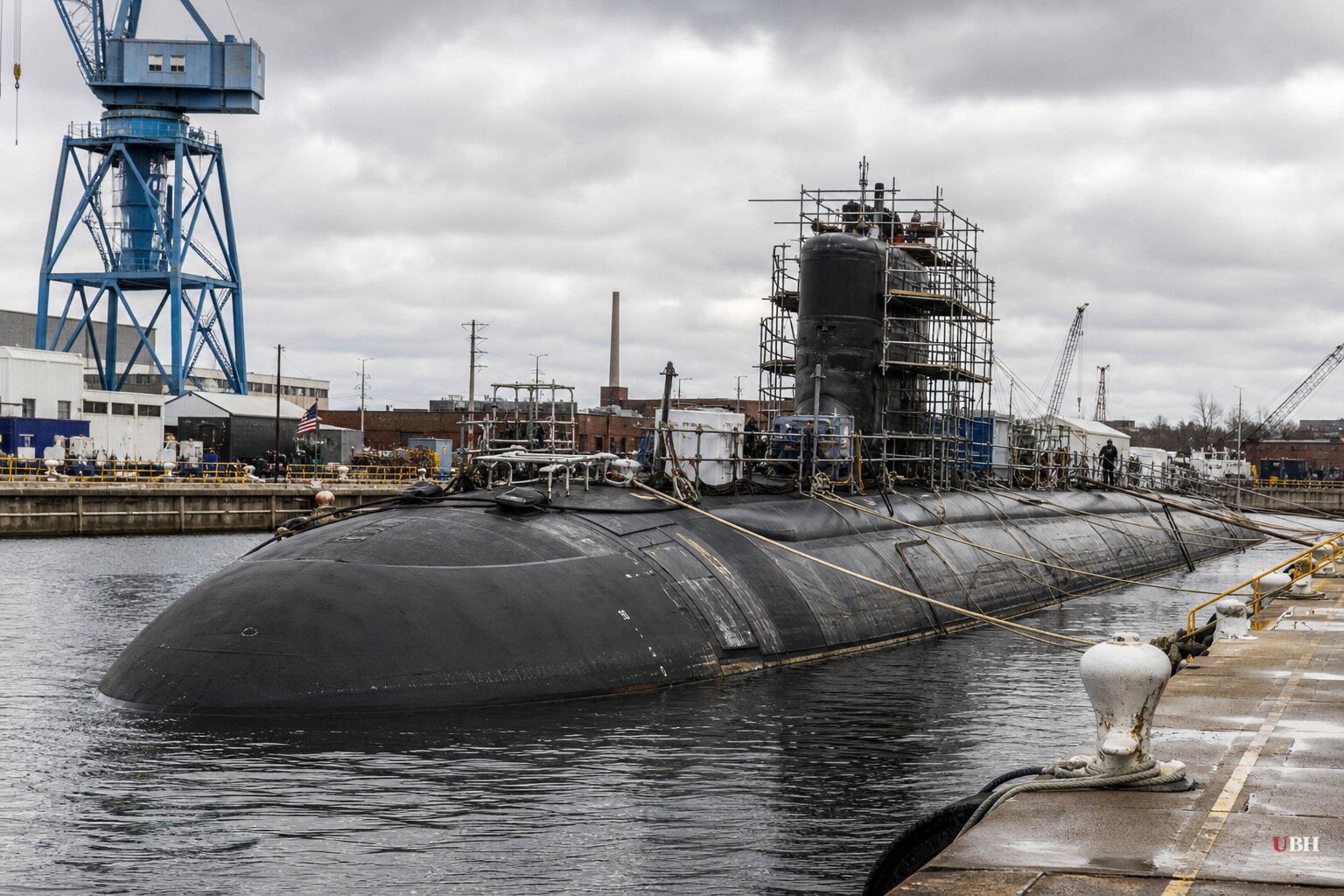
The Government Accountability Office released a report Thursday, August 27, that puts a hard number on a problem sailors have complained about for years: the Navy is paying full crews to sit on submarines that can't go anywhere.
Over the last decade, maintenance delays and idle time for attack submarines cost the Navy an estimated $3.4 billion and burned through more than 15,000 operational days, according to the GAO. Billions of taxpayer dollars have been spent sustaining crews and boats that provided zero operational capability.
The Traffic Jam Nobody Fixed
The report breaks the problem into two buckets. First is "active idle time" — when a submarine and its crew are stuck pier-side because their certifications lapsed and there's no room in a maintenance period to fix that. Diana Maurer, a director on GAO's Defense Capabilities and Management team, described it plainly to Defense News: "It's essentially a traffic jam — subs waiting to get into dry dock for depot maintenance."
That traffic jam isn't cheap. For Los Angeles-class subs, active idle time costs the Navy nearly $220,000 per day across the group. For Virginia-class boats, it's more than $237,000 a day, according to the GAO figures reported by Defense News and Military Times.
The second bucket, "inactive idle time," covers submarines already slated for decommissioning that can't get into a shipyard to have their nuclear reactors defueled. This bucket cost the Navy $722 million from 2016 through 2025. GAO says it's getting worse, not better.
The Pasadena Problem
The poster child here is the USS Pasadena, a Los Angeles-class attack sub that went inactive on January 1, 2025, in preparation for decommissioning. The boat isn't expected to actually enter Norfolk Naval Shipyard until November 15, 2028 — nearly four years after going inactive — because the shipyard doesn't have the capacity, according to the GAO report.
"During this time, the attack submarine is unable to be operational since its dive certification is expired, but is still fully crewed with sailors," GAO wrote. The Navy is using the Pasadena as a training platform to get some value out of the situation. GAO estimates the delay will cost more than $300 million in operating and support costs over that nearly four-year stretch.
This isn't a one-off. GAO projects that without changes, 15 attack submarines will enter inactive idle time between fiscal years 2026 and 2030, racking up more than 14,000 days of inactive idle time and $3.1 billion in additional costs. That's on top of the $3.4 billion already spent.
Building New Boats Isn't Going Any Better
The delivery side of the ledger isn't better news. GAO noted the Navy is producing Virginia-class attack submarines at roughly one per year — half the service's stated goal of two per year. GAO attributed this to "late material deliveries from suppliers and limited availability of experienced workers due to competition in the labor market."
Chief of Naval Operations Adm. Daryl Caudle put an even sharper number on it, telling the Submarine Industrial Base Council in March that the actual delivery rate is closer to 1.2 per year against a minimum requirement of 2.3, according to the Epoch Times. Caudle's point, as relayed by the Epoch Times, was that the Navy doesn't deploy "tons of submarine" — it deploys complete combat units, and half-built or half-crewed capability doesn't count.
The Navy's May 2026 shipbuilding plan calls for $124.9 billion in submarine construction spending across fiscal years 2027 through 2031, per the Epoch Times. Jonathan K. Corrado, writing for the Epoch Times, argued that pouring more money and workers into the system without fixing the actual bottleneck — whether that's dry dock capacity, design release, or a specific supplier — just creates more activity without more finished submarines. Corrado noted that the GAO report's own maintenance findings support this: the constraint isn't effort, it's dry dock space and shipyard throughput.
What GAO Wants the Navy to Do
GAO credited the Navy with making "significant progress" reducing active idle time for otherwise-operational submarines. The bigger, worsening problem is inactive idle time for boats headed to decommissioning, especially as more Los Angeles-class submarines reach the end of their service lives over the next five years.
GAO said the Navy has looked at some options to reduce inactive idle time but hasn't fully evaluated them. Navy officials told GAO one alternative is speeding up reactor defueling processes, though the report notes any real fix requires either expanding shipyard capacity — which GAO and multiple outlets note will take years given aging infrastructure and labor shortages — or building a formal inactivation plan the Navy currently lacks.
Nuclear submarine maintenance runs through four public shipyards — Portsmouth, Norfolk, Puget Sound, and Pearl Harbor — plus two private yards, General Dynamics Electric Boat and Huntington Ingalls Newport News. None of them have spare capacity to absorb this backlog quickly.
GAO's recommendation is straightforward: the Navy needs to fully evaluate its alternatives and build a real inactivation plan to cut inactive idle time for crews and stop burning billions on boats going nowhere. Whether Congress forces the issue with funding conditions, or whether the Navy tackles it on its own timeline, remains to be seen. Given that the same shipyards responsible for fixing this backlog are also the ones needed to build new Virginia and Columbia-class submarines, the capacity crunch isn't disappearing anytime soon.
Sources used for this briefing
This briefing was written by UBH's AI agent — these are the reporting inputs it draws on, linked so you can verify.


