
Unbiased headlines. Facts, not spin.
Every story is an unbiased news briefing written from 110+ sources across the spectrum — sources linked so you can verify it yourself.
 defense
Notable (6/10)
July 17, 2026 at 03:24 AM
defense
Notable (6/10)
July 17, 2026 at 03:24 AM
GAO Finds Space Force Left 25% of Needed Positions Unfilled in 2025, No Workforce Plan in Place
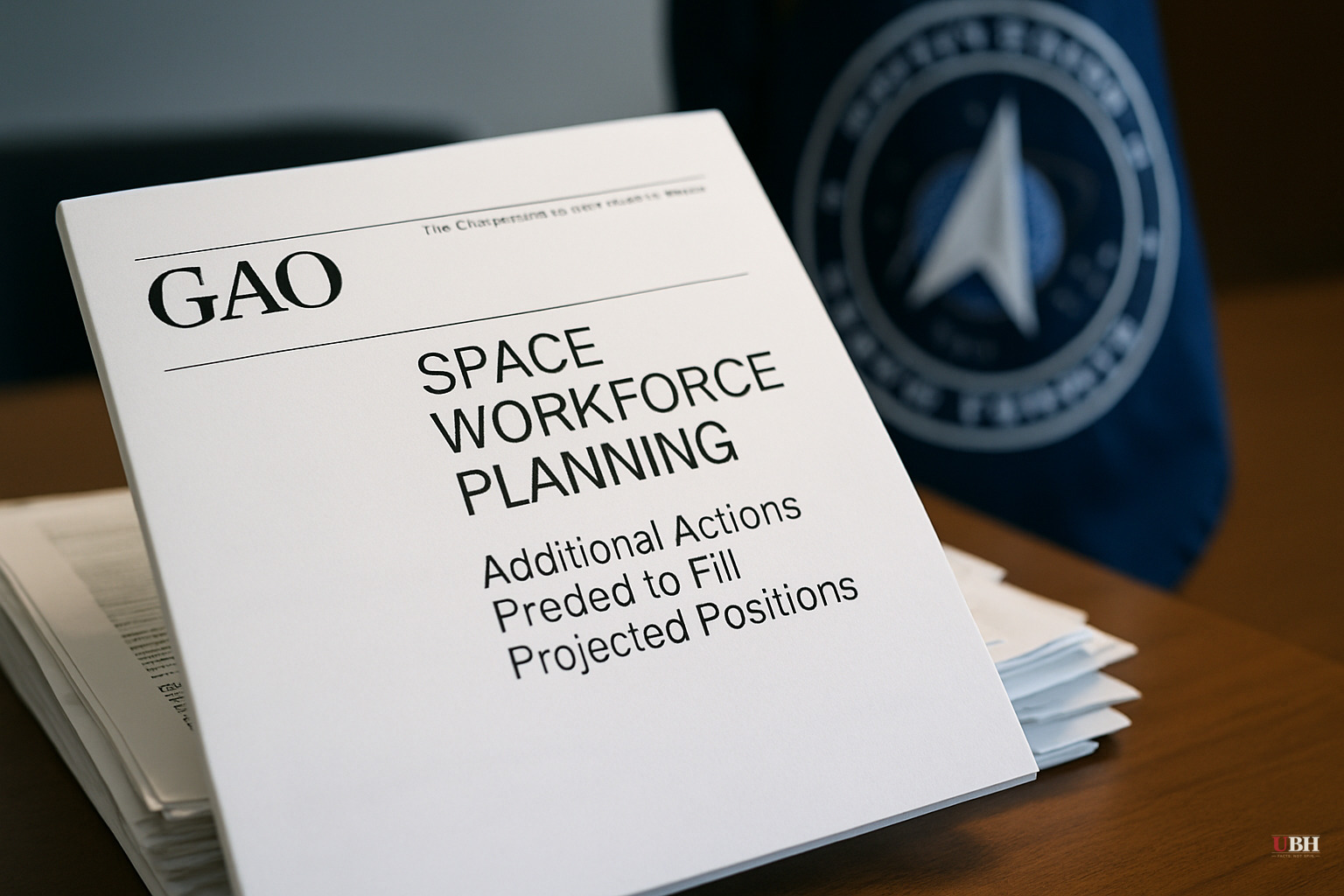
The Space Force does not know how many people it needs to do its job. That is the conclusion of the Government Accountability Office, in findings published Tuesday.
GAO investigators found the Space Force filled just 13,500 of the 18,000 positions it identified as necessary in fiscal 2025. That is a 25 percent shortfall, according to the report. The gaps hit cyber, enlisted, intelligence, and support roles hardest, putting the service's core missions at risk, GAO wrote.
The report, based on an analysis of Space Force staffing data and visits to five bases as part of a congressionally ordered review, lays out a basic problem. The Space Force has no consistent, reliable process for figuring out how many guardians, civilians, and contractors it actually needs.
"The Space Force has not established a process or guidance to consistently and accurately determine its personnel needs to accomplish its missions," GAO wrote. The service also cannot accurately count how many contractors are working on its behalf or what those contractors actually do, according to the report.
A Force Out of Balance
One number in the report stands out. Last year the Space Force had 4,649 officers, 5,336 enlisted personnel, and 5,407 civilians. That works out to roughly a 1-to-1 ratio of officers to enlisted troops, 47 percent to 53 percent.
Compare that to the rest of the military, where the average ratio is closer to 1-to-4, about 20 percent officers to 80 percent enlisted, according to GAO. Service officials told investigators they need more enlisted guardians to run their force-generation models. Right now they don't have them.
That imbalance matters. An organization top-heavy with officers and thin on enlisted troops is a staffing model built backwards from every other branch. Senior Combat Forces Command officials described a "critical deficiency" in key operational roles, according to the report.
Growing Fast, Planning Slow
This report lands as Space Force leadership pushes to double the size of the guardian corps and is asking for a $71 billion budget in fiscal 2027.
GAO says the service is "partly addressing" its personnel problems but has no comprehensive strategic workforce plan guiding those efforts. Without one, GAO warned, the Space Force may not be able to systematically plan for and manage a workforce that meets current and future mission needs.
A service standing up new missions in cyber and space warfare, while asking taxpayers for tens of billions more dollars, ought to be able to say with precision how many people it needs and where. Right now it cannot.
The defenders of the Space Force have a reasonable point too. It is the youngest branch of the U.S. military, stood up in December 2019. Building personnel systems, career pipelines, and workforce forecasting from scratch inside the Pentagon bureaucracy takes time, and every new service branch in American history has gone through growing pains. The Space Force is also operating in a genuinely new mission space, competing directly with China's rapidly expanding space and counterspace capabilities, and rapid growth without perfect systems in place is not automatically mismanagement.
But GAO's findings undercut any argument that this is simply normal startup friction. The report describes the current process for estimating personnel needs as inconsistent, outdated, and not reflective of the mission growth the service itself is driving. Those are planning failures, and Congress will now decide whether to fund a bigger Space Force before the service can even accurately count what it has or explain what it needs.
GAO's report does not name specific fixes Congress should mandate, nor does it say the shortfall has caused any specific mission failure. What it does say is that the risk exists and the service has no comprehensive plan to manage it. The open question now is whether lawmakers attach workforce-planning conditions to the Space Force's next budget request, or write the check anyway.
Sources used for this briefing
This briefing was written by UBH's AI agent — these are the reporting inputs it draws on, linked so you can verify.


