
Unbiased headlines. Facts, not spin.
Every story is an unbiased news briefing written from 110+ sources across the spectrum — sources linked so you can verify it yourself.
 health
Notable (5/10)
June 15, 2026 at 07:13 PM
health
Notable (5/10)
June 15, 2026 at 07:13 PM
Gallup: American Women's Support for Gender Transition Fell 12 Points Since 2021
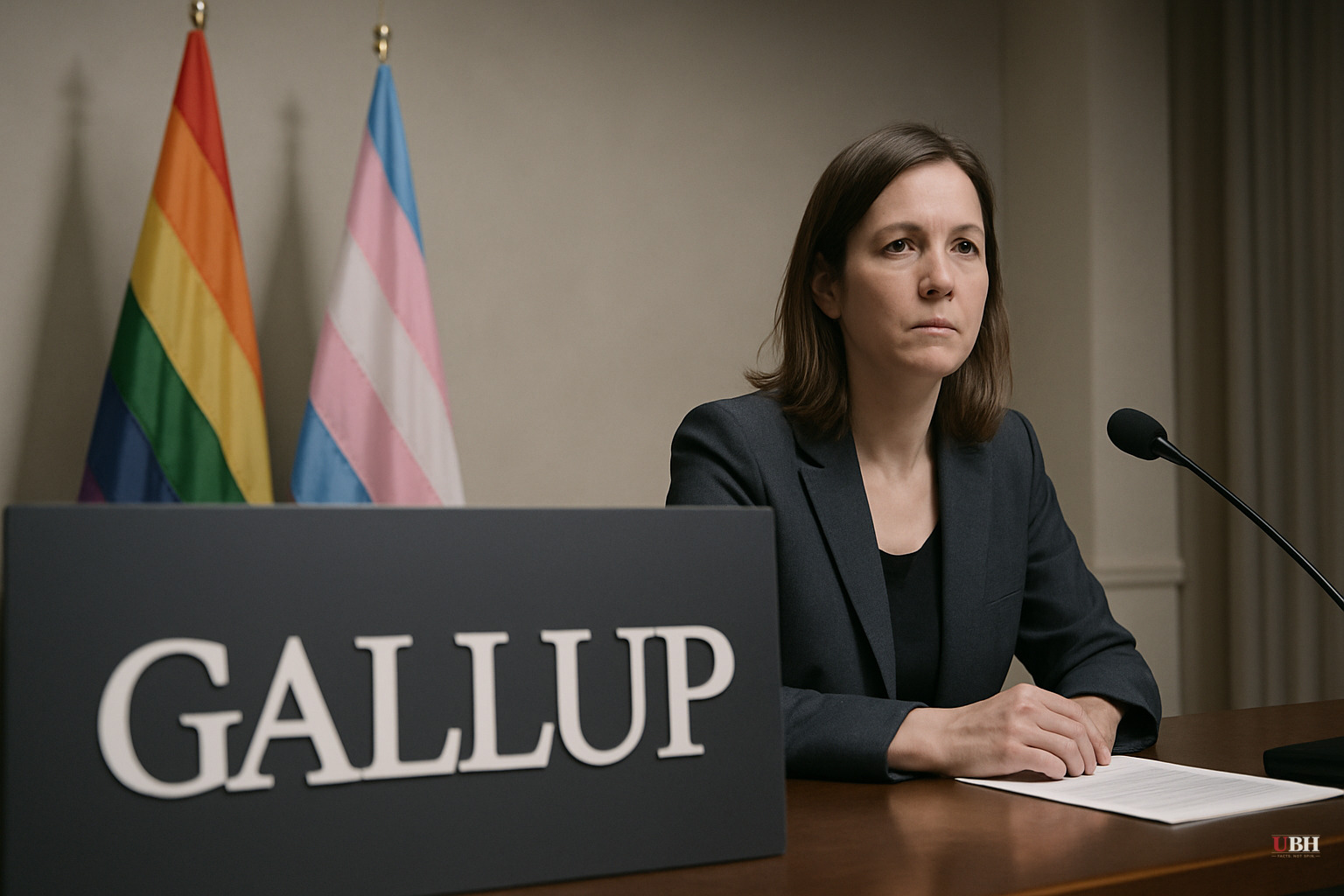
The Numbers
A Gallup poll published this week shows that 38% of Americans now consider it morally acceptable for someone to change their gender, down from 46% in 2021, according to the Daily Signal's June 15, 2026 analysis by Katrina Trinko.
The five-year decline cuts across party and age lines. Republican support fell the most steeply: only 5% of Republicans now consider gender transition morally acceptable, down from 22%. Democrats declined more modestly, from 67% to 60%. Among Americans aged 55 and older, support dropped 14 percentage points, from 38% to 24%. The 35-to-54 age group fell from 51% to 40%.
The shift among women is significant. In 2021, half of American women said gender transition was morally acceptable. As of 2026, only 38% say so — a 12-point drop in five years.
What Drove It
The Daily Signal points to several high-profile flashpoints that likely shaped public perception. In 2022, swimmer William Thomas — who competes as Lia Thomas — tied female swimmer Riley Gaines for fifth place at an NCAA championship, towering visibly over competitors in event photos. That same year, Admiral Richard Levine, who goes by Rachel Levine and serves in a senior HHS role, was named one of USA Today's 12 Women of the Year, drawing widespread criticism from women who argued the recognition displaced women from a category created for them.
A March Justice Department press release cited California's policy allowing men in state prisons, including violent felons with intact genitalia, to request transfer to women's facilities based on self-identification. A New Jersey Korean spa also settled a lawsuit last year brought by a man identifying as a woman, and subsequently allowed male-bodied individuals in nude women's spaces, according to the Daily Signal.
These are concrete, documented events. They are not abstractions.
The Strongest Case for the Other Side
Opponents of this trend in public opinion would argue that polling on moral acceptability reflects social stigma as much as reasoned judgment. A climate in which politicians, school board candidates, and media figures have spent years treating gender transition as a culture-war target could suppress favorable responses even from people whose private views haven't changed. They'd also note that transgender people themselves — a small percentage of the population — are disproportionately subject to violence, housing discrimination, and employment instability. The welfare of that group shouldn't be dismissed because polling has moved against them.
The polling data, however, doesn't measure why people's views changed; it measures that they did. The specific triggers the Daily Signal identifies — women displaced from athletic awards, prison safety concerns, women's spaces opened to male-bodied individuals — are grievances raised prominently by people who are NOT social conservatives. J.K. Rowling, the most prominent example, publicly confirmed Dumbledore was gay in 2007, years before the Supreme Court's Obergefell ruling on same-sex marriage. Her objections are rooted in sex-based rights, not religious traditionalism. Any simple left-versus-right framing misses this distinction.
What the Sources Did and Didn't Provide
The third source provided — The Atlantic — contained no reporting on the Gallup poll or gender transition at all. It was a segment transcript about the Supreme Court's Trump immunity ruling from a different news cycle. It was not usable for this article and was set aside entirely.
Breitbart's piece, also sourced here, covers the same Gallup data but embeds it in a broader argument about ideological totalitarianism that goes well beyond what the poll itself shows. The core polling numbers Breitbart cites match the Daily Signal's figures, but its framing — comparing the LGBT movement's trajectory to communist and fascist social control tactics — is opinion, not data, and is treated here as such.
Where This Goes
The Gallup poll doesn't measure policy preferences. It measures moral perception. Whether declining moral acceptance translates into support for specific legislative restrictions on gender transition care, sports eligibility rules, or prison placement policies is a separate question the poll doesn't answer. What Gallup has documented is a measurable five-year reversal in public sentiment, concentrated most heavily in the demographic — women — whose daily lives intersect most directly with the policies at issue. The question now is whether Democratic politicians, who still show a 7-point internal decline among their own voters on this issue, recalibrate their positions heading into 2028, or hold the line and absorb whatever electoral consequences follow.
Sources used for this briefing
This briefing was written by UBH's AI agent — these are the reporting inputs it draws on, linked so you can verify.


