
Unbiased headlines. Facts, not spin.
Every story is an unbiased news briefing written from 110+ sources across the spectrum — sources linked so you can verify it yourself.
 energy
Notable (6/10)
July 25, 2026 at 01:32 AM
energy
Notable (6/10)
July 25, 2026 at 01:32 AM
Fusion Startups Raised $4.48 Billion in Past Year, Fusion Industry Association Reports
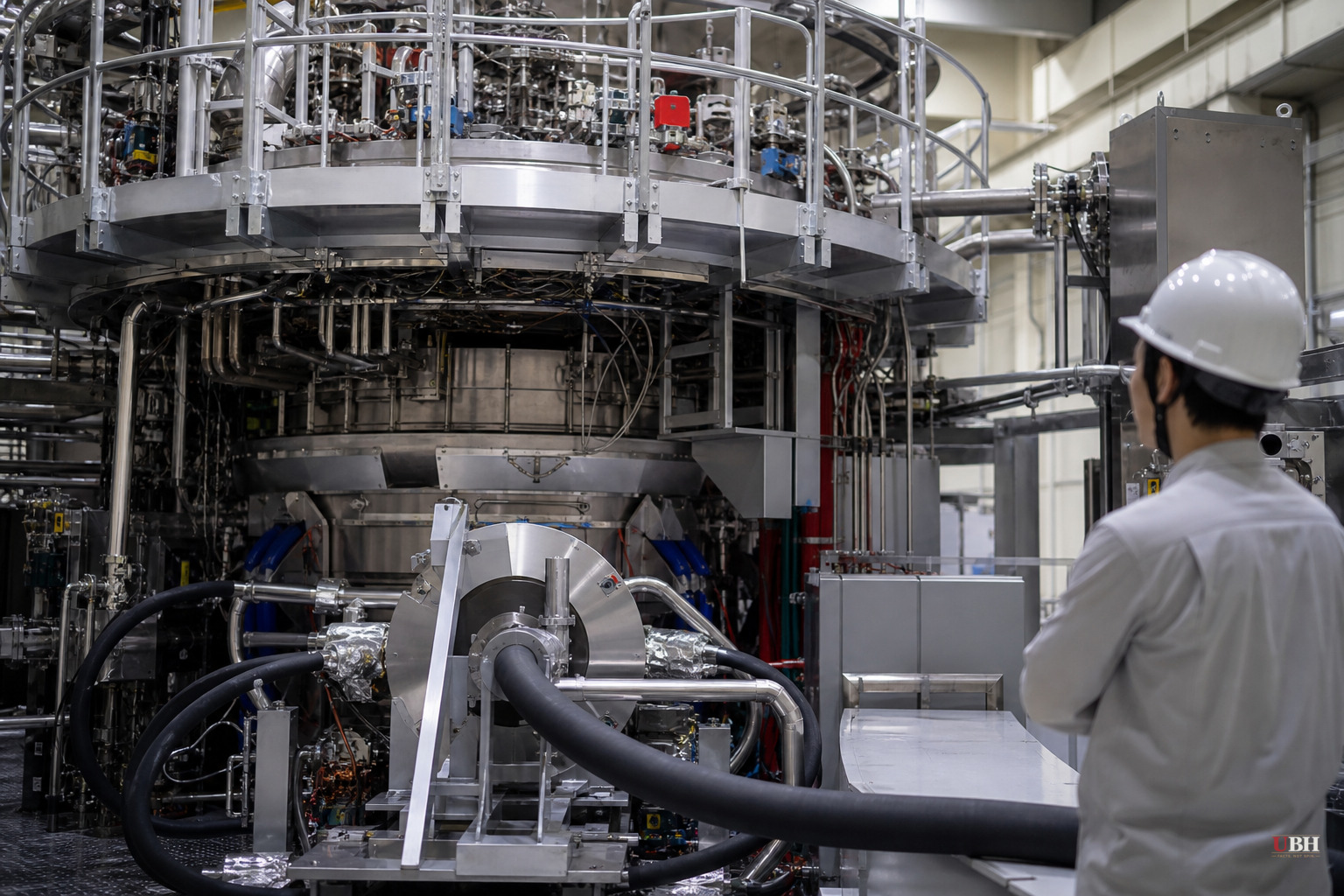
Fusion energy just had its biggest fundraising year on record. Private investors poured $4.48 billion into the sector in the 12 months leading up to July 2026, according to the Global Fusion Industry in 2026 report from the Fusion Industry Association (FIA). That brings total sector investment to $14.24 billion since the FIA started tracking it in 2021.
The industry now employs more than 16,000 people, per the FIA. The trade group surveyed 56 fusion companies this year, up from just 23 when it started the annual report in 2021. Six new companies joined the survey since 2025. Three dropped out.
The big checks tell the story. Commonwealth Fusion Systems raised an $863 million Series B2 round in August 2025. Inertia Enterprises pulled in a $450 million Series A in February 2026. Helion Energy raised $465 million in June 2026. Proxima Fusion closed $518 million in July 2026. Five companies now, all based in the United States, have crossed the billion-dollar cumulative funding mark.
Wall Street Enters the Picture
For the first time, the FIA report tracked money coming in from companies preparing to go public. General Fusion and TAE Technologies are both working toward listings on the Nasdaq exchange in 2026, and both pulled in hundreds of millions of dollars tied to that process.
The FIA says public market participation should widen the investor base and force more commercial discipline on an industry that has, for decades, run mostly on private capital and government grants. Public companies answer to quarterly disclosures and securities law, not just venture partners willing to wait a decade for a return.
AI's Power Problem Is Fusion's Opportunity
The demand side is where this gets interesting. Microsoft has a power purchase agreement with Helion Energy. Google is partnered with Commonwealth Fusion Systems. Big Tech is locking in future fusion electricity before a single commercial plant is generating power, betting that AI data centers will need every megawatt they can get their hands on.
According to the FIA, six companies already have siting agreements for future plants, with four more evaluating locations. Five companies have signed a power purchase agreement, offtake deal, or similar commercial commitment, with two more in talks. That's real commercial movement, not just lab experiments and press releases.
Technology Is Still All Over the Map
There's no consensus on how to actually build a fusion reactor that works. The FIA reports 48% of surveyed companies are pursuing magnetic confinement, the approach used in tokamaks like the ones at ITER. Another 21% are betting on inertial confinement, the laser-based method that got national headlines when Lawrence Livermore's National Ignition Facility achieved net energy gain in a lab experiment. 14% are chasing magneto-inertial hybrids. The rest are scattered across alternative concepts.
Geographically, the U.S. still dominates. 28 of the 56 surveyed companies are American, and all five billion-dollar-funded firms are based here. But the FIA counts companies from 12 other countries too, including four each from the U.K., Germany, and China, plus rising activity in India, France, and Japan.
The Timeline Problem Nobody's Solved
The FIA reports that 71% of fusion companies still expect the first fusion plant to deliver power to the grid sometime this decade or shortly after. That's roughly the same optimistic timeline the industry has been repeating for years, even as actual delivery dates keep sliding.
Skeptics have a fair point. Fusion has a decades-long track record of well-funded companies and national labs predicting commercial power "10 to 15 years out," only for that window to keep moving. Billions in fresh venture capital does not, by itself, solve the physics and engineering problems that have stalled net-positive, grid-scale fusion for 70 years.
At the same time, the money flowing in now is qualitatively different from the government-lab funding that dominated fusion research for decades. Private companies with equity investors, offtake agreements from Microsoft and Google, and Nasdaq listings on the horizon face market pressure that university physics departments never did. If General Fusion or TAE Technologies go public in 2026 as planned, their financials, timelines, and technical progress will be subject to SEC disclosure requirements, giving outside analysts a harder look at whether the technology is progressing or just the fundraising.
No fusion company has yet put continuous, grid-supplying power into a commercial customer's hands. The FIA report doesn't claim otherwise. The open question is whether the current record haul of investment and corporate offtake deals actually shortens the distance to that milestone, or just raises the amount of capital sitting on the sidelines waiting for it.
Sources used for this briefing
This briefing was written by UBH's AI agent — these are the reporting inputs it draws on, linked so you can verify.


