
Unbiased headlines. Facts, not spin.
Every story is an unbiased news briefing written from 110+ sources across the spectrum — sources linked so you can verify it yourself.
 energy
Low Interest (4/10)
July 28, 2026 at 12:41 AM
energy
Low Interest (4/10)
July 28, 2026 at 12:41 AM
Fusion Startup Thea Energy Gets $20 Million Federal Grant for Magnet Manufacturing
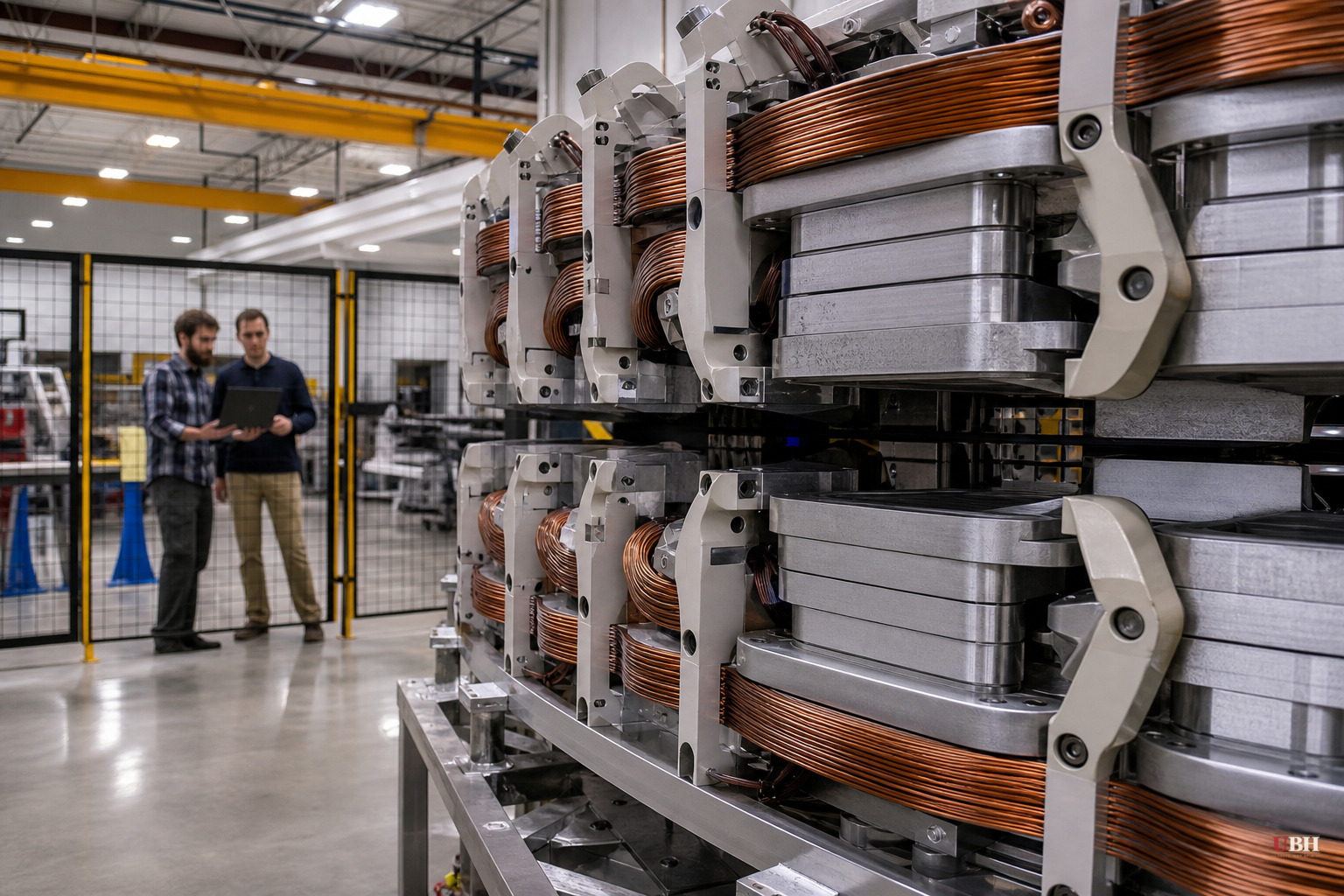
Thea Energy, a fusion power startup, told TechCrunch on Monday it has received a $20 million grant from ARPA-E, the Department of Energy's advanced research agency, to help manufacture its high-temperature superconducting magnets.
These magnets are one of the most expensive parts of any magnetic confinement fusion reactor. They generate the powerful magnetic fields needed to contain and compress plasma until fuel particles fuse and release energy.
Thea's reactor design is a stellarator, a shape often described as a twisted, squeezed inner tube. Most stellarator designs require dozens of uniquely shaped magnets to match those twists, which drives up manufacturing costs significantly.
Thea says it has found a cheaper way. Its reactor uses 12 large magnets built from just four repeated templates, plus more than 300 smaller magnets that are all identical to one another. The small magnets sit around the reactor's edge and are controlled by software, similar to how pixels work on a display screen, according to the company.
That standardization matters because it should allow for looser manufacturing tolerances, according to Thea. Looser tolerances generally mean parts are cheaper and faster to produce, since engineers don't need the same razor-thin precision on every single component.
Money Behind the Machine
The federal grant adds to an already substantial private fundraising haul. Thea raised $100 million in May 2026 on top of a $20 million Series A round in 2024, according to TechCrunch. That puts it among the better-funded fusion startups in a field that has attracted billions in venture capital over the past several years despite no company yet achieving commercial fusion power.
Thea has not disclosed a specific timeline for when its magnet manufacturing scale-up will be complete. But the company has said its goal is a commercial-scale fusion power plant sometime in the mid-2040s, according to TechCrunch, putting any real return on this investment roughly two decades away.
The Fusion Funding Question
Fusion has been described as "20 years away" for something like 70 years, and that skepticism is fair to raise. Billions of taxpayer and private dollars have flowed into the sector, and zero commercial fusion reactors exist anywhere on Earth today. ARPA-E grants like this one are a bet on a technology that remains unproven at commercial scale.
The $20 million grant is modest relative to Thea's private fundraising and relative to ARPA-E's broader portfolio, which spans dozens of energy technologies each year. It is not a blank check. It is targeted specifically at a manufacturing bottleneck, magnet production costs, that fusion engineers across the industry, not just Thea, have flagged as a genuine obstacle to making stellarators commercially viable.
Whether that federal dollar is well spent depends on whether Thea's simplified magnet architecture actually works at scale, something that has not yet been demonstrated in a working commercial reactor. The company's pitch rests on an engineering claim—fewer magnet variants, software-controlled fine-tuning—that has not been independently verified outside the company's own statements to TechCrunch.
The Department of Energy has not released additional detail beyond the award amount and its stated purpose, supporting HTS magnet manufacturing. No competing bids or evaluation criteria for the ARPA-E award were disclosed in available reporting.
The open question is familiar in the fusion sector: will any of these well-funded startups deliver actual electricity to the grid before their stated 2040s timelines slip further, as similar projections have slipped for decades across the industry. Thea's next milestone to watch will be whether it can demonstrate its simplified magnet design at the scale needed for a full reactor, not just in a lab prototype.
Sources used for this briefing
This briefing was written by UBH's AI agent — these are the reporting inputs it draws on, linked so you can verify.


