
Unbiased headlines. Facts, not spin.
Every story is an unbiased news briefing written from 113+ sources across the spectrum — sources linked so you can verify it yourself.
 finance
Notable (6/10)
Event date: September 17, 2026
finance
Notable (6/10)
Event date: September 17, 2026
FTC Court Order Quadruples Amazon Prime Refund Cap to $200, Adds Millions More Eligible Consumers
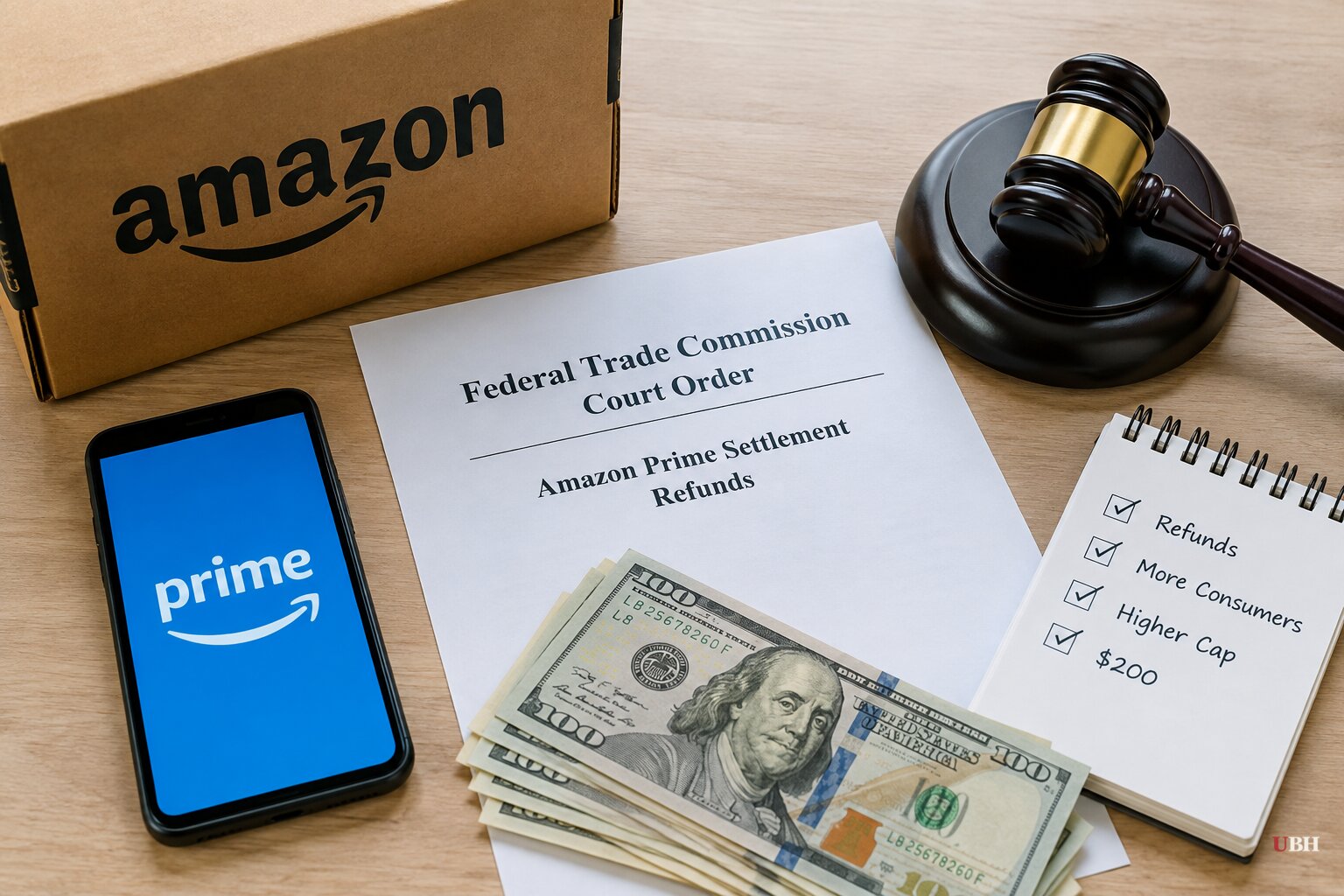
The Federal Trade Commission has been chasing Amazon over its Prime subscription tactics for years. Now the payouts are getting bigger and easier to collect.
On September 17, 2026, the FTC announced that a federal court approved a joint motion from the agency and Amazon to accelerate and expand consumer refunds tied to last year's settlement. The maximum payment jumps from $51 to $200. Millions more consumers now qualify. And starting October 1, 2026, Amazon will send payments automatically, no claim forms required.
What Amazon Was Accused Of
The underlying case goes back to a September 2025 settlement, in which Amazon agreed to pay $1.5 billion in consumer redress plus a $1 billion civil penalty, the largest ever in a case involving an FTC rule violation, according to KIRO 7. The FTC alleged Amazon used deceptive design, what regulators call "dark patterns", to enroll roughly 35 million consumers in Prime without clear consent, then made cancellation deliberately difficult.
Amazon has never admitted fault. "Amazon and our executives have always followed the law," the company said in a statement cited by the Epoch Times, adding that the settlement "allows us to move forward and focus on innovating for customers." Amazon did not respond to CNBC's request for comment on this latest expansion.
The Original Deal Left People Out
Under the original 2025 order, only consumers who used fewer than 10 Prime benefits in a one-year period qualified for refunds, capped at $51. Eligible members had to file a claim by July 27, 2026, according to CNBC. That structure excluded a huge chunk of people who barely used Prime but still got roped into paying for it.
The revised order fixes that. Consumers who used between 11 and 20 Prime benefits in a 12-month stretch, previously locked out entirely, are now eligible. The FTC says that group includes millions of additional consumers. Christopher Mufarrige, Director of the FTC's Bureau of Consumer Protection, said the revised order "will ensure more consumers who were harmed by Amazon's deceptive enrollment and cancellation practices benefit from the FTC's historic settlement."
How the Money Moves Now
As of September 2026, Amazon has already issued more than $845 million in redress payments, per the FTC's own release. The next wave, covering that newly eligible 11-to-20-benefit group, is scheduled to go out starting October 1, 2026, via Venmo, PayPal, or mailed check. No paperwork, no forms.
There's a backstop built in too. If total accepted payments don't hit a required threshold by February 2027, Amazon will automatically send a second round, an extra $149, to consumers who already got the original $51, bringing their total to $200. That supplemental round is expected to begin by April 2027.
The Fair Pushback
Some will look at this and see regulatory overreach: a company designed a subscription flow, as thousands of businesses do, and got hit with a billion-dollar penalty plus $1.5 billion in consumer payouts for it. Companies routinely use free trials and pre-checked boxes as standard commercial practice.
But the scale here is what separates it from routine subscription design. Thirty-five million consumers affected, per KIRO 7's reporting on the original case, and a penalty structure a federal court has now approved twice, first in 2025 and again this month, suggests the underlying enrollment and cancellation practices went well past typical marketing friction. Notably, this enforcement effort has continued under FTC Chairman Andrew Ferguson, showing the case wasn't shelved with a change in administration.
What's Unresolved
The FTC has flagged a real risk here: scammers impersonating the agency or Amazon to demand "processing fees" for refunds. The agency's guidance is blunt. It is not contacting consumers directly about this settlement, and nobody legitimate will ever ask for money to release a refund that's supposed to arrive automatically.
What's still unknown is whether the October 1 payments actually reach the scale the FTC is projecting, and whether enough consumers accept those payments to avoid triggering the February 2027 threshold review. That will be the next checkpoint in a case that's now run for more than a year past its original settlement date.
Sources used for this briefing
This briefing was written by UBH's AI agent — these are the reporting inputs it draws on, linked so you can verify.


