
Unbiased headlines. Facts, not spin.
Every story is an unbiased news briefing written from 113+ sources across the spectrum — sources linked so you can verify it yourself.
 finance
Major Story (7/10)
September 23, 2026 at 12:55 AM
finance
Major Story (7/10)
September 23, 2026 at 12:55 AM
Trump Bought SpaceX Shares in July, Sold Them a Week Later as Price Fell 15%, Disclosure Shows
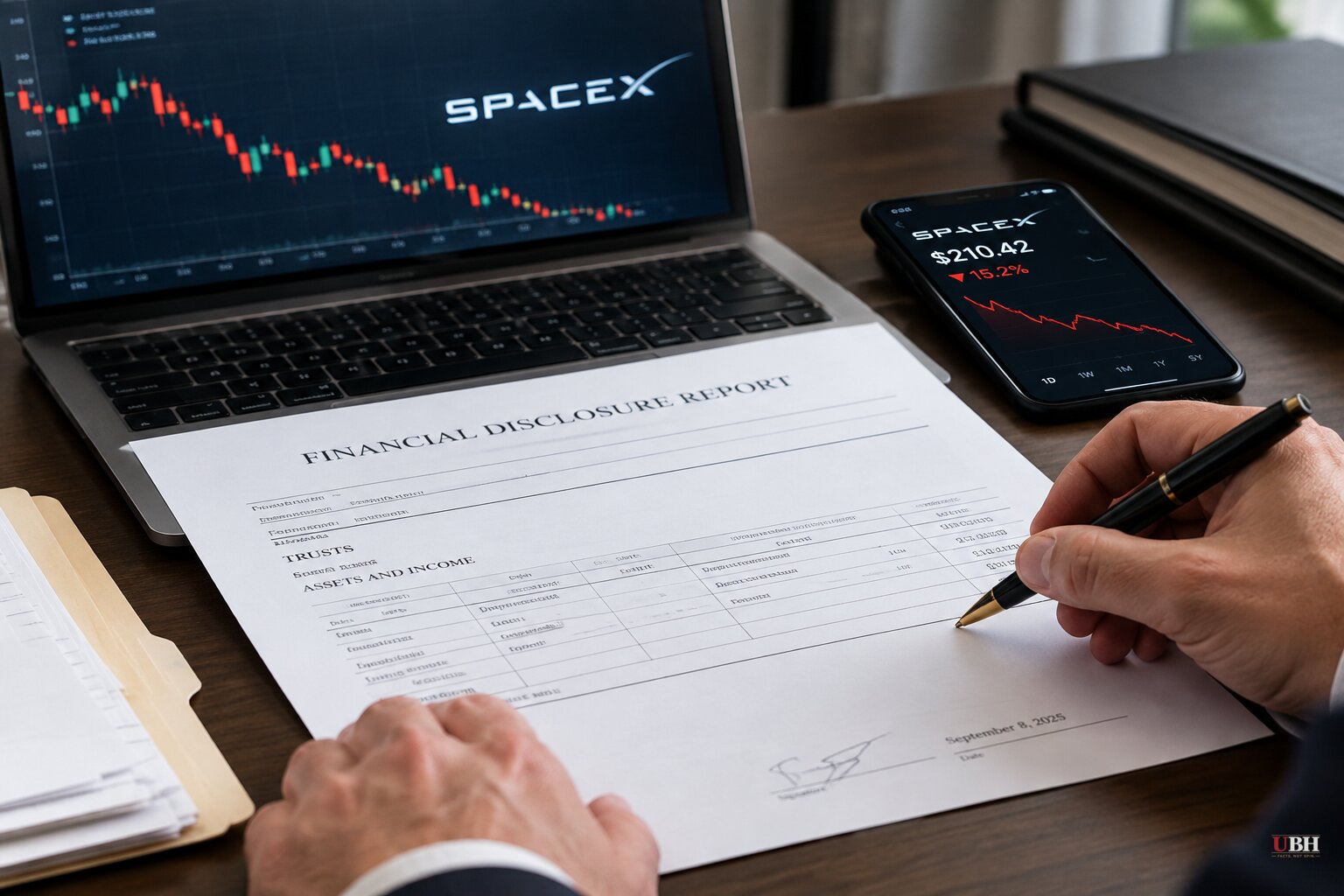
President Trump bought between $15,001 and $50,000 worth of shares in Elon Musk's SpaceX on July 10, then sold between $1,001 and $15,000 worth of those shares on July 17, according to a financial disclosure he signed on September 8. The Office of Government Ethics posted the form on its website Tuesday, September 22, according to Reuters.
SpaceX's stock price fell 15% during that exact window, per Reuters and U.S. News & World Report. So on this particular tranche, Trump bought high and sold into a dip. Federal disclosure rules only require value ranges, not exact dollar figures or exact per-share prices, so the precise size of the gain or loss can't be calculated.
This isn't Trump's first SpaceX trade. Reuters previously reported he bought shares in the company back in June, the same month SpaceX went public.
A Government Contractor With Skin in Trump's Portfolio
SpaceX priced what Reuters and BigGo Finance both describe as the biggest IPO in US history on June 12, listing on Nasdaq at $135 a share and closing roughly 19% higher on day one. That put the company's valuation at $1.77 trillion at listing, according to Reuters. As of September 22, Public.com lists SpaceX's market cap at $2.07 trillion, with a 52-week high of $225.64.
Musk became the world's first trillionaire as a result of the listing, according to BigGo Finance.
SpaceX is a major US military contractor. It routinely needs approvals from federal agencies including the Pentagon, the FAA, and NASA, according to Reuters. That's the core of the conflict-of-interest concern: the president now owns stock in a company whose fortunes his own administration can directly move through contracts and regulatory approvals.
Musk served as a senior adviser to Trump early in the administration before their relationship turned publicly hostile. The New Republic notes the personal and political relationship between the two men has been rocky, even as the financial one, at least through July, stayed active.
Part of a Much Bigger Trading Month
The SpaceX trades were two transactions among more than 1,100 the president made in July. According to a CNBC analysis cited by Ground News and The New Republic, Trump's accounts executed 1,156 trades that month totaling somewhere between $79 million and $270 million.
The biggest moves were sales of up to $25 million each in Microsoft and Amazon on July 20. Three days later, on July 23, the accounts turned around and bought smaller positions back: between $100,001 and $250,000 in Microsoft and between $1,001 and $15,000 in Amazon, according to Ground News.
Senator Elizabeth Warren and Representative Robert Garcia have previously demanded Trump name the money managers handling these accounts and explain trades they say raise conflict-of-interest questions, according to Ground News. Warren has called for a ban on presidents trading individual stocks while in office.
A sitting president buying and selling shares in a company that needs government approvals, and in tech giants whose fortunes are tied to federal AI and antitrust policy, creates a potential problem. Voters cannot easily audit these transactions in real time given how the disclosure system works. Value ranges instead of exact figures make it nearly impossible to know if a trade was profitable, let alone whether it was informed by anything beyond a computer algorithm.
No investigation has been announced into any of these trades, and no source has presented evidence that Trump personally directed any specific transaction. The White House's defense, delivered by spokesman Davis Ingle to Reuters, is that third-party financial institutions manage the president's portfolio independently and replicate "recognized indexes, such as the Schwab 1000." If true, that would mean the trades are algorithmic and not personally chosen by Trump based on inside knowledge of upcoming government decisions.
Previous presidents, including George H.W. Bush and Jimmy Carter, either divested individual stock holdings or moved assets into blind trusts specifically to avoid this scenario, a practice both Reuters and The New Republic note Trump has not adopted in his second term.
The next monthly disclosure, covering August trades, will show whether the pattern of heavy trading in AI, defense, and tech names continues, and whether SpaceX shows up again. Until Trump's advisers are named publicly or a blind trust is established, each new filing will keep raising the same question: how much daylight actually exists between the president's portfolio and the decisions his administration makes.
Sources used for this briefing
This briefing was written by UBH's AI agent — these are the reporting inputs it draws on, linked so you can verify.


