
Unbiased headlines. Facts, not spin.
Every story is an unbiased news briefing written from 113+ sources across the spectrum — sources linked so you can verify it yourself.
 finance
Notable (6/10)
September 23, 2026 at 12:11 AM
finance
Notable (6/10)
September 23, 2026 at 12:11 AM
Cities Pile Into $63 Billion of Climate-Defense Bonds as Washington Weighs Shrinking FEMA's Role
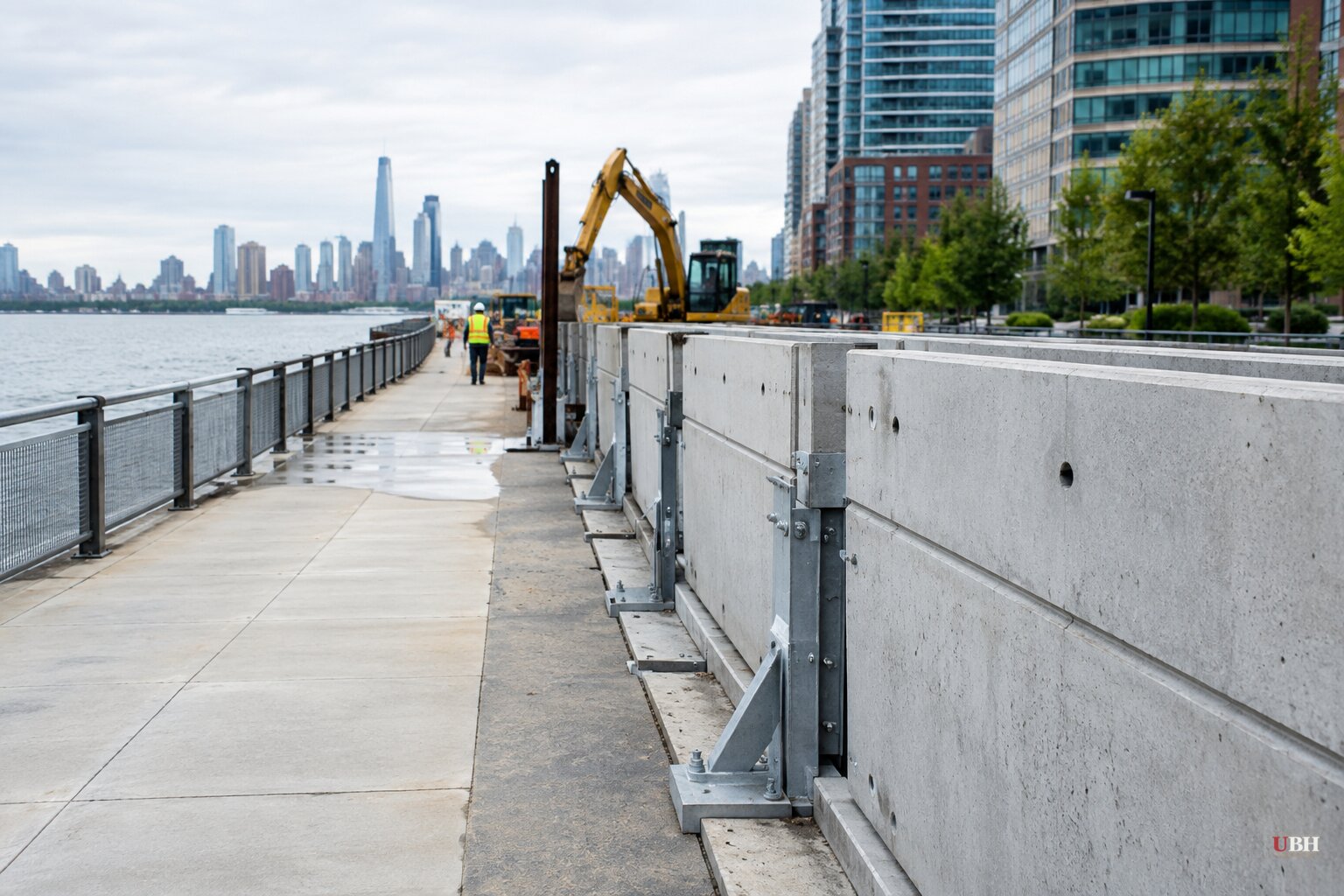
Municipal governments are borrowing tens of billions of dollars to armor themselves against floods, wildfires and storms, and the timing lines up with a federal push to hand more of that bill to the states.
Dan Close, head of municipals at Nuveen, told CNBC there is roughly $63 billion worth of climate-hardening projects currently in the works across the muni market. That includes general obligation bonds and revenue bonds tied to water, sewer and utility systems, all aimed at making infrastructure survive the next disaster rather than just rebuilding after it.
The backdrop is a real increase in disaster costs. The National Oceanic and Atmospheric Administration's National Centers for Environmental Information counted 27 confirmed weather and climate disasters in 2024 that each caused more than $1 billion in damage. Compare that to the 1980s, when the U.S. averaged 3.3 such events a year with average annual losses of $22 billion total, according to the same NOAA data cited by both CNBC and Traders Union.
Washington wants states to pay more
Close says the federal government is simultaneously looking to step back. Proposals to overhaul FEMA could shift the bulk of disaster preparedness, response and recovery costs onto state and local governments, he told CNBC. That is Close's characterization of the proposals, not a description of finalized federal policy, and no FEMA overhaul has been enacted as of today.
That push toward localizing disaster costs fits the broader conservative argument that Washington has taken on too much and states are better positioned to manage their own risk and spending. But it also means the bill for climate hardening increasingly lands on local taxpayers and municipal bondholders instead of federal disaster funds.
Traders Union points to concrete examples already in the market: Miami's $400 million Miami Forever Bond and Battery Park City Authority's $658 million flood barrier bonds, both cited by Nuveen as credits that have already put money into climate defense rather than waiting for the next storm to force the issue.
The yield math
For investors, the appeal is straightforward. Muni bond interest is exempt from federal tax, and exempt from state tax too if the buyer lives in the issuing state.
Close told CNBC that long-dated, 5% AA-coupon municipal bonds are now trading at a discount while yielding more than 5%. For someone in a high-tax state paying close to 50% in combined federal and state taxes, that works out to a taxable-equivalent yield near 10%. Ten-year munis yielding around 4% translate to roughly 8% on a tax-equivalent basis, he said.
Those are attractive numbers for wealthy investors specifically, since the tax exemption is worth the most to people in the highest brackets. It is a narrower benefit than it sounds for the average retail bond buyer.
The gap Nuveen itself admits
Not every community can afford to harden its infrastructure, and not every muni buyer can tell the difference between one that has and one that hasn't.
Close told CNBC the municipal market is "behind other fixed-income markets in assessing these risks and pricing these risks." In his own words, credits that have spent the money to harden infrastructure are sometimes priced the same as disaster-prone areas that haven't done the work, meaning they "are not getting in some cases enough credit" for the investment they made.
That is Nuveen's own assessment, and it cuts both ways. If the market can't tell a hardened Miami from an unhardened neighbor, wealthier cities with bigger tax bases and better access to capital markets, like Miami or Manhattan's Battery Park, will keep outpacing smaller or poorer municipalities that can't float a $400 million bond in the first place. There is a real equity gap in how climate risk gets financed, and Close's comments suggest even Nuveen sees the market as still figuring out how to price it.
Where this sits in the bigger bond story
A recent VoxEU analysis by economists Paul Beaudry, Paolo Cavallino and Tim Willems, highlighted by Breitbart, found that 90.5% of the rise in 10-year Treasury yields since August 2020 occurred in narrow windows around payroll reports and Fed officials' remarks, not steady fiscal-deficit fear. Municipal climate bonds are driven by something more concrete: actual infrastructure spending decisions by named local governments responding to named disaster costs.
The open question is what happens if Congress actually passes a FEMA overhaul that formally shifts disaster costs to states. Municipalities without Miami's tax base or Battery Park City's downtown real estate values will have to decide whether to issue debt, raise local taxes, or accept the risk of an unhardened system. No legislation has passed yet, and no timeline for a vote has been set.
Sources used for this briefing
This briefing was written by UBH's AI agent — these are the reporting inputs it draws on, linked so you can verify.


