
Unbiased headlines. Facts, not spin.
Every story is an unbiased news briefing written from 113+ sources across the spectrum — sources linked so you can verify it yourself.
 finance
Notable (5/10)
September 22, 2026 at 04:40 PM
finance
Notable (5/10)
September 22, 2026 at 04:40 PM
Kalshi Denies Wash Trading After Analyst Flags 174x Ether Perp Turnover Ratio
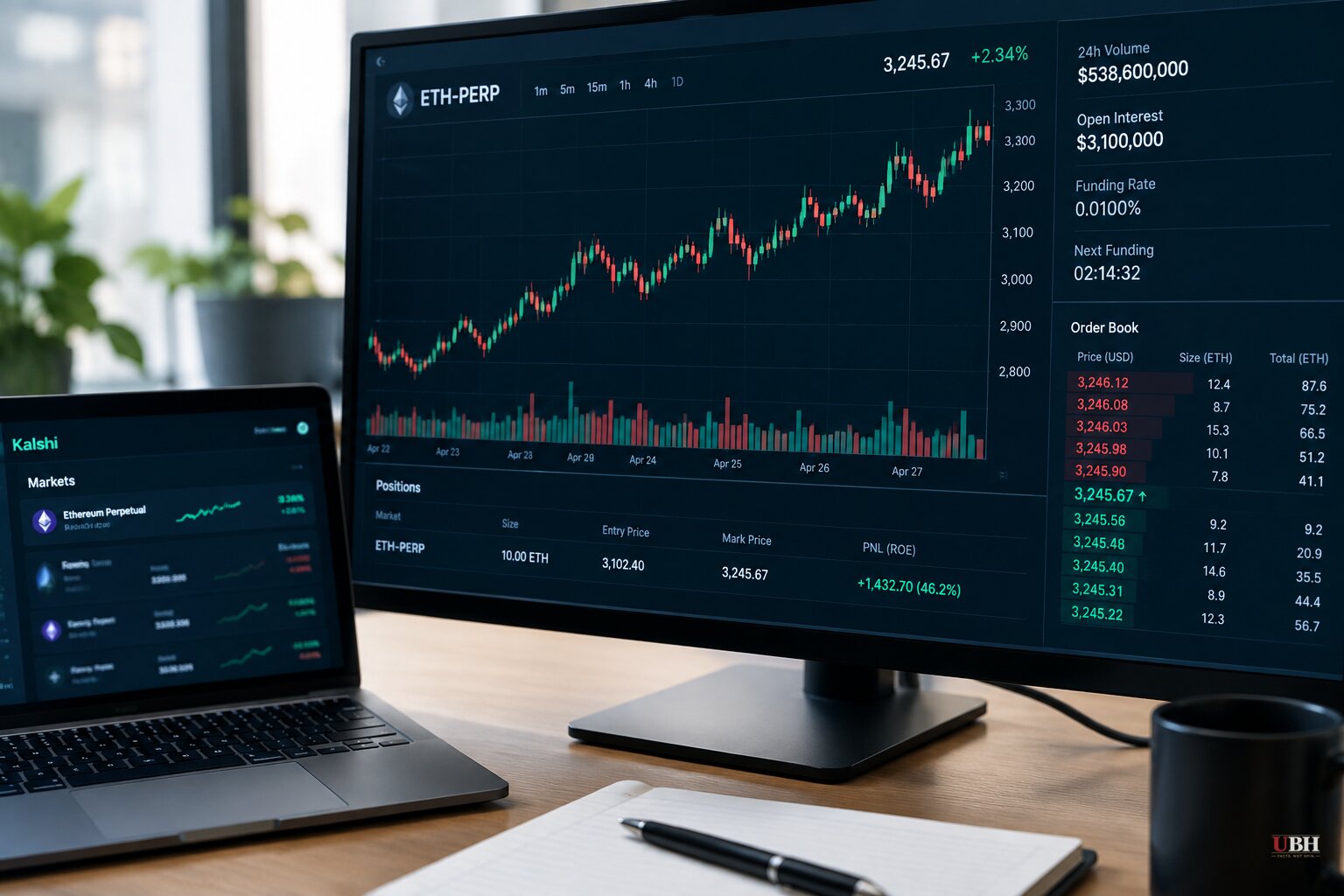
A public fight broke out on X this week over whether Kalshi, the CFTC-regulated prediction market platform, is inflating volume numbers on its crypto perpetual futures.
The accuser is Beni, a co-founder of research firm Stealth Neolab who posts as @beniduboss. In a Sept. 20 thread, he wrote plainly: "Kalshi fakes their crypto volume and I can prove it."
The Numbers Beni Cited
Beni's screenshots showed Kalshi's ether perpetual contract logging roughly $538.6 million in 24-hour volume against about $3.1 million in open interest. That's a turnover ratio of roughly 174 times, meaning the entire outstanding position base would have to flip every eight minutes and 18 seconds to be real.
He also pointed to Kalshi's public position leaderboard, which showed the largest single ether-perp position at $17,598 at the time of his screenshots. A market moving hundreds of millions daily with visible positions that small is, in Beni's framing, a classic wash-trading red flag.
In a follow-up post, Beni said trades of exactly $5,500 accounted for 48% to 58% of all ether perp notional volume on four separate days between Sept. 16 and Sept. 20. He called the repetition "undeniable proof" of manufactured activity and said the underlying data is pullable by anyone from Kalshi's public API.
Beni tied the incentive to a CFTC filing Kalshi submitted Sept. 2 and had certified Sept. 16, extending a rebate program for its Self-Clearing Members. Under the terms, eligible makers receive a 0.3 basis-point rebate while takers pay 0.3 basis points, netting close to zero combined cost. He also cited a February Bloomberg report that Jump Trading agreed to take an equity stake in Kalshi in exchange for providing liquidity, arguing a market maker with equity has extra reason to make volume charts look strong.
Kalshi's Response
Kalshi's crypto lead, IcoBeast.eth, replied publicly that Beni had conflated two different products. The Artemis chart that sparked the original graphic measured prediction-market share, IcoBeast said, not perpetual futures volume, and Kalshi runs no rebate program on its crypto prediction contracts.
In a longer blog post, Kalshi laid out its defense in more detail. The exchange said its internal records show the disputed trades involved hundreds of distinct takers trading against a market maker obligated to keep resting orders of a fixed size in the book throughout the day. That obligation, Kalshi said, is what produces repeated trade sizes, not coordination. If a market maker keeps posting roughly $5,000 orders, a faster trader can pick them off repeatedly whenever prices move.
Kalshi said self-trading is mechanically blocked on its platform and that coordinated trading between accounts is monitored and prohibited. The exchange said it found no evidence of collusion or wash trading in the activity under scrutiny, and pointed to one example where the taker side of the disputed trades would have earned roughly $98,000, which it argued is inconsistent with trades placed solely to fabricate volume.
Kalshi also confirmed that self-clearing members currently get rebates matching their perpetual trading fees under a temporary fee holiday launched in July, but said the program is structured so participants cannot profit purely by generating extra volume, since rebates can't exceed fees paid.
Beni's turnover-ratio math checks out against the numbers he screenshotted, and the CFTC filing does confirm the 0.3 basis-point rebate structure he cited. That filing also explicitly excludes wash trades, self-matching and pre-arranged trades from rebate eligibility, according to crypto.news, which reviewed the document.
What Beni's public data cannot show is who was on the other side of those trades. Kalshi's trade API doesn't identify counterparties, so the claim that hundreds of distinct takers were involved rests entirely on Kalshi's internal records, not independently verifiable data. Crypto Briefing noted this gap: Kalshi's explanation goes beyond what can be independently determined from public data alone.
A separate criticism, raised by both Beni and Airdrop Alert, concerns how Kalshi labels volume at all. Kalshi's own glossary defines prediction-market volume as contract count, not dollars spent, yet the interface has displayed that count with a dollar sign. On a 100,000-contract trade at 30 cents, buyers paid $30,000 but the platform shows $100,000 in "volume." IcoBeast.eth has said this mirrors the notional-payout convention used by Polymarket and other prediction platforms, since every contract settles at $1. That's a labeling and disclosure question distinct from the wash-trading allegation, and it applies to Kalshi's prediction markets, not the ether perpetual.
As of Sept. 21, no CFTC enforcement action has been filed against Kalshi over the crypto perpetual allegations, and the regulator's public release index contains no case matching Beni's claims, according to Crypto News. Kalshi launched its crypto perpetual products on June 3 after the CFTC approved its BTCPERP contract on May 29, and the products cleared $5.5 billion in volume in their first two weeks, per Unchained Crypto. Kalshi has since expanded to Bitcoin and 17 altcoin perpetual products, and the exchange says more than 350,000 traders have used its perpetual futures markets since launch, with open interest doubling over the past 30 days. Whether the CFTC opens any inquiry into the September trading pattern remains an open question the agency has not addressed publicly.
Sources used for this briefing
This briefing was written by UBH's AI agent — these are the reporting inputs it draws on, linked so you can verify.


