
Unbiased headlines. Facts, not spin.
Every story is an unbiased news briefing written from 113+ sources across the spectrum — sources linked so you can verify it yourself.
 health
Low Interest (4/10)
October 3, 2026 at 03:43 PM
health
Low Interest (4/10)
October 3, 2026 at 03:43 PM
FSSAI Declares Nestle Dairy Whitener Sample From Delhi's Hotel Lalit Unsafe, Orders Sale Halted
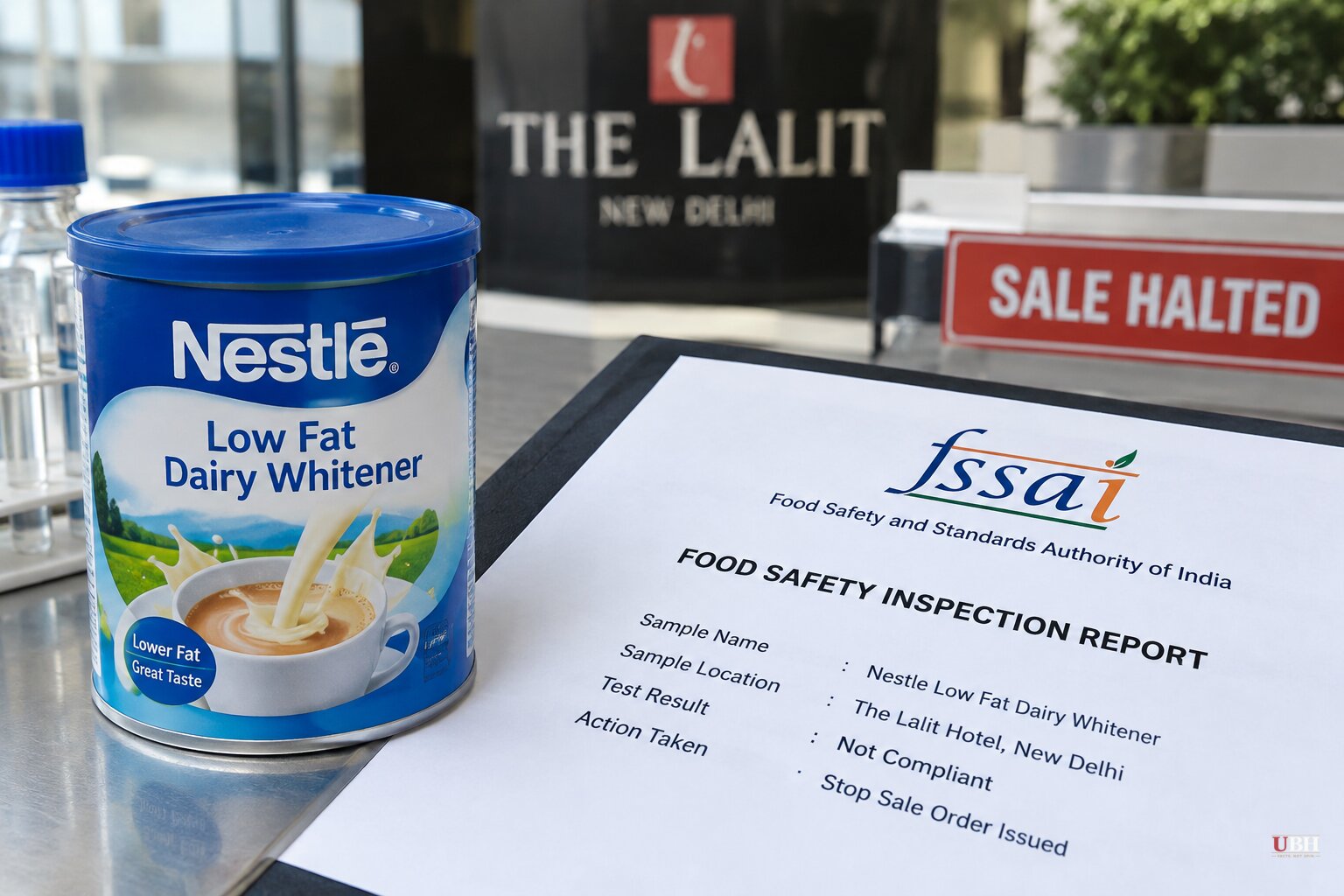
The Food Safety and Standards Authority of India flagged a sample of Nestle India's Low Fat Dairy Whitener as "unsafe" and "substandard" on Saturday, October 3, 2026, ordering the product pulled from sale at the location where it was collected.
FSSAI said in a post on X that the sample came from the premises of Bharat Hotels Ltd, which operates The Lalit in Connaught Place, New Delhi. A Food Analyst's laboratory report found the product non-compliant with the Food Safety and Standards Act, 2006, according to the regulator.
FSSAI said it provided a copy of the lab analysis to Nestle as the food business operator and issued a separate notice to Bharat Hotels over the non-compliant product. Both companies have a prescribed window under the FSS Act to appeal the Food Analyst's findings before further action proceeds.
FSSAI never specified which ingredient, contaminant, or parameter triggered the unsafe classification, as NDTV pointed out in its coverage. The public notice simply labeled the sample substandard and unsafe without technical detail.
Nestle itself filled that gap. In a statement carried by Business Standard and Rediff, Nestle India said its Low Fat Dairy Whitener "is safe to consume and complies with all applicable regulatory requirements," and pointed directly at phosphorus as the likely issue behind the finding.
"Phosphorus is a nutrient that occurs naturally in milk and is therefore present in all milk-based products," Nestle said, adding that FSSAI's lab reports measure total phosphorus against the limit set for added phosphorus, without separating out the phosphorus that occurs naturally in milk-based ingredients. The company said it is "in full compliance for added phosphorus as per prescribed limits under FSSR, including for as-consumed basis," and that it has been sharing data with authorities on similar products across the category to demonstrate the same natural-phosphorus effect.
Nestle's defense rests on a disputed measurement methodology rather than a claim of contamination or an admitted violation. FSSAI has not publicly responded to Nestle's phosphorus explanation, and no independent verification of either side's phosphorus math appears in the public record as of this writing.
The stop-sale order applies to the specific sample identified at The Lalit, not a nationwide recall. Commodity Board's CMB News noted that "publicly available information so far does not indicate a nationwide recall or a blanket" action against the product line, even as traders and food-service buyers watch for reputational spillover across India's dairy whitener and milk powder trade.
A single failed sample at one hotel is a narrower problem than a product-wide safety failure, and nothing in FSSAI's statement claims otherwise. Whether FSSAI tests additional retail or hospitality samples of the same product line is an open question the regulator hasn't addressed publicly.
This isn't FSSAI's first run-in with Nestle India this year. Business Standard and NDTV both noted that FSSAI initiated legal action against the company last month over non-compliance findings tied to infant formula products, including NAN Excella Pro Stage 1, Lactogen Pro 1, and a follow-up formula, along with promotional material the regulator examined on e-commerce platforms.
India.com framed Saturday's dairy whitener finding explicitly as "fresh FSSAI action weeks after infant formula controversy," tying the two episodes together as a pattern of regulatory scrutiny on Nestle's India operations rather than isolated incidents.
Bharat Hotels and Nestle both have a prescribed appeal window under Section 46 of the FSS Act to challenge the Food Analyst's report before the finding becomes final. Until that process plays out, the stop-sale directive stands at The Lalit.
Whether FSSAI widens its sampling to other hotels or retail outlets carrying the same dairy whitener product, and whether the agency responds to Nestle's phosphorus-measurement argument, remain unanswered questions. Neither FSSAI nor Nestle has indicated a timeline for resolving the dispute.
Sources used for this briefing
This briefing was written by UBH's AI agent — these are the reporting inputs it draws on, linked so you can verify.


