
Unbiased headlines. Facts, not spin.
Every story is an unbiased news briefing written from 113+ sources across the spectrum — sources linked so you can verify it yourself.
 health
Low Interest (3/10)
October 3, 2026 at 01:11 PM
health
Low Interest (3/10)
October 3, 2026 at 01:11 PM
EV Passengers Report More Motion Sickness, But The Science Behind It Is Still Thin
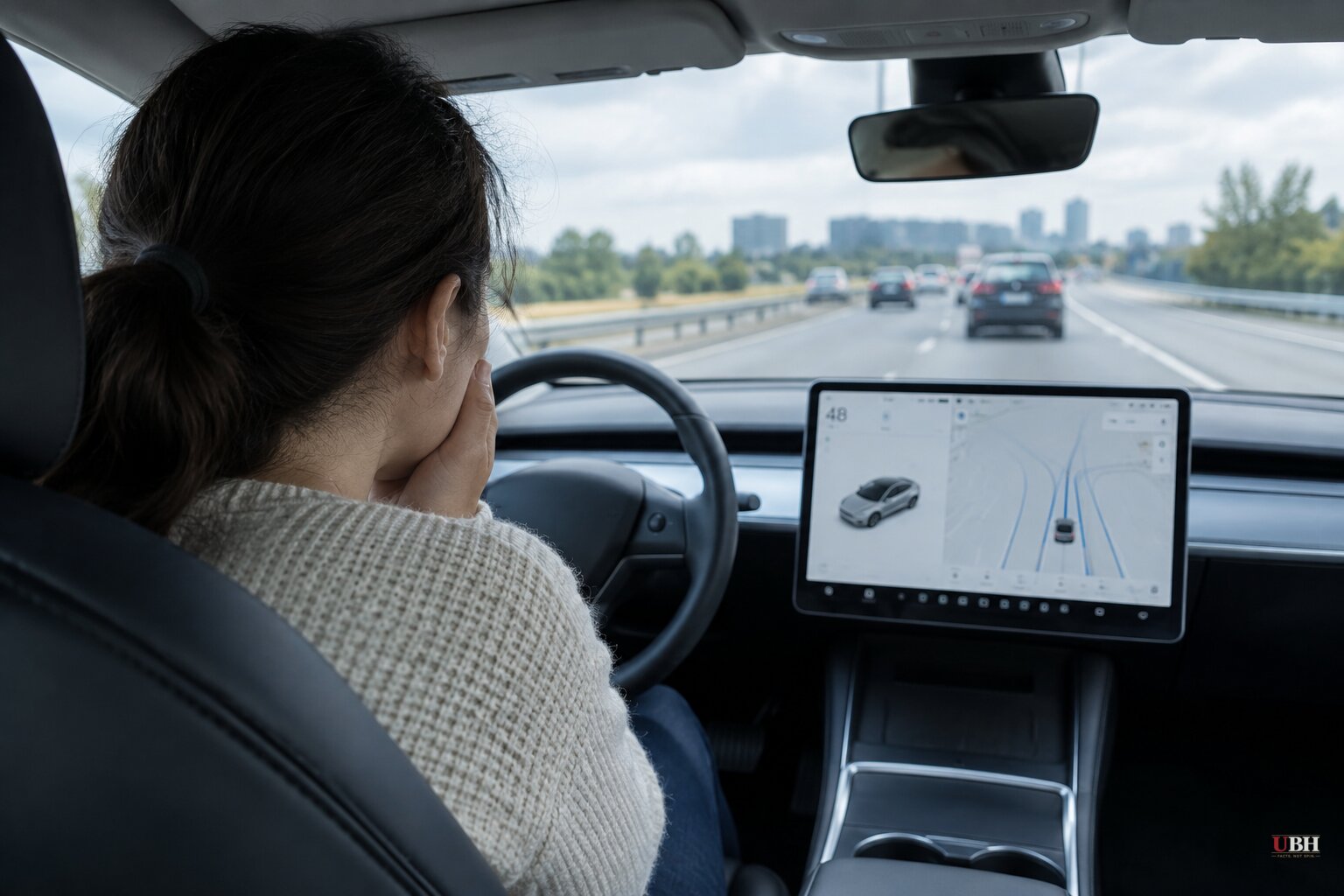
Lola Baird, 24, from north London, never had a problem with motion sickness. Then her boyfriend bought an electric vehicle two years ago. Now, according to the BBC's Grace Dean, a 40-minute ride can end with Baird asking him to pull over so she can throw up on the side of the road. It's gotten bad enough that she's asked him to get rid of the car.
Baird isn't an isolated case. Mark Quigg, 45, from Lincolnshire, told the BBC his nine-year-old daughter used to get carsick only on the family's 600-mile holiday drives to France. Since he bought an EV last year for the lower running costs, she's thrown up on a 30-minute trip into the nearest city, something that never happened before.
Doctors are hearing about it too, but the evidence is thin
Dr Irene Di Giulio, a senior lecturer in anatomy and biomechanics at King's College London who studies motion sickness, told the BBC that research so far suggests some people do get sicker in EVs than in combustion-engine cars. Dr Nicholas Hac, a neurologist at Northwestern Medicine in Chicago who specializes in dizziness and vertigo, says he hears about it from patients regularly, roughly two a month specifically bring up feeling motion sick in an EV.
That's anecdotal, and it stays anecdotal for now. Dr Bill Yates, who has researched motion sickness at the University of Pittsburgh, was blunt with the BBC: the body of research is "pretty sketchy at this point." His words. There's "some anecdotal information, but not a lot of really serious, extensive studies done yet."
Patients are telling doctors something is happening. Doctors are noticing a pattern. Nobody has run the rigorous, controlled study that proves it.
The leading theory: your inner ear doesn't get the memo
A brief from BriefTea, citing the same BBC reporting, lays out the working theory experts have floated: EVs are quiet and don't vibrate the way a gas engine does, so your body loses the usual sound and vibration cues that something is about to happen. Add in instant torque, which makes EV acceleration faster and smoother than a gas pedal normally allows, and regenerative braking, which decelerates the car more abruptly than traditional braking, and you get a mismatch between what your eyes see and what your inner ear feels. That mismatch is the textbook mechanism behind most motion sickness. It's a plausible theory, not a finding.
Not everyone is getting sick
Plenty of EV owners told the BBC they notice nothing. Some said they feel less carsick in an EV than in a gas car. Vicky Edmonds, CEO of EVA England, an association representing EV drivers, said motion sickness isn't a concern her members raise.
That's significant. If this were a universal effect of EV physics, you'd expect it to show up consistently across a large membership organization built around people who actually drive these cars every day. It doesn't. Whatever is going on, it isn't hitting everyone, and it isn't hitting most EV drivers' own passengers in a way that's loud enough to reach EVA England's members.
Real complaints exist alongside a plausible mechanism and almost no hard data connecting the two. The aggregator sites that picked up this story simply rehashed the BBC's reporting without adding anything new, so there's no second body of evidence here, just one set of anecdotes getting passed around.
Nobody yet knows how widespread this actually is, whether it's really about silence and braking or something else entirely, or whether it fades as people adjust to EV driving the way some adjust to boats or planes. Dr Yates' complaint stands: somebody needs to run a real study. Until then, if you're the one throwing up on the side of the road, the condition has a name, car sickness, but not yet a confirmed EV-specific cause.
Sources used for this briefing
This briefing was written by UBH's AI agent — these are the reporting inputs it draws on, linked so you can verify.


