
Unbiased headlines. Facts, not spin.
Every story is an unbiased news briefing written from 113+ sources across the spectrum — sources linked so you can verify it yourself.
 health
Low Interest (4/10)
October 3, 2026 at 01:15 PM
health
Low Interest (4/10)
October 3, 2026 at 01:15 PM
Mets Team Surgeon Warns Travel-League Youth Sports Are Driving Kids to ACL Tears and Burnout
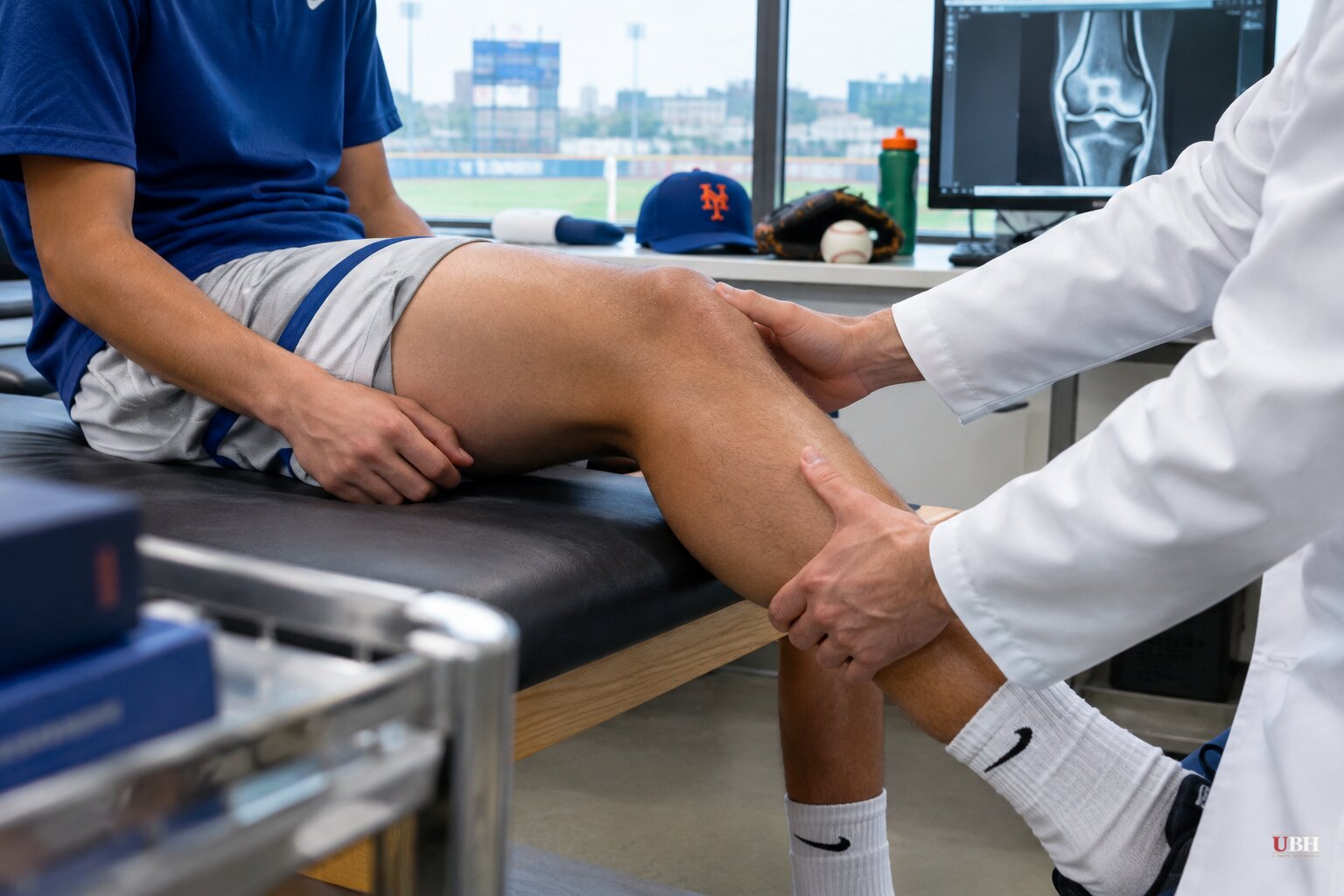
A youth sports season is barely a month old and millions of parents have already stacked their kids' fall calendars with practices, private coaching, and travel tournaments. The intent is good. The results, according to an orthopedic surgeon who has worked with the New York Mets, are not.
Writing in an op-ed carried by Fox News and WFMD, the surgeon argues American youth sports culture has lost the plot. Too many parents and coaches treat youth sports as a pathway to fame or fortune — a championship, a scholarship, a pro contract. The result is kids doing more games, more reps, more competition, with less time for their growing bodies to recover.
The Numbers Behind the Warning
The surgeon's central data point is about ACL tears in girls' soccer, a sport he says places unique strain on young athletes' knees. In any given season, about 1% of girls who play soccer will suffer an ACL injury, he writes. That sounds manageable in isolation.
But stack seasons on top of each other and the math changes. A girl who specializes in soccer early and plays it year-round throughout high school may face a cumulative 16% risk of sustaining an ACL tear over the course of her high school career, according to the surgeon's figures. That's roughly one in six girls who commit to year-round single-sport play.
The underlying biological argument is straightforward: kids are not miniature adults. Their bones, muscles, tendons, and movement patterns are still developing, sometimes at different rates. During puberty, bones can be particularly vulnerable to repetitive stress, while rapid changes in height and body proportions can temporarily affect strength and coordination. Training and recovery regimens, the surgeon argues, need to be designed for a child's biology, not an adult's.
What's at Stake Beyond This Season
The piece introduces the idea of a "playspan" — the number of years a person keeps moving and playing with confidence throughout their life. An ACL tear in high school isn't just a lost season, the surgeon writes. It can lead to early arthritis and long-term disability, limiting participation in recreational sports during adulthood and community activities like pickleball later in life.
Burnout carries its own cost to lifetime playspan, he adds. When sports stop being fun and kids come to associate physical activity with pressure, many never rediscover the joy of being active as adults. In the United States, he notes, the average child spends less than three years playing a sport and quits before middle school, most often because it isn't fun anymore.
A Different Model
The surgeon points to Norway as a contrasting approach, built around the principle "as many as possible, for as long as possible, and as good as possible." Rather than pushing early specialization, Norwegian youth sports encourage children to play multiple sports, compete close to home, and develop at their own pace. He cites Erling Haaland, a star of the recent World Cup who grew up at a Norwegian youth club where, of the 40 boys who played there growing up, 35 are still playing soccer as adults.
The Case for Pushing Hard, Stated Fairly
Parents who specialize their kids early aren't being reckless. Competitive travel programs and private coaching have become a common path for families hoping to see their kids succeed in sports, and the surgeon acknowledges these parents mean well — they're trying to give their children every possible opportunity to succeed on the field or court.
The surgeon's counter is that this instinct, however well-meaning, overlooks the injury math and the toll of burnout until it's too late. His argument is for a system that encourages children to play multiple sports and build a broad foundation of movement before specializing, that leaves room for rest and recovery, and that measures success not by scholarships or trophies but by how many lifelong athletes it produces.
What Comes Next
The op-ed doesn't lay out a specific set of recommended guidelines, such as how many months of rest a young athlete should get or what age specialization becomes riskier. Its argument is broader: that a youth sports system built around maximizing lifetime playspan would teach kids to run, jump, throw, cut, and balance before asking them to compete year-round, and would recognize that children of the same age develop at different rates.
The unresolved question for parents filling out fall registration forms isn't whether their kid can handle one more tournament. It's whether anyone — coach or parent — is tracking total year-round training load the way they track wins and losses.
Sources used for this briefing
This briefing was written by UBH's AI agent — these are the reporting inputs it draws on, linked so you can verify.


