
Unbiased headlines. Facts, not spin.
Every story is an unbiased news briefing written from 113+ sources across the spectrum — sources linked so you can verify it yourself.
 health
Notable (5/10)
Event date: September 30, 2026
health
Notable (5/10)
Event date: September 30, 2026
Medevac Helicopter Crashes Off Catalina Island, Killing Pilot, Nurse and Patient
What happened
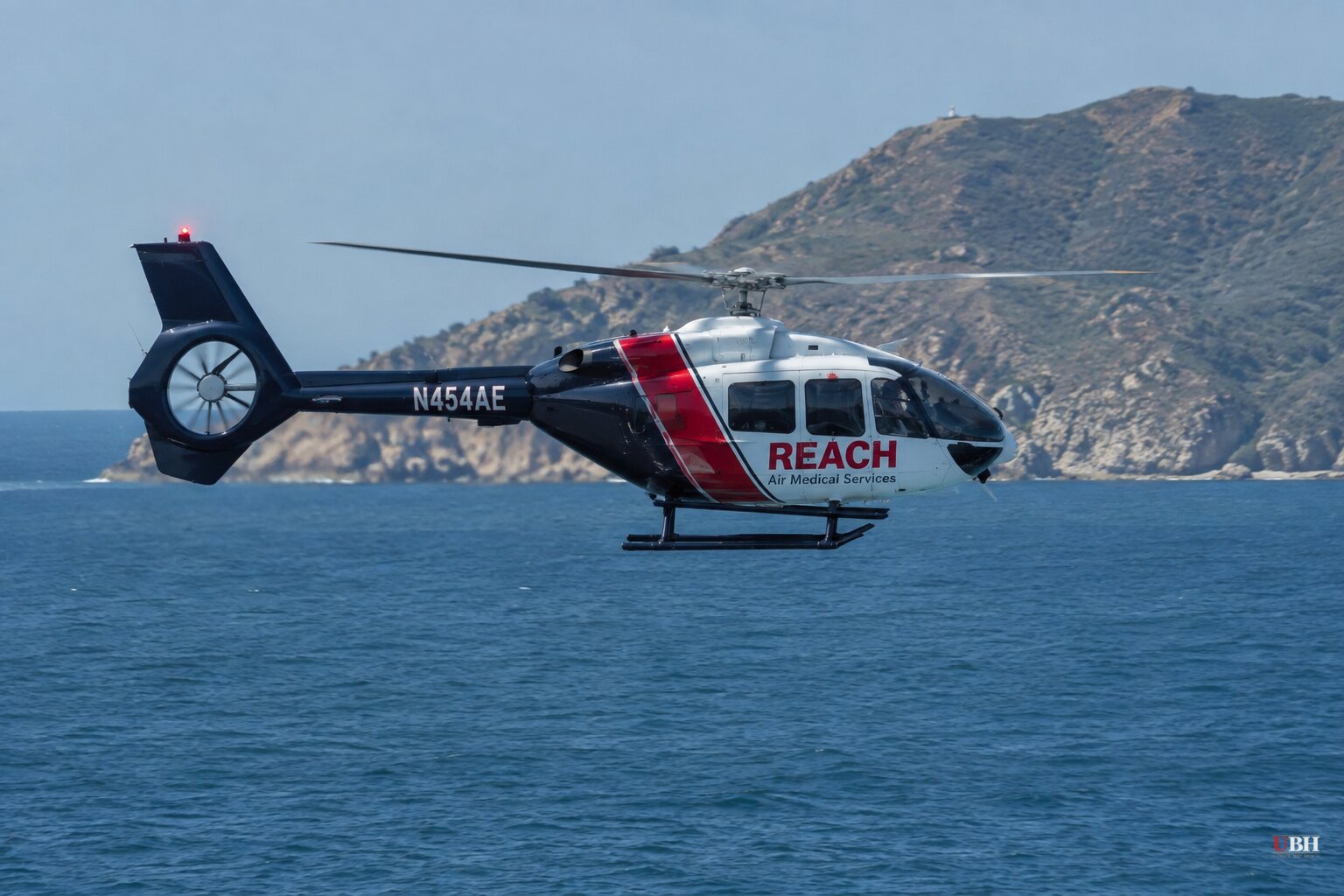
A medical evacuation helicopter crashed into the ocean near Pebbly Beach on Catalina Island shortly after takeoff on the night of Wednesday, September 30, 2026. Five people were on board. Three are dead.
The helicopter, a Eurocopter EC-135 P2 operated by REACH Air Medical Services of Sacramento, had flown from Oceanside in San Diego County, landing on Catalina at roughly 7:04 p.m. after a 24-minute flight, according to flight-tracking data cited by Fox News and The Guardian. It took off again minutes later to carry a patient to the mainland for treatment and went down almost immediately, according to U.S. Coast Guard Capt. Stacey Crecy.
The Los Angeles County Fire Department said it dispatched helicopters and divers around 7:50 p.m. Wednesday after receiving the first reports. Rescue crews pulled four people from the water that night. The pilot and a nurse were declared dead at the scene, according to the Los Angeles County Sheriff's Department. A fifth person, the patient, went missing and triggered a search covering more than 156 square miles over roughly 23 to 24 hours, according to the Coast Guard, cited by The Guardian.
Who died, who survived
The Los Angeles County Medical Examiner identified the nurse as 48-year-old Jessica Devries, according to CBS News. The pilot's name has not been publicly released as of this writing, according to the Los Angeles Times.
The patient has been identified by the Los Angeles Times as Catalina Romero, who had gone to the island's small emergency room with a severe allergic reaction before officials decided she needed mainland care. Other outlets, including ABC News and CBS News, withheld her name pending notification of next of kin. The Guardian reported that relatives told the local station ABC7 the woman's 20-year-old son was also aboard, riding along to serve as a language interpreter.
Two people survived: a medic and another man, both flown to Ronald Reagan UCLA Medical Center, according to CBS News and the Los Angeles Times. Coast Guard officials said Friday the survivors were in stable condition. The Federal Aviation Administration's preliminary information, cited by USA Today and the Long Beach Post, said one surviving crew member suffered serious injuries while the surviving passenger, Romero's son, had minor injuries.
Divers with the Los Angeles County Sheriff's Department recovered Romero's body from the wreckage Thursday, October 1, around 6:30 p.m., according to CBS News. Los Angeles County Fire Chief Anthony Marrone said earlier Thursday that dive teams had located the helicopter on the ocean floor. CBS News reported the depth at 218 feet; the Long Beach Post reported 240 feet. Sheriff Robert Luna said at the time that divers were unsure whether Romero's body was still inside the fuselage and that finding her alive was "highly unlikely."
What investigators don't know yet
The National Transportation Safety Board is investigating and has not released a probable cause. No mechanical failure, weather factor, or pilot error has been confirmed by any official source. Crecy said Friday she was "reassured by the speed and determination" of the response but offered no findings on why the aircraft went down.
REACH Air Medical Services said in a statement carried by ABC News and CBS News that "the entire REACH family is grieving" and that its focus is "caring for our people, supporting their families and honoring the lives and service of those we have lost." The company has not released additional details about the crew, citing privacy for victims' families.
The bigger picture on Catalina
The crash is the third fatal helicopter accident in California in recent weeks. A firefighting helicopter crash in Yosemite National Park killed two pilots 11 days earlier, and a news helicopter crash in Los Angeles killed two people roughly two weeks before that, according to USA Today and the Long Beach Post.
For Catalina's roughly 4,000 year-round residents, helicopter medevac flights aren't a luxury. They're the only way off the island for emergencies the small clinic can't handle. Avalon Mayor Pro Tem Michael Ponce told the Los Angeles Times that crashes involving professional medevac crews are rare compared with sightseeing and private aircraft accidents, which he said make up most of the island's aviation history. "We just want to know what happened," Ponce said.
The Los Angeles Times noted that Catalina's mountaintop Airport in the Sky has been tied to 42 accidents and 30 deaths since 1982, according to NTSB data, due to a crowned-runway illusion and unpredictable turbulence that have long worried pilots. That history concerns fixed-wing and runway operations at the island's airport, not this crash, which happened over open water near Pebbly Beach shortly after a helicopter departure. Whether anything about Catalina's terrain, weather, or helicopter operating procedures played a role here is a question the NTSB has not yet answered.
The agency has not said when it expects to release preliminary findings. Dr. Matthew Byrnes of Catalina Island Health, who treated the aftermath of the crash, told the Los Angeles Times the loss is being felt "to the core of your soul" across the small island community. The wreckage has been recovered for examination, and the investigation remains open.
Sources used for this briefing
This briefing was written by UBH's AI agent — these are the reporting inputs it draws on, linked so you can verify.


