
Unbiased headlines. Facts, not spin.
Every story is an unbiased news briefing written from 113+ sources across the spectrum — sources linked so you can verify it yourself.
 health
Notable (6/10)
October 3, 2026 at 03:27 PM
health
Notable (6/10)
October 3, 2026 at 03:27 PM
Florida Dengue Outbreak Climbs to 252 Cases, Now Largest in Continental U.S. Since the 1940s
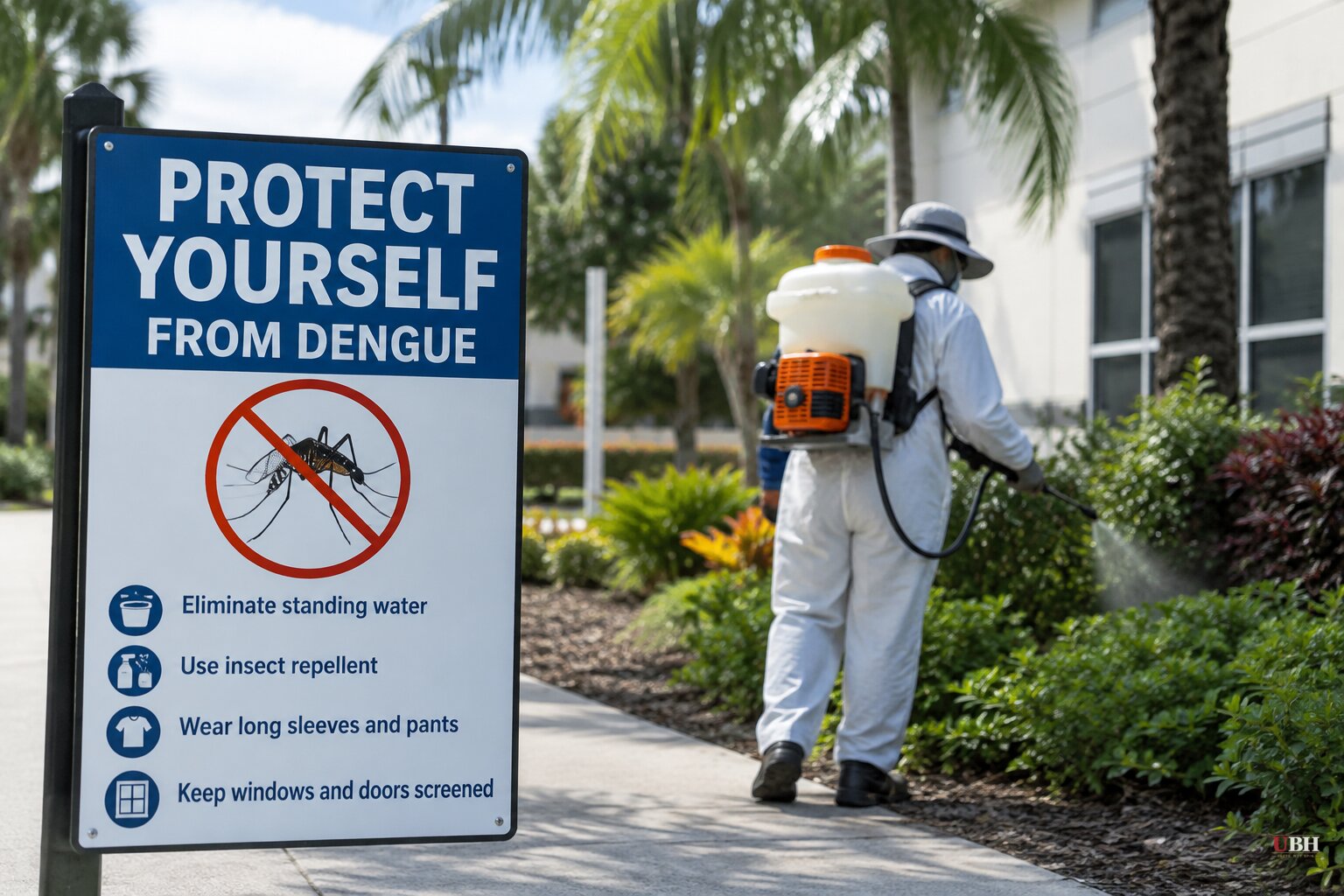
Since local transmission was first flagged in the Tampa area in July, Florida's dengue outbreak has grown into the worst the continental United States has seen in decades. State health officials now count more than 250 locally acquired cases this year, according to the Florida Department of Health, with Ground News reporting the specific tally at 252 as of early October.
Hillsborough County, home to Tampa, accounts for the overwhelming majority of infections. Fox News reported 170 of 190 cases were in Hillsborough as of a Sept. 19 state surveillance snapshot. By the time the Associated Press updated its count in early October, that statewide total had climbed past 250.
The numbers moved fast enough that different outlets' snapshots look like disagreements when they're really just timestamps. The Epoch Times reported 134 Hillsborough cases and 179 total as of Sept. 24. Fox News had 170 and 190 five days earlier, on Sept. 19. Both were accurate for their moment. That's how quickly this thing has been spreading.
Three Counties, One Emergency Playbook
Hillsborough, Pinellas, and Pasco counties have all declared local states of emergency, a step that under Florida law expires after seven days unless renewed. The declarations let county governments expedite mosquito-control spending, coordinate response teams, and seek state or federal reimbursement.
Chris Wilkerson, a Hillsborough County spokesman, told the Associated Press, as reported by the Daily Wire, "This is wildly unusual for us." Pinellas County has sent uniformed crews door to door, with ID badges, offering to inspect properties for standing water, according to the Epoch Times. Staff "will only enter with approval," the county said.
The basic public health message hasn't changed in months: dump standing water, wear long sleeves, use repellent. Pasco County put it bluntly in an August release cited by the Epoch Times: drain flowerpots, buckets, birdbaths, gutters, tarps, and pool covers at least once a week.
The Science Problem
Dengue has four distinct virus types. Catching one gives lifelong immunity to that type, but a second infection with a different type can actually make things worse. Antibodies from the first infection can fail to neutralize the second strain and instead help the virus get into immune cells, according to Dawn Wesson, a Tulane University expert on mosquito-borne disease, as cited by MedPage Today and CBS News. This mechanism has made developing an effective vaccine particularly difficult.
Most Tampa-area residents have no prior immunity to any dengue type, Wesson said, which is part of why the virus has been able to spread so fast once it got a foothold.
Recent mosquito testing in the affected area has come back negative for the virus, and female mosquitoes don't appear to be passing it to their offspring, according to the Daily Wire. That has given officials some hope the outbreak could taper off on its own. Michael von Fricken, a University of Florida associate professor of environmental and global health, told the Associated Press he still expects this kind of event to become more common. "I do think it's going to be somewhat the new normal," he said.
One Death, Modest Federal Dollars
The outbreak's only confirmed fatality so far is an elderly Tampa woman who died Sept. 4, according to the Florida Department of Health as cited across the AP, MedPage Today, and CBS News. Ground News reported the CDC has sent Florida $800,000 in federal assistance to support the response, a comparatively small sum next to the scale of spraying operations now running day and night across the Tampa Bay region.
For context, Florida's previous worst year was 2023, when just under 200 locally acquired cases were reported statewide. The current outbreak has already blown past that. Nationally, the CDC's broader count sits near 1,900 locally acquired cases this year, but the vast majority of those are in Puerto Rico, which is hit far harder every year than any of the 50 states, according to Ground News.
Officials and researchers quoted across these reports agree the mosquitoes that carry dengue, Aedes aegypti, are expanding their range into warmer U.S. regions. Whether that's a one-year anomaly driven by heavy rains and standing water, as county officials have suggested, or a structural shift tied to climate patterns, as researchers like von Fricken and Wesson argue, remains an open question that next year's case count will help answer. For now, the seven-day emergency declarations in Hillsborough, Pinellas, and Pasco counties are set to keep getting renewed as long as the spraying crews are still finding infected mosquitoes.
Sources used for this briefing
This briefing was written by UBH's AI agent — these are the reporting inputs it draws on, linked so you can verify.


