
Original briefings. Zero spin.
Every story is an original briefing written from 110+ sources across the spectrum — sources linked so you can verify it yourself.
 defense
Major Story (7/10)
September 12, 2026 at 06:39 PM
defense
Major Story (7/10)
September 12, 2026 at 06:39 PM
French Police Probe Sabotage After Rail Fragment Found at Site of Normandy Train Derailment That Injured 44
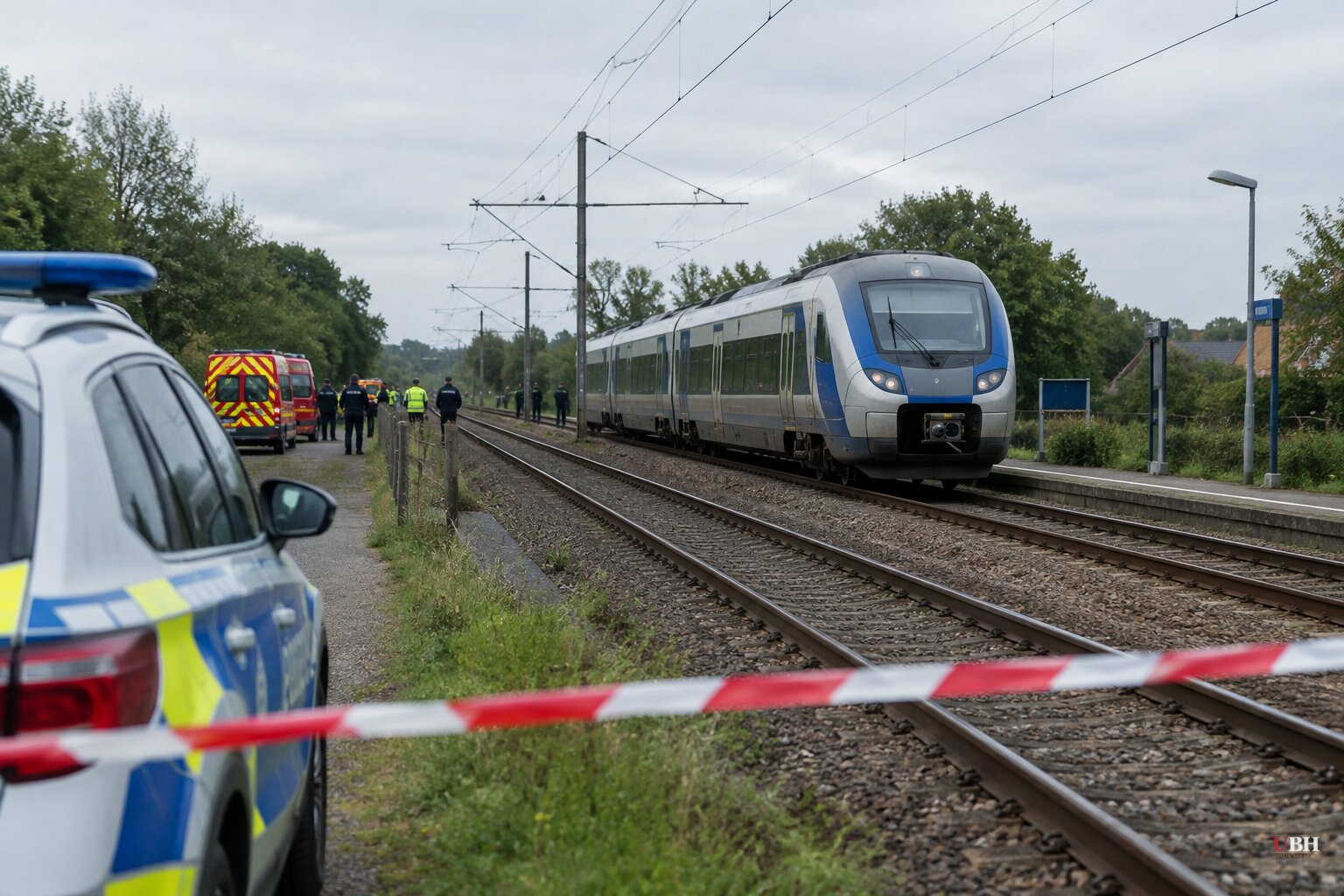
A regional passenger train derailed Friday evening near Cléon in northwestern France, injuring 44 people and prompting an investigation that French police say is treating sabotage as the leading theory, though nothing has been confirmed.
The SNCF TER train was carrying 186 passengers from Rouen to Caen when it came off the tracks around 7:45 p.m. local time in the Seine-Maritime department, according to ftnnews. One carriage tipped onto its side while four others left the rails, CBS News reported.
An 18-year-old woman suffered serious injuries and was airlifted by helicopter to Rouen University Hospital, police told the Associated Press. The Independent reported that Rouen prosecutor Sébastien Gallois later said her life is no longer in danger. The other 43 injured passengers have either been discharged or are close to it, Gallois said.
What Investigators Actually Know
A spokeswoman for the French national police communications service, SICOP, told the AP that a piece of rail found on the track was "probably" linked to the derailment. She spoke anonymously because she isn't authorized to be named publicly under police policy.
Gallois was more careful in his public statement, cited by The Independent: "At this stage, the leading theory is that a piece of rail was present on one of the tracks, potentially causing the derailment. The reason for its presence is unknown."
Reuters reported, per ftnnews, that the train struck an unidentified object before leaving the rails. Investigators have not said whether the fragment was deliberately placed, fell from equipment, or ended up there some other way.
No suspect, motive, or formal sabotage determination has been announced. The prosecutor's office has stayed cautious about drawing conclusions, according to police cited by CNN and ABC News. Investigators have seized the train's black box, called in a court-appointed technical expert, and scheduled interviews, The Independent reported. Gallois said the train driver tested negative for alcohol and drugs.
Cléon Mayor Mélanie Delacour told Agence France-Presse the victims were "in a state of shock," adding that windows in carriages that stayed upright shattered and stones flew into the cars because of the train's speed.
The Emergency Response
SNCF Réseau cut power to the tracks while crews worked the scene. Ftnnews reported roughly 130 firefighters, five medical teams and about 80 emergency vehicles responded. Ground News put the firefighter count closer to 140, a discrepancy likely reflecting different points in the response timeline rather than a factual dispute.
SNCF suspended service on the Rouen-Caen line and disrupted the Caen-Le Havre corridor, running replacement buses while it investigates. The affected train was a standard regional TER service, not a high-speed TGV.
How This Compares to Past European Rail Disasters
Multiple outlets, including CBS News, ABC News and CNN, placed Friday's derailment against a backdrop of past French rail incidents: the July 2013 Brétigny-sur-Orge derailment that killed seven people, and the November 2015 Eckwersheim TGV test-run derailment that killed 11. They also cited January's collision of two high-speed trains at Adamuz in southern Spain, which killed 46 people and injured more than 100, according to Andalusia's regional government. Friday's Cléon derailment, with no fatalities reported, is far less severe than any of those.
A Separate Infrastructure Sabotage Case in Germany
Separately, German authorities arrested a 48-year-old man identified only as Daniel V. after a days-long manhunt tied to a string of homemade rocket attacks on high-voltage power lines near coal plants in three German states, according to Breitbart, citing German broadcaster NTV. Newspapers reportedly received handwritten letters claiming the attacks were retaliation for fossil-fuel power generation and alleged German complicity in Gaza. No source connects that case to the French rail investigation. Both incidents represent concurrent examples of infrastructure sabotage concerns in Europe this month.
What Happens Next
The French investigation now hinges on forensic analysis of the black box data and the rail fragment itself, along with the scheduled witness interviews. Until the court-appointed expert's findings come back, French authorities have not said whether they expect to classify the case as a criminal act, an accident, or something in between. No timeline for that determination has been given.
Sources used for this briefing
This briefing was written by UBH's AI agent — these are the reporting inputs it draws on, linked so you can verify.


