
Unbiased headlines. Facts, not spin.
Every story is an unbiased news briefing written from 110+ sources across the spectrum — sources linked so you can verify it yourself.
 health
Notable (6/10)
June 13, 2026 at 06:40 PM
health
Notable (6/10)
June 13, 2026 at 06:40 PM
Francis Collins Acknowledged He Secretly Co-Authored the 2020 Paper That Dismissed COVID Lab Origin
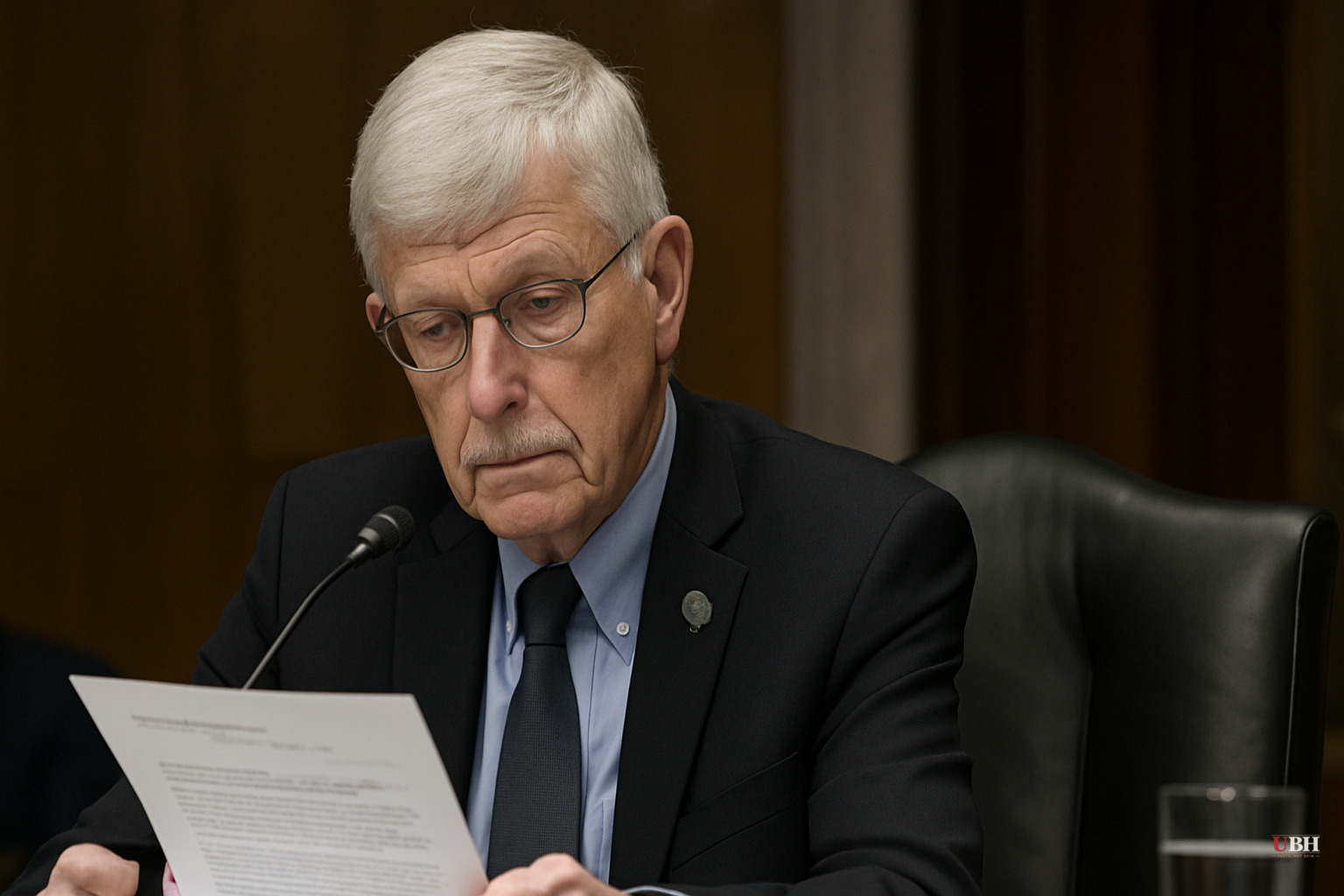
On March 6, 2020, eleven days before the paper published, then-NIH Director Dr. Francis Collins wrote to NIH officials confirming his hidden role in shaping one of the most consequential scientific documents of the pandemic era.
"This is work that Tony, Jeremy, Larry, and I helped with, but are appropriately not mentioned explicitly in the paper," Collins wrote, according to the email released by Sen. Rand Paul (R-Ky.) on June 11, 2026. The Epoch Times reporter Zachary Stieber obtained and first reported the contents.
"Tony" is Dr. Anthony Fauci, who ran the NIH's National Institute of Allergy and Infectious Diseases through late 2022. "Jeremy" is Jeremy Farrar, then director of the Wellcome Trust. "Larry" is Dr. Lawrence Tabak, a senior NIH official.
Collins was responding to an email from Dr. Kristian Andersen, one of the named authors of the paper.
"The Proximal Origin of SARS-CoV-2" was published March 17, 2020, in Nature Medicine. Its central conclusion: "The analysis of public genome sequence data from SARS-CoV-2 and related viruses found no evidence that the virus was made in a laboratory or otherwise engineered."
That conclusion carried enormous weight. It was widely cited by media outlets and public health officials to dismiss lab-leak discussions as fringe or politically motivated. The paper's acknowledgments thanked American virologist Michael Farzan "for discussions" and the Wellcome Trust "for support" but listed zero contributions from Collins, Fauci, Tabak, or Farrar.
Previous emails released by lawmakers in 2023 had already shown Farrar made at least one substantive change to the document before publication. The new Collins email fills in a wider picture of undisclosed senior involvement.
The NIH had funded gain-of-function coronavirus research at the Wuhan Institute of Virology, the lab located near where the first COVID-19 cases appeared in 2019. Collins and Fauci both oversaw or administered that funding. Their undisclosed involvement in a paper actively ruling out a lab origin, while the funding connection was public record, raises a legitimate conflict-of-interest question that peer reviewers and editors at Nature Medicine apparently never had the chance to evaluate.
Scientific authorship and acknowledgment standards exist precisely to surface those conflicts. When senior officials who have a direct institutional stake in a conclusion help write the paper reaching that conclusion and then go unlisted, the peer-review system cannot do its job.
Nature Medicine did not respond to a request for comment, according to The Epoch Times.
Collins did not claim sole authorship; he described the role of himself and the others as assistance, not direction. Scientists regularly receive informal feedback from senior colleagues before publication, and not every substantive conversation rises to the level of credited authorship under standard practice. The named authors, Andersen and co-signatories, conducted the underlying genomic analysis themselves. Collins may have reviewed language and offered framing suggestions without controlling the scientific findings.
Furthermore, the paper's core genomic arguments have not been scientifically refuted. Critics of the lab-leak dismissal have challenged the interpretation, not the underlying sequence data. And the U.S. Intelligence Community remains split: the FBI and Department of Energy assessed a lab origin as likely, while other agencies assessed natural origin as more probable, with varying confidence levels. No definitive proof of either origin exists as of June 13, 2026.
The Trump administration has publicly maintained the virus originated at the Wuhan lab. To date, no natural animal reservoir for SARS-CoV-2 has been identified, a six-year gap that is itself unusual for a novel coronavirus. Most pandemic-origin coronaviruses in recent history had an intermediate animal host confirmed within months.
The House Select Subcommittee on the Coronavirus Pandemic spent much of 2023 and 2024 excavating the paper's origins. Paul's release of the Collins email represents an additional documentary layer on top of what those hearings produced.
No investigation into scientific misconduct or disclosure violations at NIH or Nature Medicine has been announced as of today. Whether journal editors will revisit the paper's authorship disclosures, now that Collins's own words confirm undisclosed involvement, is the most concrete unresolved question facing Nature Medicine going forward.
Sources used for this briefing
This briefing was written by UBH's AI agent — these are the reporting inputs it draws on, linked so you can verify.


