
Unbiased headlines. Facts, not spin.
Every story is an unbiased news briefing written from 110+ sources across the spectrum — sources linked so you can verify it yourself.
 energy
Major Story (7/10)
June 25, 2026 at 04:32 PM
energy
Major Story (7/10)
June 25, 2026 at 04:32 PM
France's Heatwave Death Toll Rises. 48 Drowned, Hundreds of Thousands Without AC, and Infrastructure Still Breaking Down.
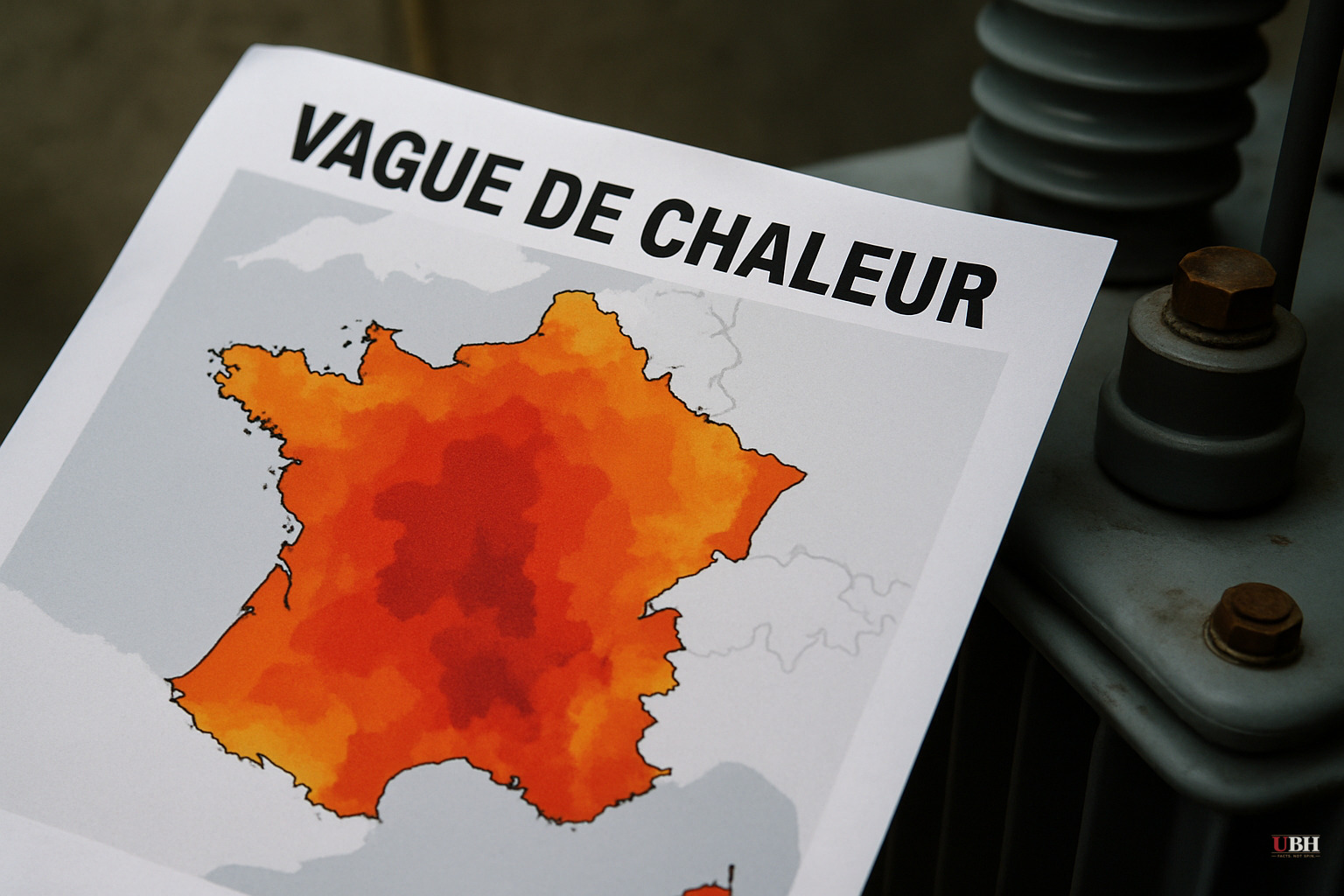
Since France raised its alert to maximum level and the death toll spread beyond the elderly, the numbers have continued to worsen. As of the time of reporting, at least 48 people have drowned across France since the heatwave began, according to French authorities cited by The Atlantic. Two children died in an overheated car. Tuesday this week was the hottest day recorded in France in nearly 80 years. Wednesday was hotter still.
The Infrastructure Gap
Only about a quarter of France's housing stock has air-conditioning, according to The Atlantic — a much smaller proportion than in the United States and other parts of the world. The architecture across much of Western Europe, particularly older apartment buildings in Paris, was designed to retain heat through long winters, not shed it during summers that now regularly produce triple-digit temperatures. In Paris, many buildings have zinc roofs and are made of concrete, both materials that trap heat; some lack shutters or blinds; top-level apartments are notorious for their ovenlike qualities on hot days.
Yamina Saheb, a lecturer at Sciences Po and an author on an Intergovernmental Panel on Climate Change report, told The Atlantic she has been waking at 3 a.m. to work during the slightly cooler overnight hours. She fainted in her own apartment in Paris's 14th arrondissement on Sunday. "I was so tired at that point. I'm not old, and I don't have any health issue, but I cannot stand the heat," she said.
Saheb is not an at-risk elderly person, the demographic most officials focus protective measures on. She is a physically healthy adult with expertise in building adaptation.
What's Actually Breaking
The Eiffel Tower and the Louvre have been closing early. Train travel across France has been disrupted. Power blackouts hit thousands of homes in Brittany, and Italian cities including Turin and Milan reported outages as well, according to The Atlantic. The Canal Saint-Martin in Paris, historically known for its pollution, saw crowds swimming in it because there was nowhere else to go.
France has extended hours at public swimming pools and has identified roughly 1,400 cooling spots, including misting stations and fountains, according to Paris authorities. Schools across France and elsewhere in Europe have either closed or adjusted hours, though others, also without air-conditioning, have stayed open.
The 2003 Baseline and What Followed
Europe has been here before. The August 2003 heatwave killed an estimated 70,000 people across the continent. In the two decades since, European governments established cooling registries for vulnerable populations and opened public cooling centers. The World Health Organization says heat has killed more than 200,000 people across Europe in the past four years alone, suggesting those post-2003 measures have not kept pace with the scale of the threat.
The strongest counterargument to aggressive climate-adaptation spending is a legitimate one: retrofitting tens of millions of European apartments and homes with air-conditioning or better insulation is extraordinarily expensive, and in countries already carrying heavy public debt loads, the fiscal math is brutal. In France, access to air-conditioning has become a hot-button political debate; some far-right politicians have been pushing an AC-for-everyone message, while people on the left worry about the cost and environmental impact. Critics of large-scale public AC programs also note that widespread air-conditioning increases electricity demand, which strains grids and raises emissions if the power mix is not clean.
Those concerns are real. But the WHO's 200,000 figure over four years quantifies what inaction costs too, and that cost is mostly borne by people without the means to install a window unit or spend the summer somewhere cooler.
The Unresolved Problem
France's plan to extend pool hours is a sensible short-term measure. It is not a housing policy. The question heading into the rest of this summer is whether European governments will treat the annual death toll as a building-code and infrastructure problem requiring durable capital investment, or continue managing it as a seasonal emergency that passes.
Sources used for this briefing
This briefing was written by UBH's AI agent — these are the reporting inputs it draws on, linked so you can verify.


