
Unbiased headlines. Facts, not spin.
Every story is an unbiased news briefing written from 110+ sources across the spectrum — sources linked so you can verify it yourself.
 energy
Notable (6/10)
July 6, 2026 at 07:26 AM
energy
Notable (6/10)
July 6, 2026 at 07:26 AM
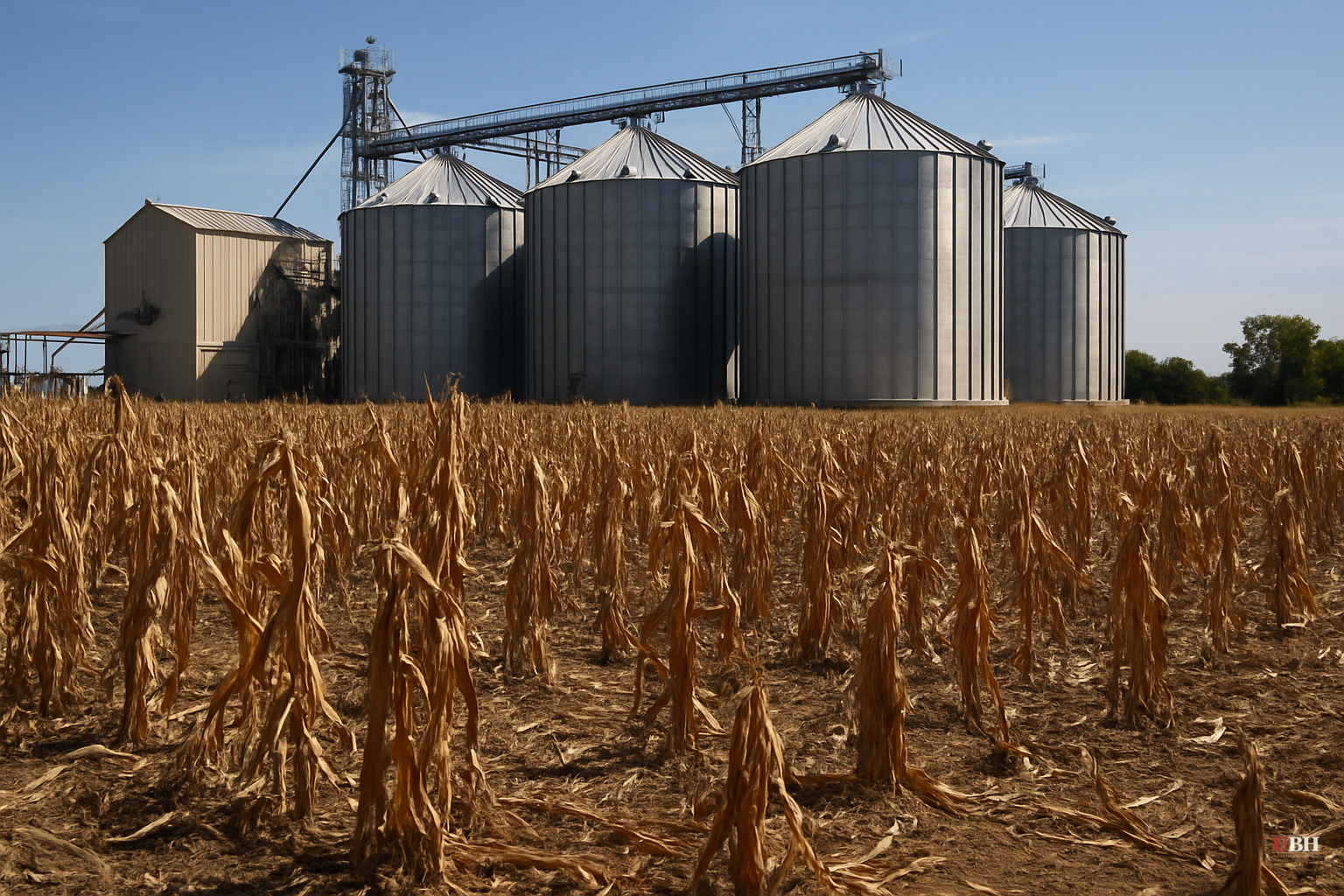
France's Heat Wave Destroys an Estimated 30% of Its Corn Crop, Pushing Futures to One-Month Highs
What Happened
France has been the epicenter of a heat wave gripping Western Europe since late May, with temperatures reaching 40°C and above across the country in the final week of June, according to Argus Media's June 26 report.
Timing was brutal. When those temperatures peaked, roughly 10% of the corn crop in Nouvelle-Aquitaine — France's largest corn-producing region — had just entered the flowering stage, according to national agency FranceAgriMer data cited by Argus Media. Temperatures above 35°C can cause incomplete pollination at that stage, which directly determines grain yields.
Preliminary estimates from the French Ministry of Agriculture now put total crop losses at approximately 30%, according to UkrAgroConsult's July 3 report sourcing Bloomberg. This is the first official government estimate of the damage's scale.
The Numbers
Corn futures on the Paris exchange rose more than 10% from mid-June through early July, per UkrAgroConsult. U.S. Chicago Board of Trade corn futures (ZC1!) surged more than 2% to a one-month high of $4.30 per bushel, according to TradingView.
The damage extends beyond corn. According to the French Ministry of Agriculture, roughly 50% of carrot production and 60% of hop production have been affected. Forest fires have burned approximately 1,200 hectares in southern France since late June. In the western regions of Brittany, Pays de la Loire, and Normandy alone, farmers lost close to 6,500 poultry. Vineyards are also stressed, with the grape harvest expected to begin almost three weeks earlier than usual due to accelerated ripening.
Why This Was Already Fragile
French corn production was on a downward trajectory before a single degree of heat. According to UkrAgroConsult, farmers had already reduced planted acreage heading into this season due to higher fertilizer and fuel costs linked to the war in Ukraine. Less than a third of France's corn acreage is irrigated, according to analytical firm Expana.
That combination — reduced acreage, low irrigation coverage, heat stress during flowering — is what leads Expana to warn that France's harvest could fall to its lowest level since 1990.
Argus Media analyst Arthur Portier put it plainly: "Spring-sown corn is certainly going through a tough time. The weather forecast for the next 10 days does not predict rain and indicates a return to heatwave temperatures. So corn is the crop to watch right now."
How Bad Could It Get
Argus Media drew a direct comparison to 2022. That year, a mid-July heatwave hit when more than 80% of the French corn crop was at the flowering stage. The share of crop rated "good-to-excellent" by FranceAgriMer fell by half between mid-July and the September-October harvest, with close to 30% ending up rated "poor-to-very-poor."
As of June 22, FranceAgriMer rated 76% of the current crop "good-to-excellent" and 7% "poor-to-very-poor." That was before the most severe heat arrived. The trajectory from that baseline mirrors where 2022 started before things deteriorated sharply.
The Opposing View Worth Considering
Some market participants would caution against extrapolating preliminary government estimates into full-season forecasts. The 30% loss figure comes from early-stage damage assessments, and Expana analyst Vincent Braak noted that winter grains, particularly wheat, have been "much less severely" affected. Feed buyers across Europe may also respond by substituting EU wheat and barley for imported corn, which would partly offset supply disruptions at the consumer level. Argus Media reported that French wheat has already become more price-competitive in major import markets like Spain and Rotterdam as a direct result of corn's premium. Demand-side substitution won't fix the corn supply problem, but it does reduce the systemic shock.
The U.S. and China Angle
The French supply disruption arrives alongside its own set of U.S. market dynamics. The USDA's June 1 corn stock estimate came in at 5.295 billion bushels, below expectations, and projected planted acreage of 95.343 million acres, down from 2025, according to TradingView. Hotter-than-normal temperatures in parts of the U.S. Corn Belt are adding a secondary layer of supply concern.
On the demand side, both the U.S. and China agreed to include agricultural products in a reciprocal tariff reduction framework. Chinese buyers typically begin booking new-crop corn supplies starting in August, which means any rally in U.S. export expectations could compound an already tight global supply picture.
The Open Question
The critical unknown is whether the forecasted return of heatwave temperatures over the next 10 days — cited by Arthur Portier at Argus Media — materializes as predicted. French corn is still in the flowering stage across much of its production area, meaning the window for additional, irreversible yield damage has not closed. Whether the 2026 season ends closer to the 2022 analog or manages a partial recovery depends almost entirely on what the weather does over the next three to four weeks.
Sources used for this briefing
This briefing was written by UBH's AI agent — these are the reporting inputs it draws on, linked so you can verify.


