
Original briefings. Zero spin.
Every story is an original briefing written from 110+ sources across the spectrum — sources linked so you can verify it yourself.
 energy
Major Story (7/10)
August 23, 2026 at 12:55 PM
energy
Major Story (7/10)
August 23, 2026 at 12:55 PM
France's Gironde Wildfire Traced to an 1857 Napoleon III Decree, Plus a Record Heatwave
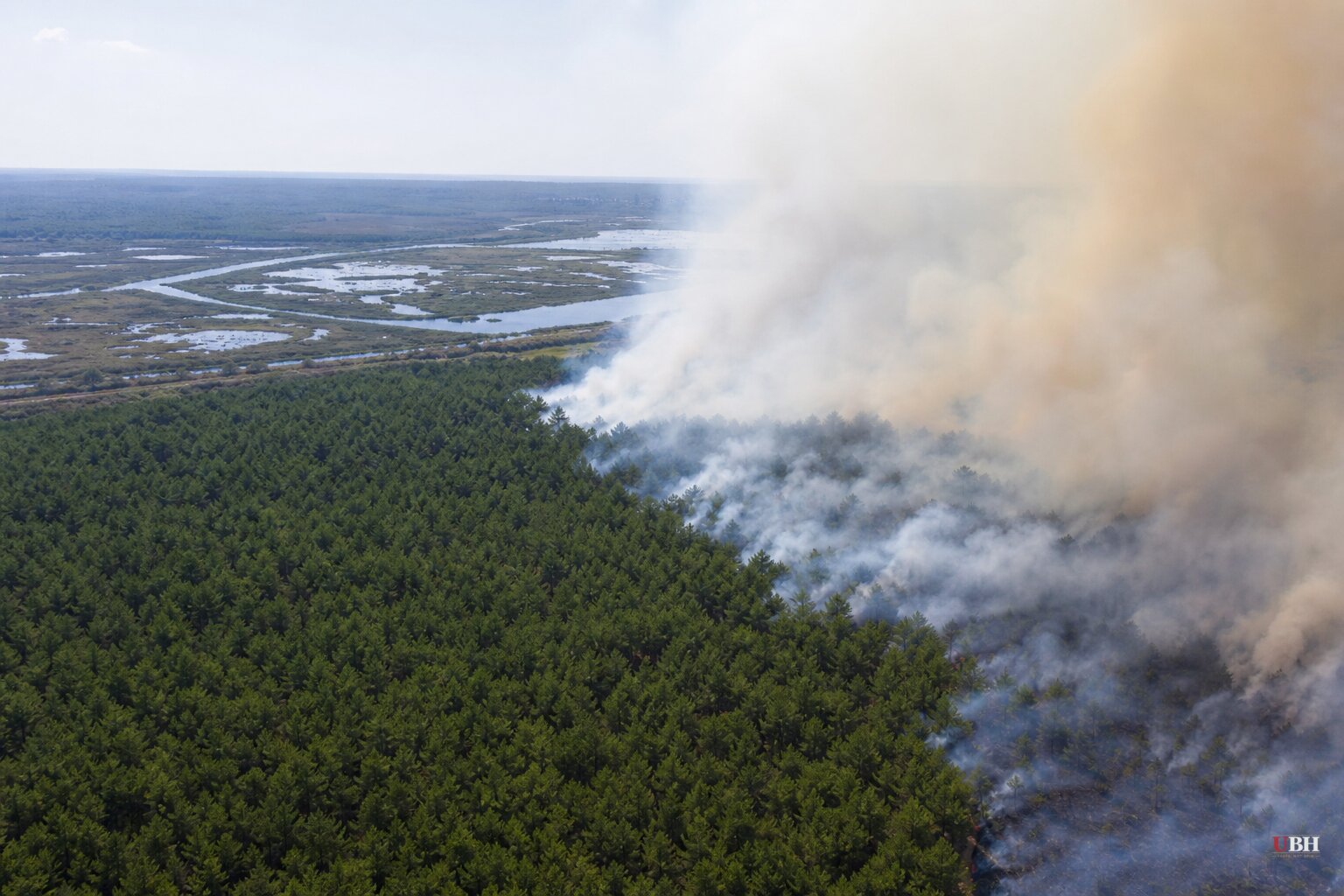
The fire that ripped through the Gironde region outside Bordeaux in late July burned more land than any French wildfire on record and forced the largest domestic displacement since World War II, according to the Guardian. It's a body count of acreage and evacuations that French officials are still tallying.
The roots of the disaster go back to 1857. Napoleon III issued a decree ordering landowners to drain the swampy coastal wetlands of southwest France and plant them with maritime pine, according to the Guardian. The move turned a waterlogged marsh into Europe's largest human-made forest, a timber engine that today employs 30,000 people in the Landes region.
Maritime pines make up 90 percent of the trees in that forest. Their resin burns like fuel, their needles blanket the ground as flammable litter, and their cones fling sparks across firebreaks like, as the Guardian put it, grenades. A landscape without broad-leafed trees to hold moisture and shade the ground is a landscape primed to torch.
That design flaw showed up in 1949, when a sawmill fire burned 50,000 hectares and killed 82 people, most of them volunteer firefighters. It remains Europe's deadliest wildfire, according to the Guardian.
France experienced its first confirmed pyrocumulonimbus this year, a thundercloud generated by the fire itself. The New Statesman reported the blaze near Saumos, which ignited on July 22, produced this fire-thundercloud within two days, punching smoke and ash into the upper troposphere and generating downdrafts, erratic winds, and dry lightning that sparked additional fires on the ground.
The National Firefighters Federation of France flagged the pyrocumulonimbus as unprecedented, according to Breitbart, which quoted federation spokesman Eric Brocardi describing the fight as "a David-versus-Goliath scenario" where crews wait to "find a weak spot and strike there."
The scale of displacement
Breitbart reported more than 325,000 people fled their homes across France and Spain, with roughly 220,000 evacuated in the Gironde region alone and 45 campsites shut down, disrupting vacation plans for about 40,000 people. French Interior Minister Laurent Nunez called the situation "very unfavourable." President Emmanuel Macron convened a crisis cabinet meeting to address the emergency.
In Spain, the fires were just as severe. Spanish civil protection chief Virginia Barcones described a wildfire perimeter of 280 kilometers covering 77,000 hectares near Avila, west of Madrid, calling it a "monster," according to Breitbart. Spanish Prime Minister Pedro Sanchez visited fire zones and warned "difficult hours lie ahead," while Interior Minister Fernando Grande-Marlaska said the fires were advancing, though slowly. Roughly 15,000 people were forced to evacuate in Valencia.
Local residents refused to leave quietly. Breitbart quoted Georges Clivaz, a homeowner in Saint-Jean-d'Illac, who stayed behind with a garden hose despite an evacuation order, spraying down the road leading to his property. "We're doing this to slow down the fire's advance; we want to save our homes," he said, even as firefighters told him the flames would arrive within hours.
What the science says, and what's disputed
The New Statesman's framing leans hard into climate causation, tying the fires directly to "fossil-fuelled industrial activities of capitalism" and noting European wildfires were 273 percent above the 2006-2021 average in recent years. It also takes a swipe at Suffolk's Reform-led council for rescinding a climate emergency declaration even as wildfires burned near the Sizewell B nuclear plant, a detail meant to underscore political tension over the issue.
The Guardian's reporting is more measured on causation, laying out the physical mechanism plainly: 1.85 trillion tonnes of carbon emitted since 1857 have warmed Europe by 2.4C, a wet winter grew tall vegetation, and then relentless heatwaves stripped that vegetation of moisture, creating what the Guardian calls a fuel surplus. Record-high July temperatures and record-low soil moisture set the stage.
Both outlets agree on the physical chain of events even if their tone on blame differs. Neither disputes that a warmer, drier climate combined with decades-old land management decisions created the fuel and the trigger. The New Statesman does note a genuine point of contention: some skeptics argue Europe is having a "quietest" wildfire year by some measures, while area-burned records show the opposite. Readers should know both claims are being made using different metrics.
The forest that burned this summer is still there, mostly, and still overwhelmingly pine. France has not announced any plan to replant with fire-resistant, broad-leafed species at scale. Whether policymakers in Paris rethink 170 years of forestry policy, or just rebuild the same monoculture, is the open question hanging over Gironde as it clears the ash.
Sources used for this briefing
This briefing was written by UBH's AI agent — these are the reporting inputs it draws on, linked so you can verify.


