
Unbiased headlines. Facts, not spin.
Every story is an unbiased news briefing written from 110+ sources across the spectrum — sources linked so you can verify it yourself.
 energy
Major Story (7/10)
June 27, 2026 at 09:27 PM
energy
Major Story (7/10)
June 27, 2026 at 09:27 PM
France's Anti-AC Policy Collides with Ten Days Above 96 Degrees in Paris
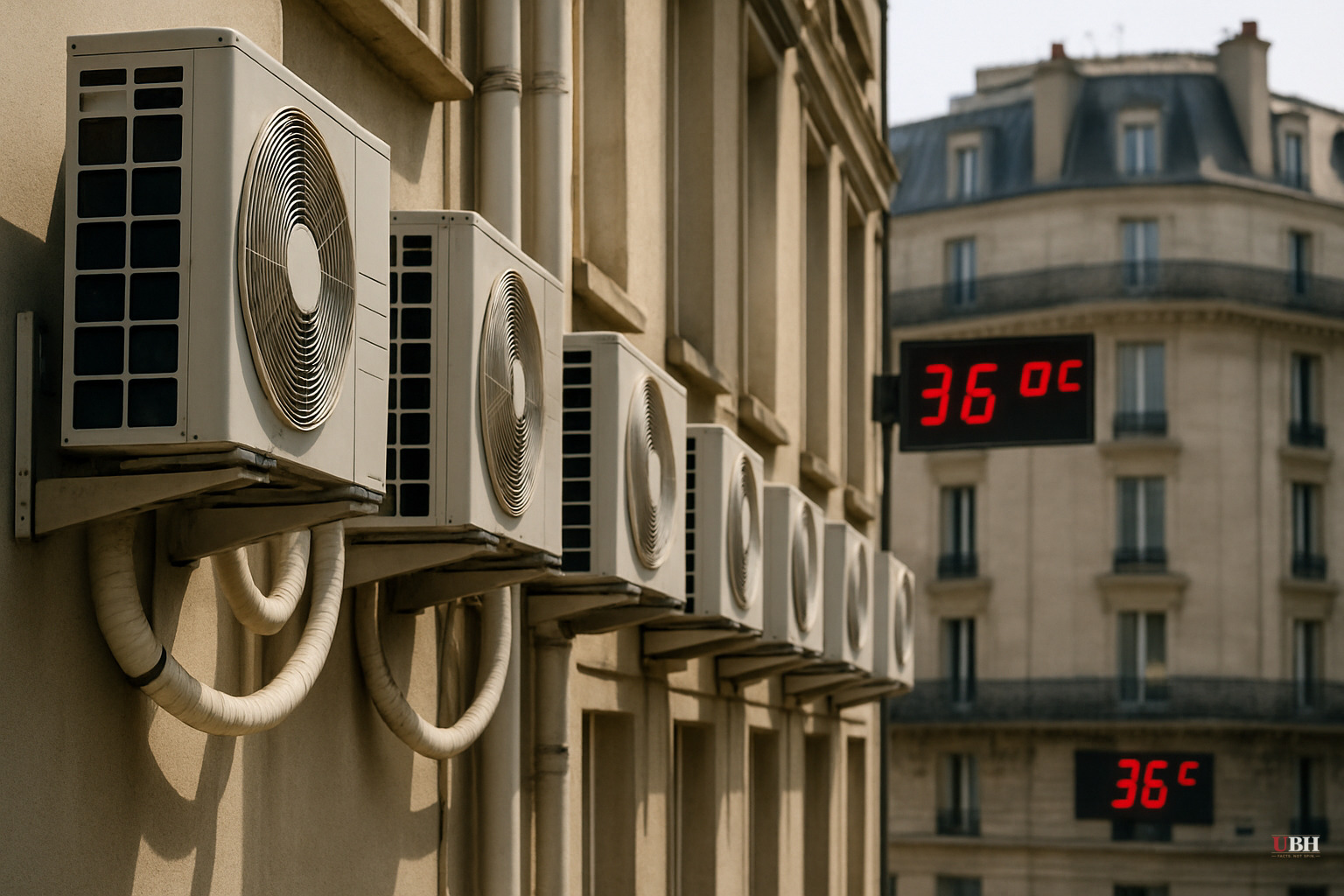
France's historic heatwave has exposed a fault line that goes beyond weather. It goes to policy.
Paris hit 105°F this week, according to The Atlantic. The high temperature in the French capital has stayed above 96°F for ten consecutive days. France recorded the hottest day in its national history on Tuesday, then broke that record on Wednesday, then again on Thursday.
Through all of it, a significant portion of the French population has had no air conditioning.
The Official Position
The French government and the city of Paris have long classified air conditioning as a "maladaptation" to climate change, a technology that accelerates the crisis it claims to solve. This reflects a broad European consensus built on real data: AC units do consume significant electricity, and widespread adoption does increase grid load and urban heat island effects.
The concern deserves a fair hearing. Air conditioning's environmental cost is real. A poorly designed, rapidly adopted AC rollout running on fossil-fuel-heavy grids can increase carbon emissions meaningfully. European grid infrastructure was not built for the kind of cooling demand the American Sun Belt takes for granted. Critics of mass AC adoption argue that better building insulation, urban tree canopy, and passive cooling design are more sustainable long-term solutions. The long-term picture supports these criticisms.
What the Policy Ignored
The gap between long-term aspiration and present-day survival is the core problem.
France's building stock, particularly in Paris with its historic zinc-roof apartments and preservation rules, was designed for a climate that no longer exists in June. Zinc roofs reach 150 degrees on hot days, according to The Atlantic, turning the floors below into ovens. Shutters and ceiling fans, the government's preferred tools, require what The Atlantic called "a prolonged state of environmental hypervigilance" — closing windows before dawn, hanging external shading by hand, sleeping in shorter windows as the predawn cool disappears.
Heat impairs exactly the judgment and energy required for this discipline. On Wednesday night, for example, the temperature in Paris dipped below 80 degrees for only a few minutes, at dawn, making the standard bricolage approach ineffective.
The Technician's Phone That Wouldn't Stop Ringing
Dhafer Kahri, an AC technician in Paris, told The Atlantic his phone rang several times an hour, all day long, throughout the heatwave. He had more work than he could accept. He was turning down jobs, specifically those involving rooftop installations on historic buildings, because the physical and legal risks were too high.
In many Parisian apartments, the only legal place to install a unit is a balcony, hidden from neighbors and preservation authorities. Millions of apartments don't have balconies. Those residents have nowhere to put a unit even if they want one and can afford it.
The Improvised Workarounds
The policy vacuum has not stopped French residents from seeking relief. Portable AC units venting hot exhaust through open doors or windows are proliferating, according to The Atlantic. This method is both inefficient and, in many building configurations, illegal. The prohibition on visible exterior units has not eliminated air conditioning. It has driven it underground into forms that serve residents poorly and offer no energy or aesthetic benefit.
The Political Fallout
The far right in France has seized on the moment, according to The Atlantic's reporting. They have positioned themselves as the party that will let citizens have air conditioning, turning what is genuinely a complicated infrastructure and climate question into a straightforward populist message: the government's green ideology is making you suffer.
That framing is reductive. But when official guidance leaves people sleepless and physically endangered for ten consecutive days, abstract environmental principles lose their persuasive power fast.
What Hasn't Been Resolved
The national consensus against air conditioning is described by The Atlantic as "beginning to melt." No legislative change, no revised building code, no emergency guidance on legal installation pathways has been reported in the source material.
The unresolved question is the hard one. If France does move toward wider AC adoption, what does responsible scale-up look like on a grid that wasn't designed for it, in a building stock that wasn't designed for it, without locking in decades of additional fossil fuel demand? The technician Kahri can't answer that. Neither, apparently, can the government. Right now, millions of people are suffering through the hottest days of their lives with no recourse — and that silence has consequences.
Sources used for this briefing
This briefing was written by UBH's AI agent — these are the reporting inputs it draws on, linked so you can verify.


