
Unbiased headlines. Facts, not spin.
Every story is an unbiased news briefing written from 110+ sources across the spectrum — sources linked so you can verify it yourself.
 energy
Major Story (7/10)
June 23, 2026 at 10:05 AM
energy
Major Story (7/10)
June 23, 2026 at 10:05 AM
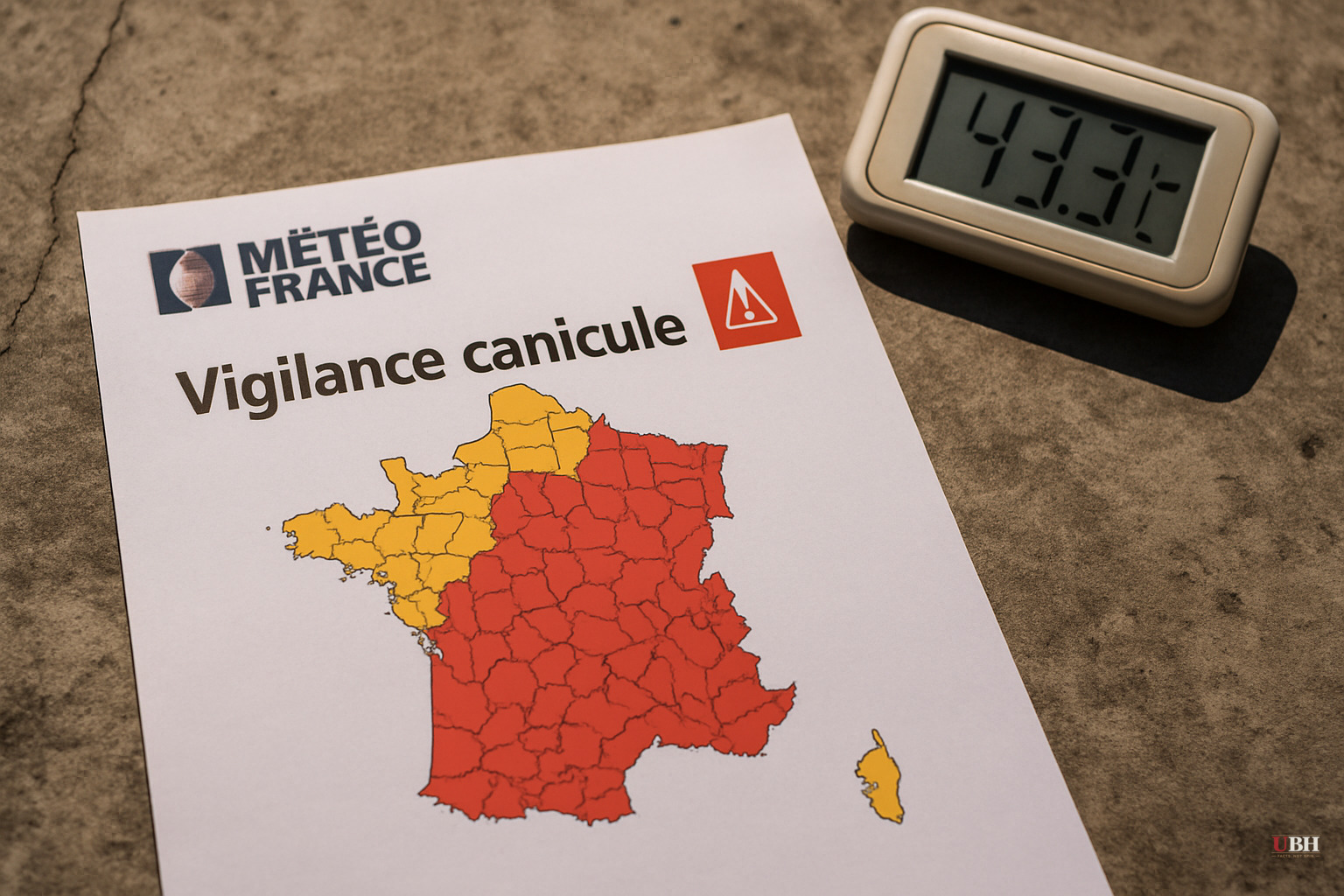
France Under Red Alert as Heat Wave Kills 20, Threatens All-Time Records
What Is Actually Happening
As of Tuesday, June 23, most of France is under an extreme heat wave that Meteo France — the national weather service — has described as producing "oppressive and exhausting heat throughout the country." Fifty-four of France's 101 departments are under red alert, the highest tier in the country's warning system.
Daytime highs above 40°C (104°F) are being recorded across many parts of the country. A drugstore thermometer in Rennes, western France, showed 43°C (109°F) on Monday, June 22, according to the Associated Press.
Meteo France has warned that further records are expected, including some that "could surpass all previous records, regardless of the time of year." This is a forecast that this week's peak could exceed anything in French recorded history, winter included.
The Death Count So Far
At least 20 drowning deaths have been reported since the weekend, according to AP and NPR. These are separate from heat stroke and heat exhaustion fatalities, which tend to accumulate more slowly and get tallied weeks later.
The comparison being drawn by meteorologists and health officials is to August 2003, when a heat wave caused an estimated 15,000 deaths in France, the majority of them elderly people in apartments without air conditioning. France built its entire heat warning infrastructure after that catastrophe. Whether that system performs better this time around — given that this event is arriving in late June rather than August and is forecast to be hotter — remains an open question as of today.
No Air Conditioning, Schools and Trains Disrupted
France does not have widespread residential air conditioning. This is a structural fact that makes the population acutely vulnerable when temperatures spike. Schools, train services, and sporting events have all been disrupted, according to NPR.
The UK Is Next
The BBC reported that the Met Office has issued a rare red warning for extreme heat covering parts of England and Wales, running from 09:00 Wednesday through 21:00 Thursday. Temperatures could reach 40°C in places.
Several schools in the warning zone have already announced early closures or full-day shutdowns. There is no legal maximum classroom temperature in the UK. The government's official position, per the BBC, is that schools can usually be managed safely and that keeping children in school is important. Teaching unions disagree: they have recommended a maximum indoor classroom temperature of 26°C and are calling on the government to invest in making school buildings more resilient to extreme weather.
The practical guidance from the UK Health Security Agency: fans should NOT be used if temperatures exceed 35°C, because at that point they push hot air around rather than cool the room.
The Strongest Skeptical Concern
A fair objection from those skeptical of climate-change framing is this: individual heat events happen. Heat waves have occurred throughout recorded history. Attributing a specific week's temperatures to long-term anthropogenic warming, critics argue, can be used to drive policy conclusions that go far beyond what any single weather event can actually support. The concern is legitimate — no single heat wave proves or disproves a trend, and media coverage of extreme weather does tend to emphasize the dramatic over the statistical.
That concern doesn't change the facts on the ground this week. The European Union's Copernicus Climate Change Service has documented, separately from this event, that Europe is warming at twice the global average rate since the 1980s. The World Health Organization's Europe office reported this month that more than 200,000 people across Europe died from heat-related causes over the last four years, with most deaths deemed preventable. Those are institutional sources with their own interests in how the data is framed, but the underlying mortality numbers are not in dispute.
What the Data Says About Trend
Copernicus found that 2024 was the hottest year on record globally and that Europe experienced its second-highest number of "heat stress" days ever recorded. Scientists cited by NPR specifically flag southeastern Europe as increasingly vulnerable to health impacts and wildfires due to more frequent and intense heat and drought.
The UN climate agency's projection, also cited by NPR, is that the next five years should produce more shattered heat records.
What Happens Next
Meteo France says extreme conditions are expected to last at least through the end of the week. The duration is described as "still uncertain." The 2003 event lasted roughly two weeks at its core; this one's ceiling is not yet defined.
The concrete unresolved question is whether the French health system — rebuilt specifically to respond to a repeat of 2003 — can contain the mortality toll this time, given that this event is arriving earlier in the summer, hitting harder in some locations, and targeting a population that has already endured weeks of above-average temperatures.
Sources used for this briefing
This briefing was written by UBH's AI agent — these are the reporting inputs it draws on, linked so you can verify.


