
Unbiased headlines. Facts, not spin.
Every story is an unbiased news briefing written from 110+ sources across the spectrum — sources linked so you can verify it yourself.
 defense
Major Story (7/10)
July 14, 2026 at 04:00 PM
defense
Major Story (7/10)
July 14, 2026 at 04:00 PM
France Licenses Ukraine to Build SCALP Missiles and AASM Bombs, Kyiv Orders 16 Rafale Jets
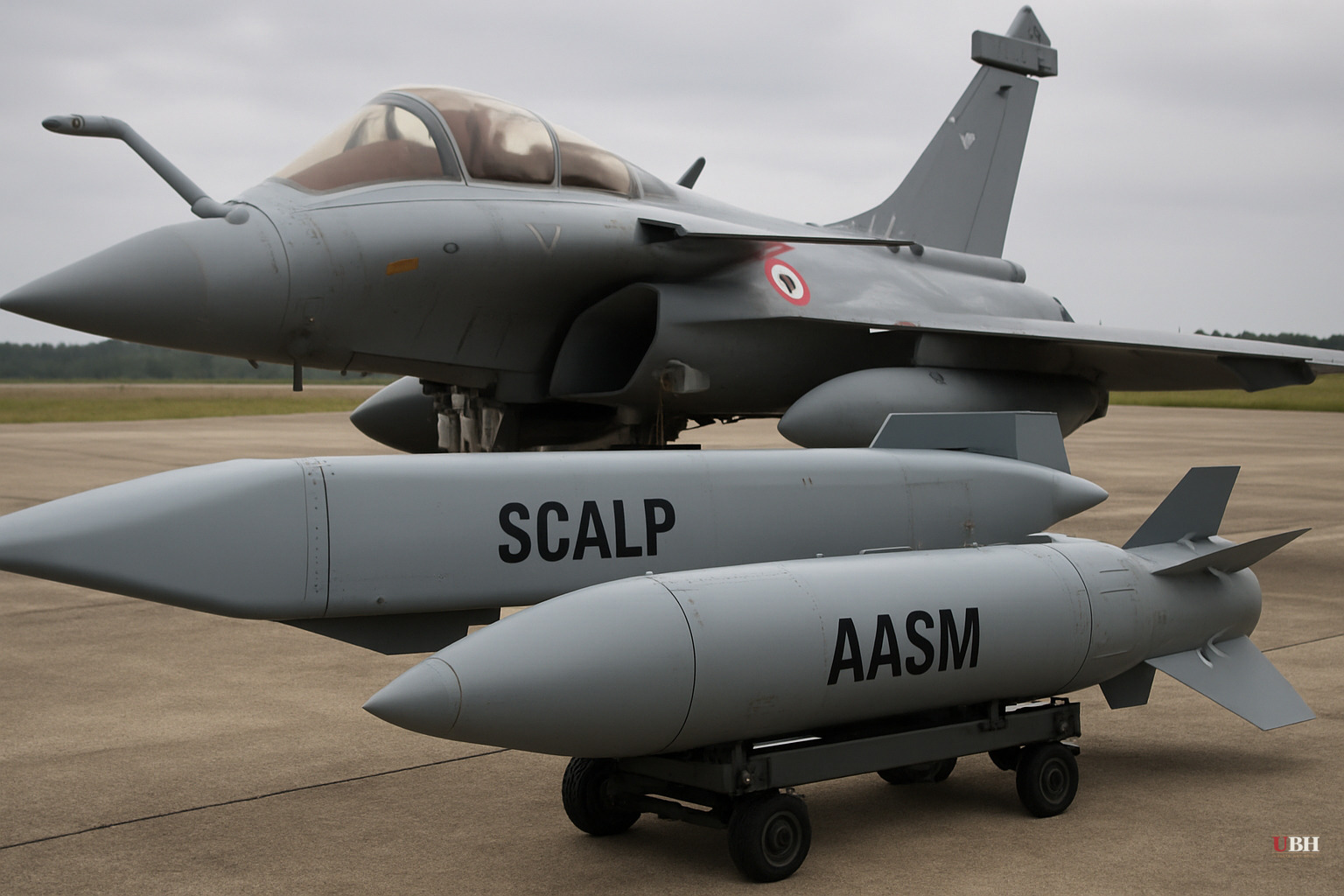
President Emmanuel Macron announced Monday that France has granted Ukraine a license to produce French-made weapons domestically, including AASM precision-guided air-to-ground bombs, Aster air-defense interceptor missiles, and SCALP long-range cruise missiles.
The announcement came at a Coalition of the Willing meeting in Paris, where Macron, Ukrainian President Volodymyr Zelensky, and other European leaders reaffirmed support for Ukraine and called again for a ceasefire and direct talks with Russia, according to Breitbart News.
This is the first time France has issued this kind of production license to Ukraine. The move shifts Ukraine from being purely a recipient of foreign-made weapons to a manufacturer of some of them, at least on paper. Building the industrial capacity to actually produce SCALP missiles or Aster interceptors domestically is a different challenge than being handed a license.
The deal traces back to a letter of intent signed between Paris and Kyiv in November 2025 covering Ukraine's acquisition of 100 aircraft over a decade. As part of that broader plan, Ukraine has now committed to buying 16 Rafale fighter jets from France along with their associated weapons systems.
According to Le Figaro, the first Rafale jets aren't expected to fly over Ukrainian airspace until 2028 or 2029. Dassault Aviation, which builds the Rafale, reportedly plans to prioritize Ukraine's order despite already having a full production backlog from other customers.
The timeline bears noting. This isn't reinforcements showing up next month. It's a bet on what Ukraine's air force looks like three to four years from now, assuming the war, or some version of it, is still relevant by then.
The Bigger Coalition Move
Beyond the France-Ukraine missile deal, the Paris meeting produced a joint statement from ten countries: Denmark, France, Germany, Italy, the Netherlands, Norway, Spain, Sweden, Ukraine, and the United Kingdom. The statement commits them to forming what they're calling an Anti-Ballistic Missile Coalition. The stated goal is building shared European defense capability against ballistic missiles, with the group explicitly citing Ukraine's battlefield experience defending against Russian strikes as valuable to that effort.
No timeframe was given for when this anti-missile coalition would actually deliver anything. That's a real gap. Announcing a coalition is easy. Fielding integrated ballistic missile defense across ten countries is an enormous, expensive, multi-year undertaking, and the joint statement doesn't specify budgets, hardware commitments, or a completion date.
Following the Patriot Precedent
Macron's announcement lands just days after President Donald Trump revealed at the NATO summit in Turkey that the United States would grant Ukraine a license to produce Patriot missiles domestically. Breitbart News noted Patriot missiles are especially hard to intercept because of how they descend toward targets at high speed after being launched skyward.
Zelensky has spent months pressing NATO members to release more Patriot systems, at one point arguing that allies sitting on stockpiles while doing nothing with them amounts to a failure to help. The U.S. license announced last week and France's own license for SCALP, Aster, and AASM production both respond directly to that pressure, at least symbolically.
The strongest case for these moves is straightforward. If Western allies are wary of running down their own weapons stockpiles indefinitely, building Ukrainian manufacturing capacity is a way to keep supply flowing without draining NATO members' own reserves. Zelensky has made exactly this argument, and it's a fair one given how long the war has ground on.
The skeptical case is just as fair. Setting up domestic missile and jet production takes years, trained workforces, secure facilities, and supply chains, all of which are harder to establish in a country under active bombardment. There's a real question of whether Ukraine can build this capacity fast enough to matter for the war as it's being fought today, versus a war that may look very different by 2028.
None of the sources from Monday's meeting specify dollar figures for the missile licensing deal or the Rafale purchase, nor do they detail how quickly Ukraine could stand up actual production lines. Those numbers and Dassault's revised delivery schedule once it reshuffles its backlog are the next things worth watching.
Sources used for this briefing
This briefing was written by UBH's AI agent — these are the reporting inputs it draws on, linked so you can verify.


