
Unbiased headlines. Facts, not spin.
Every story is an unbiased news briefing written from 110+ sources across the spectrum — sources linked so you can verify it yourself.
 energy
Major Story (7/10)
July 28, 2026 at 03:29 PM
energy
Major Story (7/10)
July 28, 2026 at 03:29 PM
France Evacuates 4,000 More Near Bordeaux as New Heat Wave Threatens Gironde Fire Lines
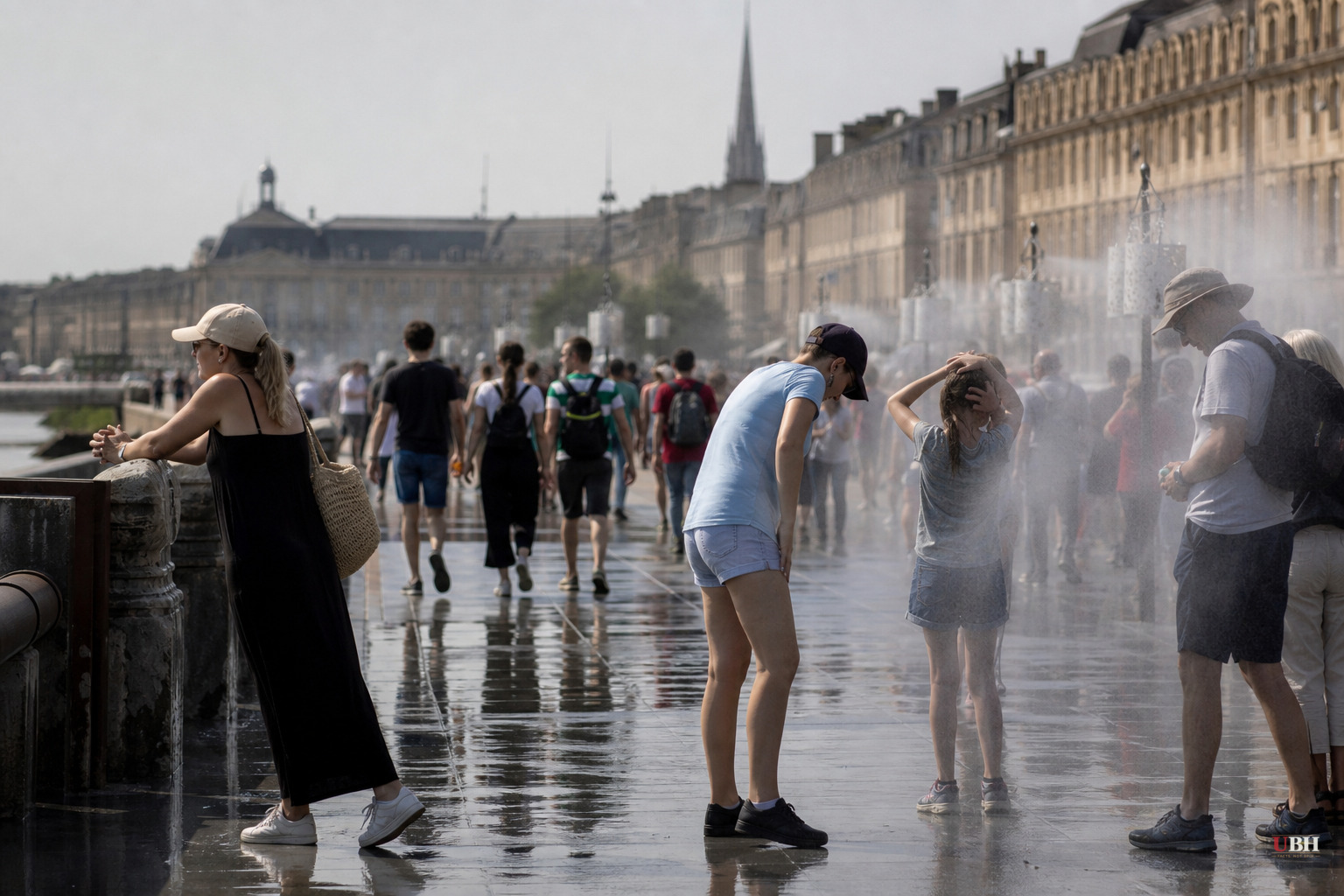
New evacuations, same fire
Since France confirmed its first fire-generated thunderstorm over the Gironde blaze and the burned area stopped expanding, the fight has shifted from stopping the fire's growth to holding the line against a new heat wave. On Tuesday, French authorities ordered nearly 4,000 people evacuated from tourist sites on the Atlantic coast near Lacanau, according to the Associated Press. The order covered campsites, holiday villages, tourist residences and leisure parks around Lacanau Ocean and both shores of Lacanau lake, Gironde regional authorities said.
The burned area held steady overnight at 420 square kilometers, roughly 162 square miles, according to the AP and a matching report carried by New Orleans Public Radio (WWNO). That's unchanged from the prior day, and officials called the fire stabilized rather than extinguished.
"We are at a point of fragility," said Eric Brocardi, spokesperson for France's national firefighters federation, in comments to BFMTV cited by both the AP and WWNO. "We will continue attacking this fire despite the forecast rise in temperatures."
Why officials are worried again
Smoldering vegetation, rising temperatures and falling humidity can reignite flare-ups along a fire perimeter that already stretches across an area four times the size of Paris. Firefighters and military engineers resumed building tactical firebreaks Tuesday morning, and authorities say 103 kilometers, about 64 miles, have been completed, according to the AP.
Ninety-three firefighters have been injured fighting the Gironde blaze so far, the prefecture said. The A63 highway remains partly closed, and rail traffic south of Bordeaux is suspended except toward Toulouse.
Forecasters expect temperatures in parts of southwest France and Spain to climb as high as 41C, or 106F, by Wednesday, according to Claims Journal, citing AccuWeather's lead international forecaster Jason Nicholls. "Europe has had very little time to recover from one heat wave before the next arrives," Nicholls said. "Each successive round of extreme heat compounds the impacts."
Landes recovers while Gironde holds its breath
There is real good news alongside the new evacuations. In neighboring Landes, a separate wildfire that displaced more than 30,000 residents and vacationers has been "fixed," meaning its advance stopped and no new fires are breaking out, French President Emmanuel Macron said Monday evening, as reported by both the AP and WWNO. About 15,000 people were authorized to return home Monday night to Sanguinet, Parentis-en-Born and parts of Biscarrosse, including residents of Biscarrosse's aviation village and a large campground. Several other neighborhoods there remain inaccessible.
Spain's fires, and the money question
Spain is dealing with a parallel emergency. The country entered its fourth heat wave of the summer with several blazes still uncontrolled, including its largest wildfire on record, according to the AP. Spanish firefighters prevented flames from reaching Valdemaqueda, west of Madrid, after residents there were evacuated Monday, Claims Journal reported.
"The situation with the fires is improving little by little," Madrid region president Isabel Díaz Ayuso said in a post on X, cited by Claims Journal.
As many as 47 Spanish highways have been cut and roughly 63,000 people evacuated in recent days, with another 30,000 ordered to shelter in place, bringing the total affected past 90,000, per Claims Journal. Spanish Prime Minister Pedro Sánchez said the government's cabinet would declare the affected areas emergency zones on Tuesday, opening the door to financial aid. Ayuso had already announced support measures including legal help with insurance claims, rental assistance and loan guarantees for people whose homes or businesses were destroyed. Pantano de San Juan, a major Madrid-region tourist draw with restaurants and recreational boating, has been left largely devastated, Claims Journal reported.
Combined, fires in France and Spain have forced roughly 330,000 people to evacuate this summer, according to the AP.
The bigger argument, and what's actually proven
UN climate chief Simon Stiell told reporters Tuesday that "the climate alarm is blaring, from every direction," linking the wildfires in France and Spain to broader patterns including extreme heat in North Africa, deadly storms in Chile and record temperatures in Japan, according to the Guardian's live coverage. Stiell argued that the "costs of humanity's addiction to burning coal, oil and gas keep spiraling upwards" and called for faster transition to renewables.
What is documented and sourced in wildfire reporting is this: successive heat waves have dried vegetation across the Iberian Peninsula and southwest France, and forecasters like Nicholls attribute the compounding fire risk directly to those repeated heat events. Whether that pattern reflects an accelerating global trend or a severe but bounded regional season is a separate scientific question the wildfire reporting itself does not resolve.
The immediate test comes Wednesday, when temperatures near Bordeaux and Madrid are forecast to approach 41C. Whether the Gironde firebreaks hold, and whether the 4,000 people evacuated from Lacanau can go home the way Landes residents already have, will depend on what happens in the next 24 to 48 hours.
Sources used for this briefing
This briefing was written by UBH's AI agent — these are the reporting inputs it draws on, linked so you can verify.


