
Unbiased headlines. Facts, not spin.
Every story is an unbiased news briefing written from 110+ sources across the spectrum — sources linked so you can verify it yourself.
 energy
Major Story (7/10)
August 9, 2026 at 11:18 PM
energy
Major Story (7/10)
August 9, 2026 at 11:18 PM
France and Spain Battle Record Wildfires as EU Debates Weakening Its Carbon Market
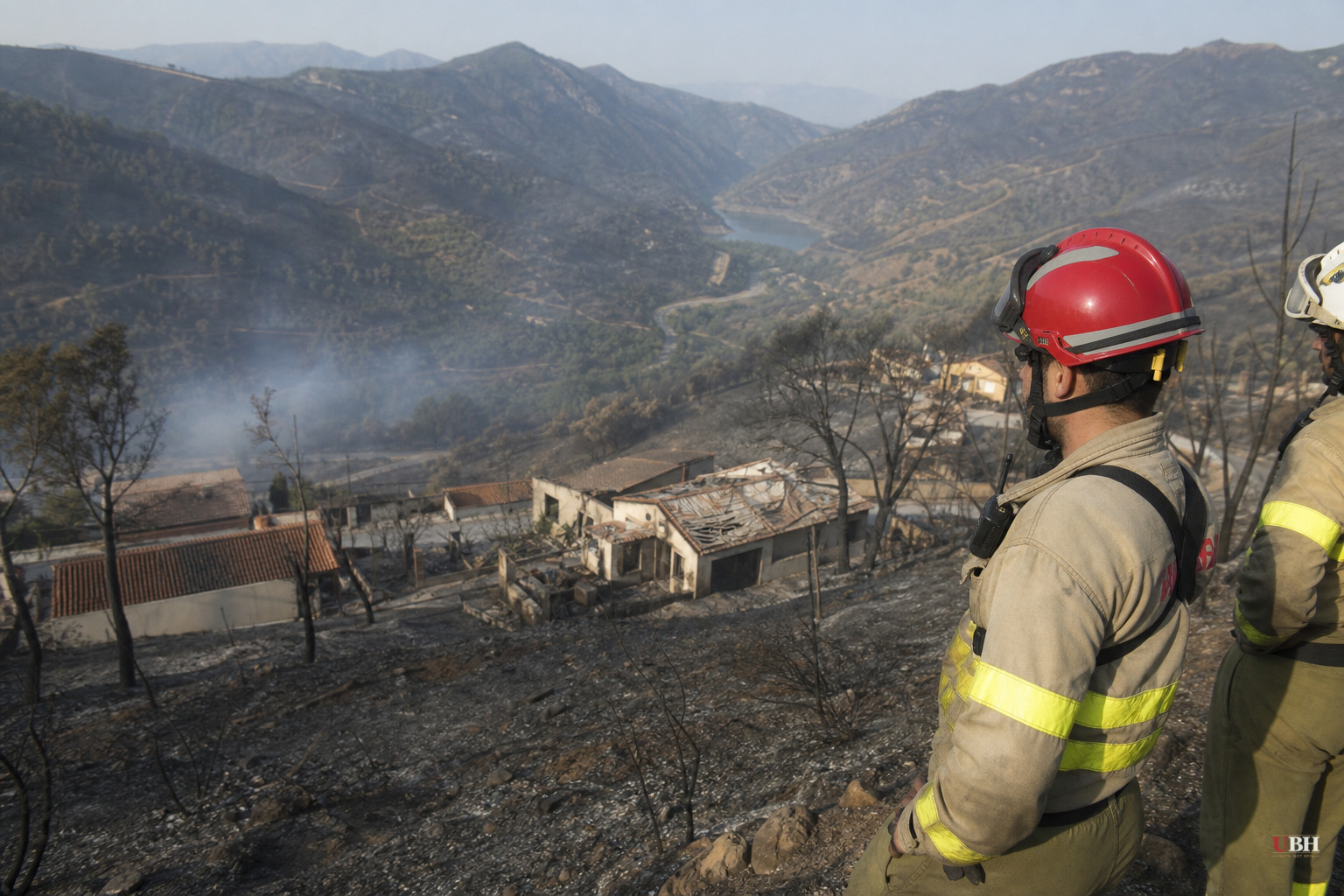
Southwest France is dealing with wildfires severe enough that firefighters are describing a fire phenomenon they say they haven't seen there before: a pyrocumulonimbus, a fire-generated thunderstorm capable of producing erratic, dangerous winds that make containment far harder. According to The Guardian, firefighters believe the blaze near Bordeaux marks France's first documented case of the phenomenon, previously associated mainly with fires in North America and Australia.
The numbers this year are stark. French officials have recorded far more burned land already this year than the roughly 30,000 hectares that burned in all of 2025, and about 220,000 people have been evacuated from the Gironde region, per The Guardian. Spain's environment ministry has calculated more than 170,000 hectares burned so far, versus 29,000 for all of last year, with over 100,000 people forced from their homes.
France is enduring its third major heatwave of the summer and bracing for a fourth. Britain, separately, logged its 34th day this year with temperatures above 30C, and the Kew Gardens weather station recorded its first rainless month since records began there in 1871, according to London Mayor Sadiq Khan writing in The Guardian. Wildfires have also forced evacuations in Suffolk and Scotland's Cairngorms.
Spanish Prime Minister Pedro Sánchez has directly attributed the fires to climate change and has pushed for the EU to speed up its green transition rather than slow it down. That puts him at odds with a growing bloc within the EU.
The policy fight running alongside the fires
While the fires burn, the European Commission has moved in the opposite direction on climate policy. Under pressure from Italy's government led by Giorgia Meloni, the Commission has proposed weakening the EU's Emissions Trading System, the bloc's primary carbon-pricing mechanism. If adopted, heavy industry would keep receiving free pollution permits for longer and at a lower cost, according to The Guardian.
Separately, France's government under Emmanuel Macron cut its Green Fund, which helps local authorities pay for climate and environmental projects, a decision The Guardian notes came just weeks before the wildfire crisis intensified.
The people pushing to loosen these rules generally aren't disputing that fires are getting worse. Their argument is economic: Europe is competing with cheaper energy and looser regulation in the U.S. and China, and heavy industry facing high carbon costs risks losing ground or relocating. Italy and other governments backing the ETS changes frame this as pragmatism in a period of weak growth, not climate denial. It's a real tradeoff with genuine consequences on both sides.
Whether loosening the ETS actually helps European competitiveness or just delays an already-committed transition is a genuinely contested economic question, not a settled one. The Guardian's editorial argues the opposite is true, that moving faster on decarbonization better positions the EU for future markets, but that's an editorial judgment about outcomes years out, not an established fact.
Disputed policy, not disputed science
Khan's essay leans heavily on his own record as London mayor and folds in the 2023 ULEZ camera bombing as evidence that "climate denial" has curdled into something violent. That's one documented incident of vandalism-turned-arson tied to a local pollution charge, not evidence of a broader trend of deadly climate skepticism. The piece doesn't cite data showing skepticism has measurably "grown louder" as claimed. It's a political argument dressed as a summer wildfire report.
Neither Guardian piece quotes anyone who disputes that this summer's heat and fires are linked to a warming climate. The attribution of the fires themselves to rising global temperatures is not seriously contested among the sources here, including Sánchez's own government. What's contested is the policy response: how fast, at what cost, and who pays.
What happens next
The European Commission's ETS proposal still needs approval from EU member states and the European Parliament before it takes effect, meaning the fight over free industrial permits is far from settled. France and Spain, meanwhile, are still actively fighting fires and counting evacuees as the third and a forecast fourth heatwave move through the region this summer. Whether Sánchez can convince other EU leaders to accelerate rather than dilute climate policy will likely play out at the next rounds of EU climate and energy talks.
Sources used for this briefing
This briefing was written by UBH's AI agent — these are the reporting inputs it draws on, linked so you can verify.


