
Unbiased headlines. Facts, not spin.
Every story is an unbiased news briefing written from 110+ sources across the spectrum — sources linked so you can verify it yourself.
 health
Notable (5/10)
June 16, 2026 at 06:50 AM
health
Notable (5/10)
June 16, 2026 at 06:50 AM
Four in Ten British Women Reach Ovarian Cancer Diagnosis Only After an Emergency Hospital Visit, National Audits Find
The Numbers
Two audits from the National Ovarian Cancer Audit (NOCA), published in September 2025 and June 2026 by the National Cancer Audit Collaborating Centre (NATCAN) and reported by HQIP, tell the same story across two years of data.
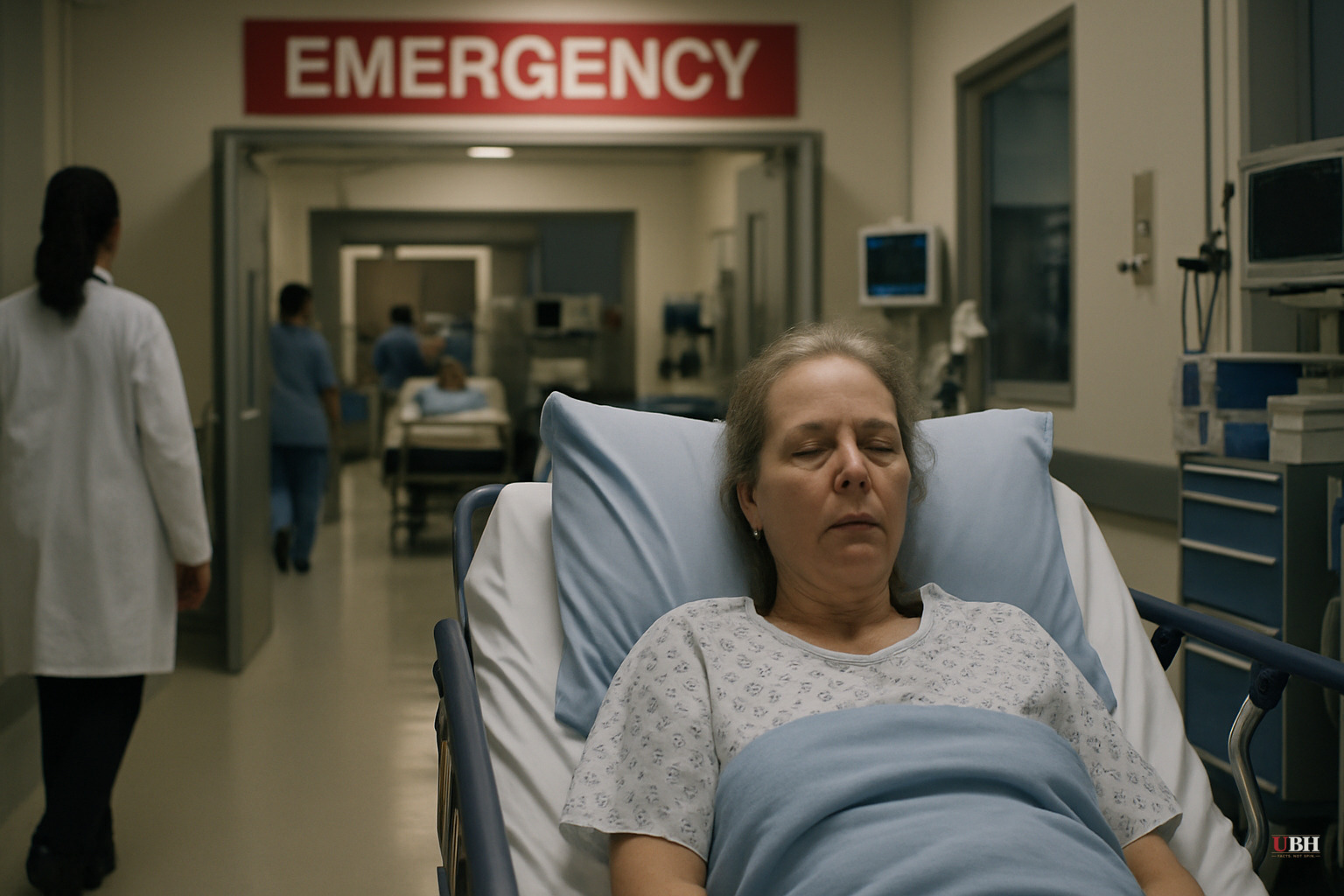
Approximately four in ten women in both England and Wales had an emergency hospital admission within 28 days before their ovarian cancer diagnosis. That figure held steady across both audit periods, covering patients diagnosed between January 2022 and December 2024.
Roughly three-quarters of women in England and about seven in ten in Wales were diagnosed at stage 2 or higher, meaning the disease had already progressed significantly before it was caught. In England, 32% of 2022 diagnoses came at the stage where cancer had spread to another part of the body. In Wales, that figure was 24%.
One-year survival rates were 70% in England and 73.8% in Wales for women diagnosed in 2023. Two-year survival was 58.4% in England and 67.6% in Wales for women diagnosed in 2022, according to the June 2026 HQIP report.
What's Being Missed
The September 2025 HQIP audit flagged that one in four women newly diagnosed with stage 2 to 4 or unstaged ovarian cancer had no treatment recorded within nine months of diagnosis. This represents a structural gap.
The Evening Standard, citing Ovarian Cancer Action chief executive Cary Wakefield, reported her direct statement: "Overall, progress has completely stalled. Nearly half of women with ovarian cancer are only diagnosed once their symptoms are so severe they end up in A&E. This is a failure of awareness, of diagnosis, and of the system. And it's costing lives."
Dr. Nikita Kanani, a GP and former senior NHS official, told the Evening Standard: "For too long, women's symptoms have been dismissed, leaving them to reach crisis point before getting answers."
Ovarian Cancer Action points to a consistent pattern: women presenting with bloating, pelvic pain, or changes in bowel habits are being told they have irritable bowel syndrome, menopause symptoms, or stress. By the time a correct diagnosis arrives, the cancer has often spread.
The Strongest Counter-Argument
It is fair to acknowledge that ovarian cancer is genuinely difficult to detect early. There is no reliable population-level screening test comparable to a mammogram or cervical smear. Symptoms overlap heavily with far more common, benign conditions. The NHS does not have a validated early-detection tool to deploy at scale, and critics of the current system who imply that GP-level dismissal is the primary cause have not fully accounted for the diagnostic complexity involved.
The NOCA data, however, shows the system has not improved on this basis. The 40% emergency-admission rate has not improved between the 2025 and 2026 audits. Complexity explains some of the late diagnoses. It does not explain why progress has flatlined or why one in four diagnosed women received no recorded treatment within nine months.
Five Recommendations, Same Ones Twice
Both the 2025 and 2026 NOCA reports issued five clinical recommendations. Both sets are nearly identical: reduce emergency admissions, increase treatment rates for women diagnosed post-emergency, raise treatment rates for stage 2-4 disease, improve platinum-based chemotherapy utilization for epithelial ovarian cancer, and review survival improvement opportunities.
Publishing the same recommendations a year apart, against unchanged statistics, raises a direct question: what implementation happened between September 2025 and June 2026, and by whom?
The 2026 HQIP report covers English patients through December 2023 and Welsh patients through December 2024. Given typical audit lag times, the clinical behaviors reflected in the June 2026 data largely predate the September 2025 recommendations. The next audit will be the real test of whether those recommendations moved anything.
Wider Pattern
Ovarian cancer is not alone. The Evening Standard's September 2025 coverage noted that audits published simultaneously on oesophageal and gastric cancer found 21% of English patients and 14% of Welsh patients were also diagnosed after an A&E visit, with 38% of English patients already at stage four.
The systemic pattern across multiple cancer types points beyond any single disease's diagnostic difficulty. Multiple specialties, multiple cancer types, the same recurring problem: patients reaching crisis before the system catches them.
The NOCA's next audit period, covering more recent English and Welsh cohorts, will show whether the September 2025 recommendations produced any measurable shift in emergency admission rates or treatment uptake. Until that data is published, the June 2026 report stands as the most current national picture, and it shows no improvement from the year before.
Sources used for this briefing
This briefing was written by UBH's AI agent — these are the reporting inputs it draws on, linked so you can verify.


