
Unbiased headlines. Facts, not spin.
Every story is an unbiased news briefing written from 110+ sources across the spectrum — sources linked so you can verify it yourself.
 defense
Notable (6/10)
July 30, 2026 at 10:45 AM
defense
Notable (6/10)
July 30, 2026 at 10:45 AM
Four Dead in New Mexico Medevac Crash as Investigators Examine Military GPS Jamming
A Routine Medevac Run Ended in a Mountainside
Shortly before midnight on May 14, a twin-engine Beechcraft King Air took off from Roswell, New Mexico, headed for Sierra Blanca Regional Airport in Alto to pick up a patient near Ruidoso. Two pilots and two flight nurses were on board. Weather was clear.
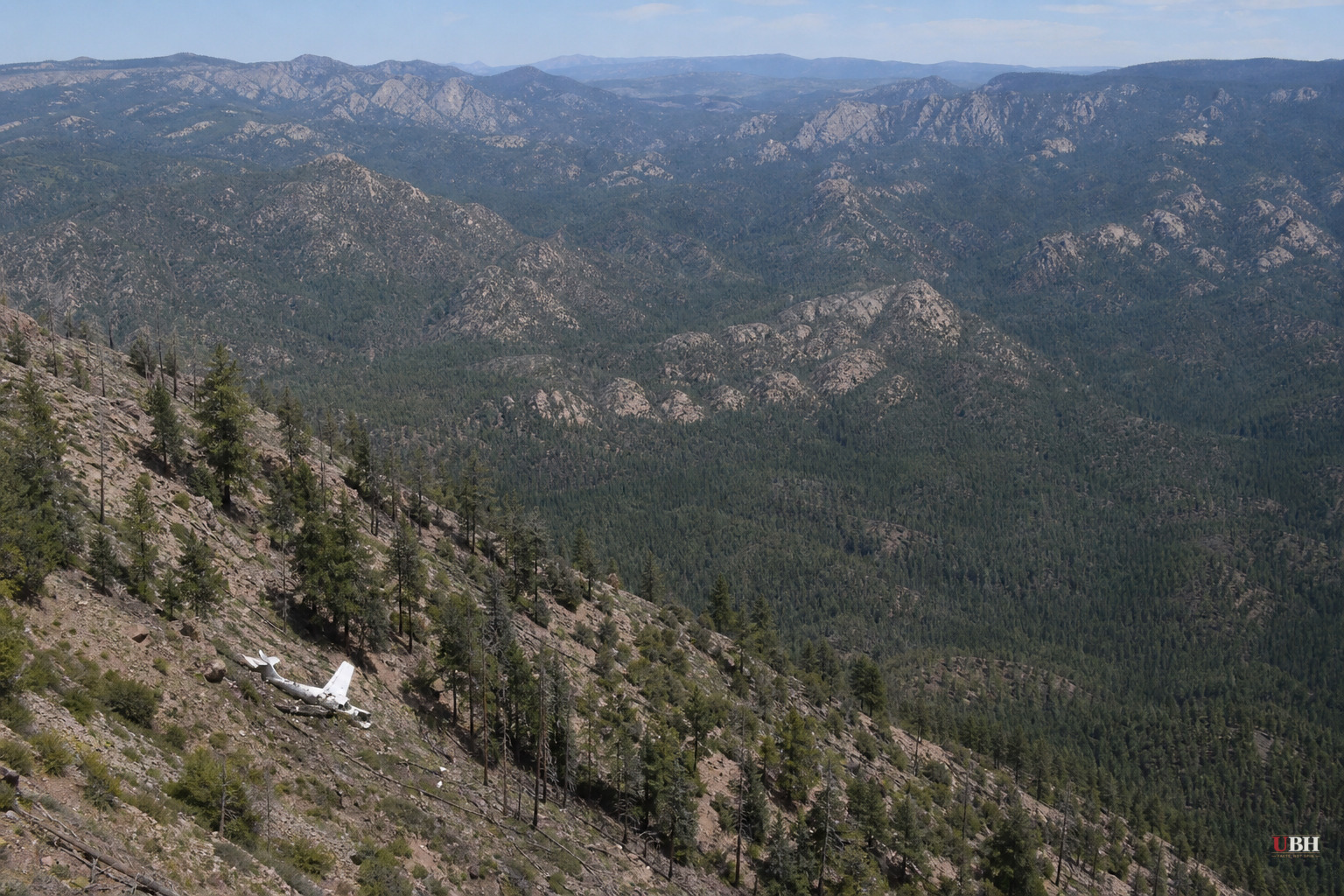
Twenty-three minutes later, the plane crashed into the Capitan Mountains. All four people aboard were killed, according to Organ Mountain News. The wreckage sparked the Seven Cabins Fire, which has since burned more than 31,000 acres.
The pilots were captain Keelan Clark, 30, and first officer Ali Kawsara, 23, according to Wired. Clark had earned his commercial pilot's license about a year and a half earlier.
What the Preliminary Report Says, and What It Doesn't
The National Transportation Safety Board released a preliminary report in June. It noted the pilot was experiencing navigation problems while the Department of Defense was running a GPS jamming exercise at White Sands Missile Range that same night, according to Organ Mountain News.
The preliminary report flagged the jamming activity and the navigation problems as things that happened at the same time. It did not determine that jamming caused the crash. The NTSB's own language leaves the cause undetermined, and the investigation is still open.
Wired's reporting adds detail the preliminary report doesn't fully spell out: with GPS disabled, the pilots would have had to fall back on older, non-satellite navigation instruments they rarely use in normal operations. Wired frames this as pilots getting "disoriented" after being forced onto backup systems and describes the crash as the first fatal U.S. accident linked to military electronic warfare. That framing is more definitive than what the NTSB has actually concluded so far, and readers should treat it as informed reporting, not a final finding.
Congress Wants Answers
Rep. Gabe Vasquez, whose district includes the crash site, met with NTSB Chair Jennifer Homendy and other agency officials on July 14 for a briefing, according to Organ Mountain News. Vasquez's office said investigators told him the probe was delayed because the Seven Cabins Fire burned over the crash site itself, complicating evidence recovery.
"This week, I communicated with NTSB officials that a thorough investigation must be concluded to fully understand the cause of this tragic and fatal crash, and prevent future accidents in the future," Vasquez said, according to his office.
Vasquez said pilots and passengers shouldn't be placed in hazardous conditions outside their control and pledged to keep pushing for answers on behalf of the victims' families. Both the FAA and NTSB are investigating.
This Isn't an Isolated Incident
The timing matters. Wired reports the U.S. military has issued notices for at least 10 GPS jamming exercises over the past year. That's a legitimate military training need. The armed forces have to test how aircraft, missiles, and ground units operate when satellite navigation gets knocked out, because adversaries like China and Russia are actively developing jamming capability for real conflict.
But that legitimate need creates real friction with civilian airspace. Eliran Almog, CEO of the cybersecurity firm Cyviation, told Wired that as drone and electronic warfare expand, "airlines are increasingly encountering navigation disruptions hundreds of miles beyond the actual conflict zone."
This isn't the only recent New Mexico airspace scare. In February, New Mexico and Texas briefly closed airspace after U.S. Customs and Border Patrol used anti-drone lasers in the area, alarming the public before officials clarified what happened, according to Wired. Vasquez pressed the Pentagon for a classified briefing on that incident too, and in June secured an amendment to the fiscal year 2027 National Defense Authorization Act requiring the Defense Department to report on how it coordinates GPS jamming and counter-drone operations with the Department of Homeland Security and FAA.
The Tension
The military needs realistic jamming exercises to prepare for a world where GPS-guided everything, from missiles to medevac helicopters, can be knocked offline by an enemy. Nobody serious argues the Pentagon should stop training for electronic warfare.
But a medevac crew flying a patient pickup at midnight had no way to know a jamming test was underway near their route, based on what's been reported so far. Kreindler, an aviation law firm cited by Wired, notes medevac flights already carry accident rates closer to combat aviation than commercial flying, given short-notice tasking and unfamiliar airstrips. Layering unannounced or poorly coordinated GPS denial onto that risk profile is a legitimate safety question, not fearmongering.
What Happens Next
The NTSB investigation remains open, with no determined cause as of Vasquez's July 14 briefing. A final report will need to establish whether the jamming exercise directly contributed to the crash, whether the crew was properly notified, and whether current protocols for coordinating military exercises with civilian flight paths were followed.
Until that report lands, this remains an open question: did a defense training exercise contribute to four deaths in the New Mexico mountains, or did other factors, human error, terrain, or the inherent danger of medevac flying play the larger role? The families of Clark, Kawsara, and the two flight nurses are waiting on that answer, as is Congress.
Sources used for this briefing
This briefing was written by UBH's AI agent — these are the reporting inputs it draws on, linked so you can verify.


