
Unbiased headlines. Facts, not spin.
Every story is an unbiased news briefing written from 110+ sources across the spectrum — sources linked so you can verify it yourself.
 energy
Major Story (7/10)
July 7, 2026 at 11:48 PM
energy
Major Story (7/10)
July 7, 2026 at 11:48 PM
Four Advanced Reactors Reached Criticality by July 4. The U.S. Has Not Done This in Decades.
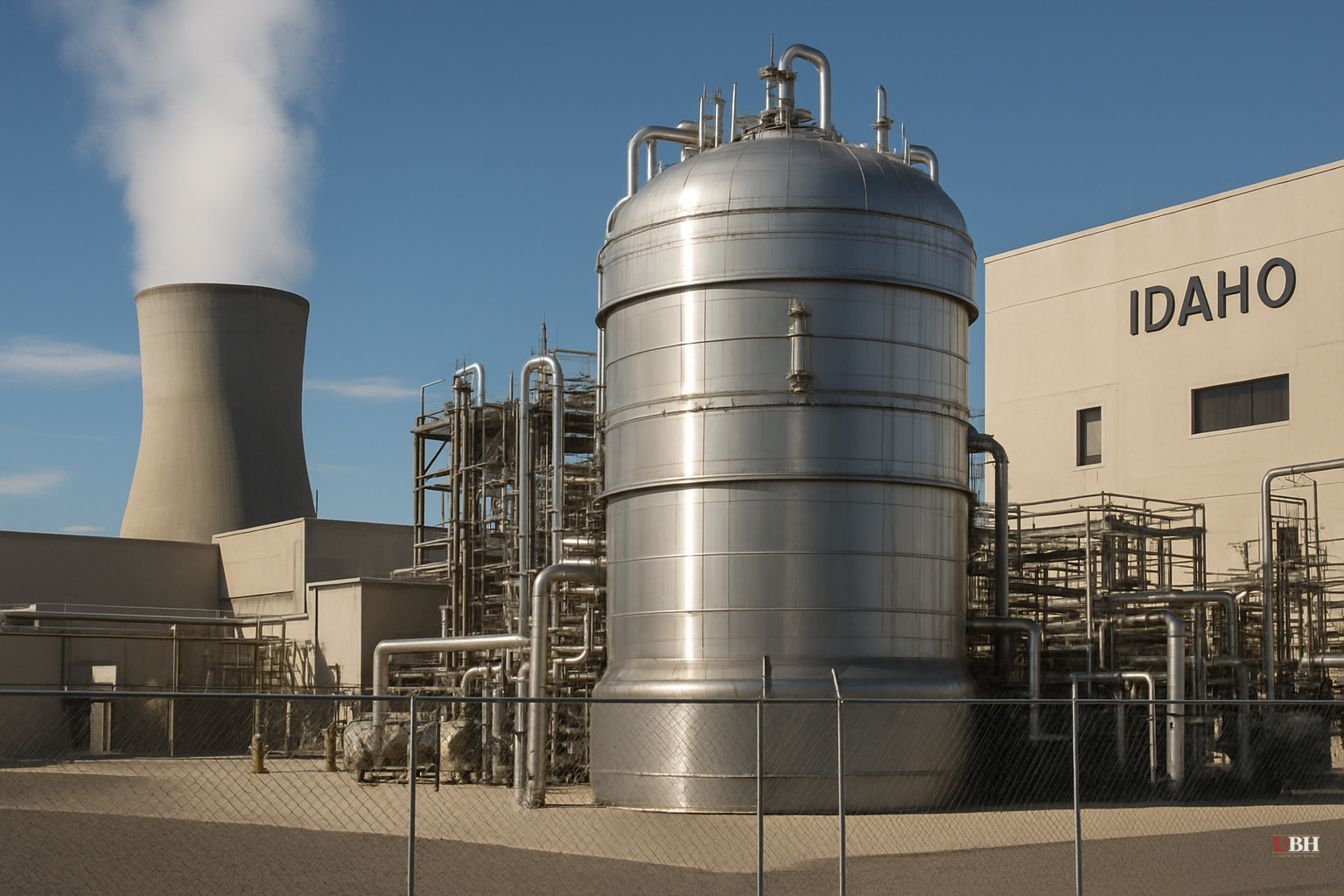
Four Reactors. One Month. One Deadline Beaten.
President Trump's Executive Order 14301, signed in May 2025, set a specific target: at least three advanced test reactors authorized and achieving criticality by July 4, 2026, the 250th anniversary of American independence. The U.S. hit four.
Antares Nuclear's Mark-0, Valar Atomics' Ward 250, and Deployable Energy's Unity reactor all reached criticality in June 2026, according to the National Association of Manufacturers and the American Nuclear Society. Aalo Atomics' Critical Test Reactor crossed the threshold at 12:20 a.m. Mountain Time on July 4, becoming the fourth.
Criticality means the reactor sustained a self-supporting nuclear chain reaction. In Aalo's case, this was zero-power criticality — no electricity was generated — but the physics were confirmed at full commercial scale, using a complete core load.
What Aalo Built, and How Fast
Aalo broke ground at Idaho National Laboratory less than eight months before achieving criticality, according to World Nuclear News. The company says that's one of the fastest reactor builds in 80 years.
The reactor is a low-enriched uranium-fueled, sodium-cooled design. Aalo built it from scratch: its own safety programs, its own fuel assemblies (10 MW worth), and commercial-scale systems manufactured and quality-controlled in-house. "We took on the largest scope within the Reactor Pilot Program," the company said in its announcement.
Yasir Arafat, President and CTO of Aalo Atomics, said: "The hardest problem in nuclear was never the physics, our country simply forgot how to build. The success of the Department of Energy Reactor Pilot Program is proof America can execute again. We are proud to play a major role in America's nuclear renaissance." INL Director John Wagner put it plainly in a congratulatory statement: "This is exactly what a nuclear renaissance looks like: American companies, moving at American speed, proving novel reactor designs real one after another."
Energy Secretary Chris Wright welcomed the milestone, stating that Trump had asked for three advanced reactors to achieve criticality by the 250th anniversary, and the country delivered four.
The Commercial Case
Aalo's stated endgame is not a research reactor. The company's commercial product is the "Aalo Pod," a 50-MWe modular nuclear plant built from five 10-MWe reactors, purpose-built to power AI data centers. According to the American Nuclear Society, Aalo has already signed fuel fabrication contracts with Global Nuclear Fuel, and Urenco USA completed enriching the uranium hexafluoride feedstock and delivered it to GNF for fuel rod fabrication.
The company is now expanding into a one-million-square-foot factory, applying assembly-line manufacturing to reactor production. Work on a second reactor, Project Ascension, is already underway at the INL site. The plan is for that reactor to produce 10 MWe of electricity and power an on-site data center in 2027.
NAM President and CEO Jay Timmons framed the broader significance: manufacturers consume about one-third of U.S. energy, and the DOE pilot program's speed demonstrates what expedited permitting can actually accomplish.
The Fair Objection
Skeptics have a reasonable concern here. Zero-power criticality is a physics test, not a power plant. No electrons were generated. No grid was powered. The gap between "sustained chain reaction in a test reactor" and "commercial reactor delivering reliable power to data centers" is enormous, and the nuclear industry has a long history of prototype-to-product timelines that stretch years or decades beyond initial forecasts. Aalo is a company founded less than three years ago. Scaling from a two-acre test plot to mass-produced modular plants is a fundamentally different engineering and regulatory challenge than what was just demonstrated.
Those concerns are legitimate. Aalo's own investor disclosures acknowledge that early-stage private nuclear investments are speculative, illiquid, and can go to zero. No commercial Aalo Pod is operating today. Project Ascension's 2027 electricity target has not been met yet.
The July 4 test did validate the supply chain, reactor physics, control systems, and fueling procedures at commercial scale. That is a specific, verifiable set of validations, not just a press release milestone.
What the EO Actually Changed
The DOE's Reactor Pilot Program operates under Executive Order 14301, which authorized the agency to expeditiously certify and construct first-of-a-kind advanced reactor designs. The speed here is notable: Aalo was named in August 2025 by the DOE as one of the selected projects, broke ground two weeks later, and achieved criticality in July 2026. Under the prior regulatory regime, that timeline would have been measured in years, not months.
Four companies demonstrated working reactor designs in a single month. According to Erik Townsend of Macro Voices, an early investor in Aalo who disclosed that financial interest, four new reactor designs went critical in just 31 days — more genuine reactor firsts than the previous half-century produced. Townsend's financial stake in Aalo makes him an interested party, and his characterization of Aalo's commercial importance over the other three reactors should be weighed with that in mind. The factual core of his claim, that four criticality events occurred in roughly 31 days, is corroborated by the American Nuclear Society and the Department of Energy.
The unresolved question is whether Project Ascension delivers on schedule. If Aalo's second reactor produces electricity and powers a data center in 2027 as planned, the July 4 test will look like the opening act. If it slips or fails, it will look like exactly what skeptics said it was.
Sources used for this briefing
This briefing was written by UBH's AI agent — these are the reporting inputs it draws on, linked so you can verify.


