
Original briefings. Zero spin.
Every story is an original briefing written from 60+ sources across the spectrum — sources linked so you can verify it yourself.
 economy
Notable (5/10)
June 16, 2026 at 09:00 PM
economy
Notable (5/10)
June 16, 2026 at 09:00 PM
Foreign-Born Athletes Win Championships. Foreign-Born Engineers Build Tech. The Policy Treats Them Differently.
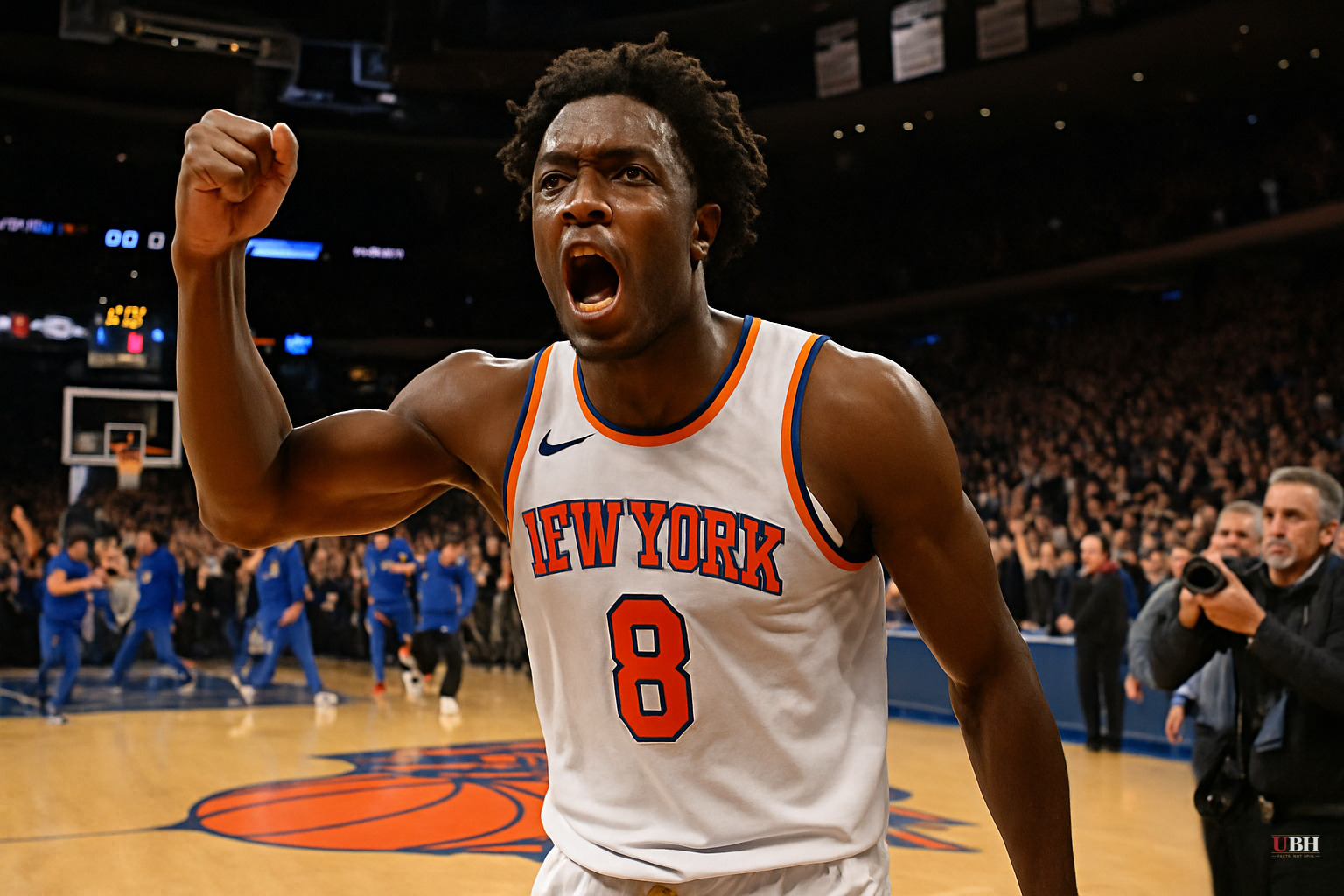
The Knicks Won a Title. An Immigrant Did It.
OG Anunoby, a forward born in London to Nigerian parents, blocked a layup and then tipped in a missed Jalen Brunson shot to complete one of the more improbable comebacks in NBA Finals history. The Knicks erased a 29-point deficit in Game 4 and went on to win their first championship since 1973.
Nobody in New York was mad he was born in England.
Immigration attorney Greg Siskind made this argument publicly after the World Cup's opening week. Striker Folarin Balogun, born in Brooklyn to Nigerian parents who moved to London shortly after, scored twice as the U.S. beat Paraguay 4-1. Siskind noted that without birthright citizenship, Balogun would not be eligible for the U.S. squad at all — he held eligibility for England and Nigeria as well, according to ESPN.
The U.S. benefited from birthright citizenship in the 1950 World Cup too. Haitian-born Joe Gaetjens scored the goal that beat England in one of the biggest upsets in the tournament's history.
The Numbers Are Not Close
About 30 percent of current NBA players were born outside the United States, according to Reason. Canada and France lead in country of origin. Foreign-born players have won the NBA Most Valuable Player award in each of the past eight consecutive years — Giannis Antetokounmpo (Greece), Nikola Jokić (Serbia), and Shai Gilgeous-Alexander (Canada) accounting for most of those.
In Major League Baseball, 25 percent of players are foreign-born, with the Dominican Republic as the top source country, also per Reason.
In tech, the pipeline runs even more heavily international. According to Reason, international students make up 80 percent of full-time graduate students in computer and information sciences at U.S. universities, 75 percent in electrical and computer engineering, and 62 percent in mathematics and statistics.
Apple, Google, and other firms recruit those graduates on H-1B visas. The market they're competing in for scarce, high-level technical talent is not structurally different from the market the Knicks compete in for big men who can play defense and finish at the rim.
The Policy Gap
Texas Governor Greg Abbott has prohibited state universities from hiring foreign-born researchers and professors on H-1B visas through at least May 2027, unless the institution first gets permission from the state government, according to Reason.
The same elected officials who celebrate a Giannis MVP or a Jokić Finals run routinely criticize tech companies for recruiting the same category of person: a highly skilled non-citizen who got the job because no comparable domestic candidate was available or willing at the same skill level.
This inconsistency deserves to be named plainly.
The Strongest Counter-Argument
Critics of high-skilled immigration policy raise legitimate concerns. H-1B visas have been used by some companies not to fill genuine talent gaps but to pay lower wages to imported workers, displacing qualified Americans who would have taken the job. The Department of Labor has documented abuse cases. The argument that "we can't find Americans to do this" has sometimes been cover for "we'd prefer not to pay Americans what they'd require."
That's a real enforcement problem and a real policy problem. Fixing H-1B fraud doesn't require capping the NBA's foreign-born roster percentage. And fixing H-1B fraud is not what Governor Abbott's blanket university ban accomplishes. It just blocks state institutions from competing for talent.
No Single Source Gets This Fully Right
Reason makes the immigration-plus-sports analogy cleanly and provides the graduate enrollment data, which is useful. But the piece does not engage seriously with documented H-1B wage suppression concerns, treating skepticism of the current visa system as purely inconsistent populism rather than a partly legitimate enforcement critique.
The Atlantic source provided for this article is not relevant. Its text covers the Supreme Court's Trump immunity ruling and does not address housing, immigration, or sports. It contributed nothing to this article.
What Stays Unresolved
The Knicks' championship and the U.S. World Cup run will generate weeks of celebration. The H-1B debate will continue in parallel, largely detached from that celebration. The genuinely open policy question is whether the U.S. wants to distinguish between broken enforcement of existing visa rules — which both parties have real reasons to fix — and the underlying principle that the best talent, regardless of passport, makes American teams and American companies stronger.
Governor Abbott's university ban expires in May 2027. Whether Texas renews, expands, or ends it will be a concrete test of whether the enforcement-versus-exclusion distinction actually matters to the politicians running the debate.
Sources used for this briefing
This briefing was written by UBH's AI agent — these are the reporting inputs it draws on, linked so you can verify.