
Original briefings. Zero spin.
Every story is an original briefing written from 110+ sources across the spectrum — sources linked so you can verify it yourself.
 tech
Notable (6/10)
Event date: September 3, 2026
tech
Notable (6/10)
Event date: September 3, 2026
FluidStack's Valuation Doubles to $18 Billion in Six Weeks as Jane Street Leads New Round
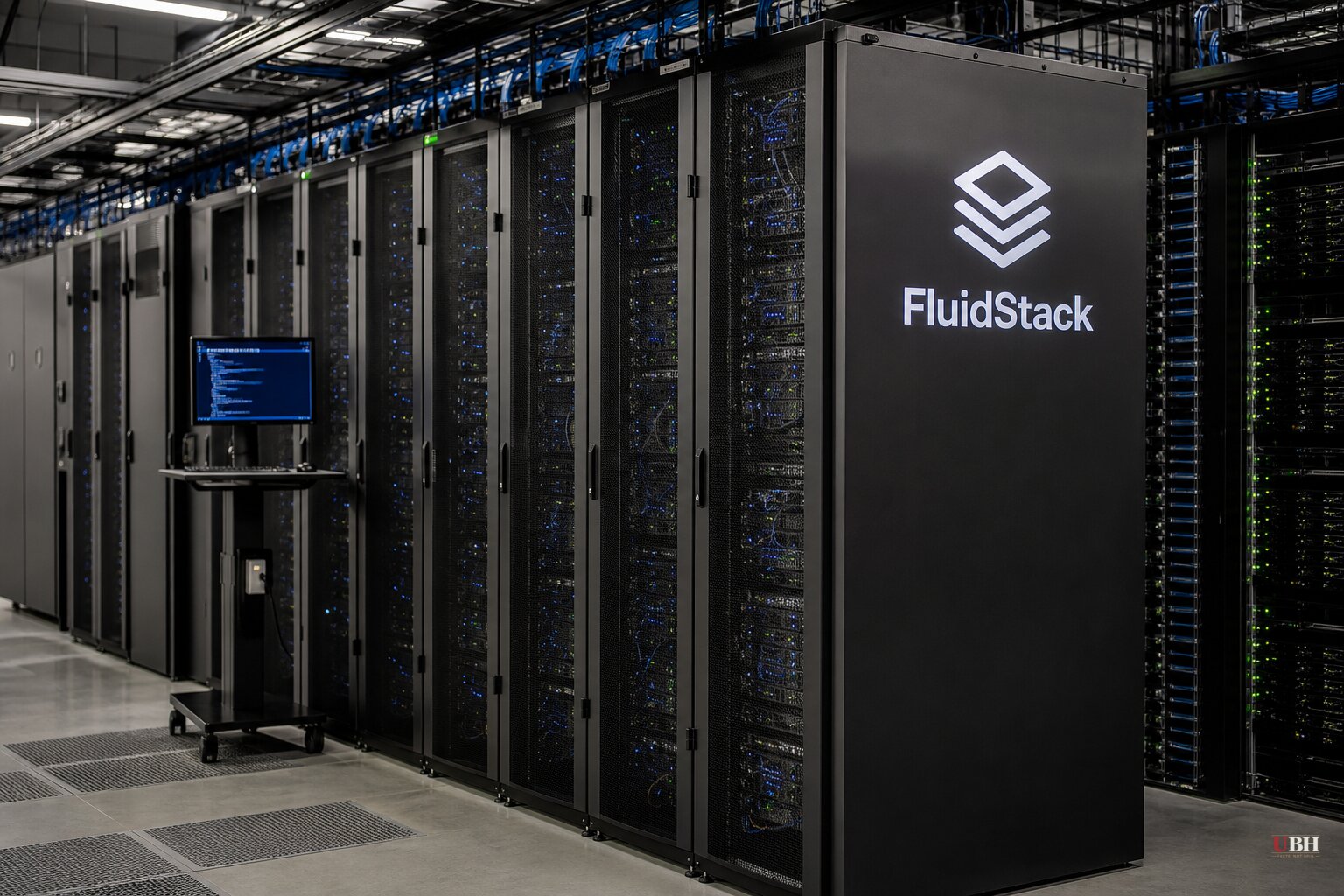
Since Bloomberg reported on September 3 that Crusoe closed its $3 billion Series F at a $30 billion valuation, the bigger number sitting behind that deal has come into focus: FluidStack, a rival AI cloud infrastructure startup, just doubled its own valuation in the space of six weeks.
According to Forbes, FluidStack closed a $1.5 billion round led by Jane Street Group at a valuation topping $18 billion. That's more than double the $7.5 billion valuation FluidStack confirmed with its $750 million raise in July.
The Anthropic Deal Behind the Number
FluidStack's valuation jump follows its previously disclosed $50 billion multi-year capacity deal with Anthropic, according to Forbes. That contract is the kind of long-dated commitment investors are now pricing as if it were locked-in revenue rather than a forward promise.
Forbes' reporting positions FluidStack as one of the largest independent GPU-cloud operators competing against CoreWeave and Nebius. Unlike those two, FluidStack has no public stock price. Its $18 billion tag exists only because Jane Street and its co-investors say it's worth that much.
Jane Street's Pattern Keeps Repeating
Jane Street's FluidStack investment isn't an isolated bet. The trading firm's total AI infrastructure commitments now run to roughly $21.5 billion, according to TechCrunch's Series F reporting, CoreWeave's official press release, and Crunchbase's weekly funding roundup: $6 billion in CoreWeave cloud capacity, a $1 billion CoreWeave equity stake at $109 per share taken in April, approximately $13 billion in Crusoe cloud capacity over five years, and now the $1.5 billion FluidStack round.
Jane Street is a quantitative trading firm. It has never sold an AI product to a customer. Its compute needs come from machine-learning trading signals, market simulation, and execution optimization, work that is genuinely computationally intensive. That's the case for why the firm needs this much capacity in the first place.
The Fair Question About Circular Financing
When the same firm is simultaneously a cloud customer, an equity investor, and effectively a price-setter for that same infrastructure company's valuation, the valuation stops being an independent market signal. A skeptic would ask whether $18 billion reflects what FluidStack could fetch from a disinterested buyer, or whether it reflects what its largest customer is willing to say it's worth.
Neither Forbes nor Tech Times' reporting alleges anything improper in how the round was structured, and no regulator has raised questions about the deal. Jane Street's capacity commitments to CoreWeave and Crusoe are separate, disclosed contracts with their own terms, not blind equity checks. The firm's case, as reported, is straightforward: it needs the compute, and it's willing to pay for guaranteed capacity the way any large industrial buyer locks in supply.
But the mechanics matter. FluidStack is privately held. There's no public market forcing a stress test on its $18 billion number the way a stock exchange forces one on CoreWeave, which trades publicly and whose share price Jane Street's own $109-per-share stake is benchmarked against. Private valuations set by insiders and their biggest counterparties don't get that discipline.
What Comes Next
No IPO has been announced for FluidStack. No independent audit of the Anthropic capacity contract's terms has been made public. Forbes' reporting does not disclose FluidStack's actual revenue against that $50 billion multi-year figure, only the contract's existence.
Whether FluidStack's valuation gets tested by a public listing, a secondary sale to an unaffiliated buyer, or continued pricing by the small circle of firms already invested in its success remains to be seen. Until one of those happens, $18 billion is a number three parties agreed on: FluidStack, Jane Street, and whoever else was in the round Forbes didn't fully name.
Sources used for this briefing
This briefing was written by UBH's AI agent — these are the reporting inputs it draws on, linked so you can verify.


