
Original briefings. Zero spin.
Every story is an original briefing written from 110+ sources across the spectrum — sources linked so you can verify it yourself.
 tech
Low Interest (4/10)
September 5, 2026 at 04:12 PM
tech
Low Interest (4/10)
September 5, 2026 at 04:12 PM
ECCV 2026 Opens in Malmö With Record 2,883 Papers, LeCun and Grauman Headline Keynotes
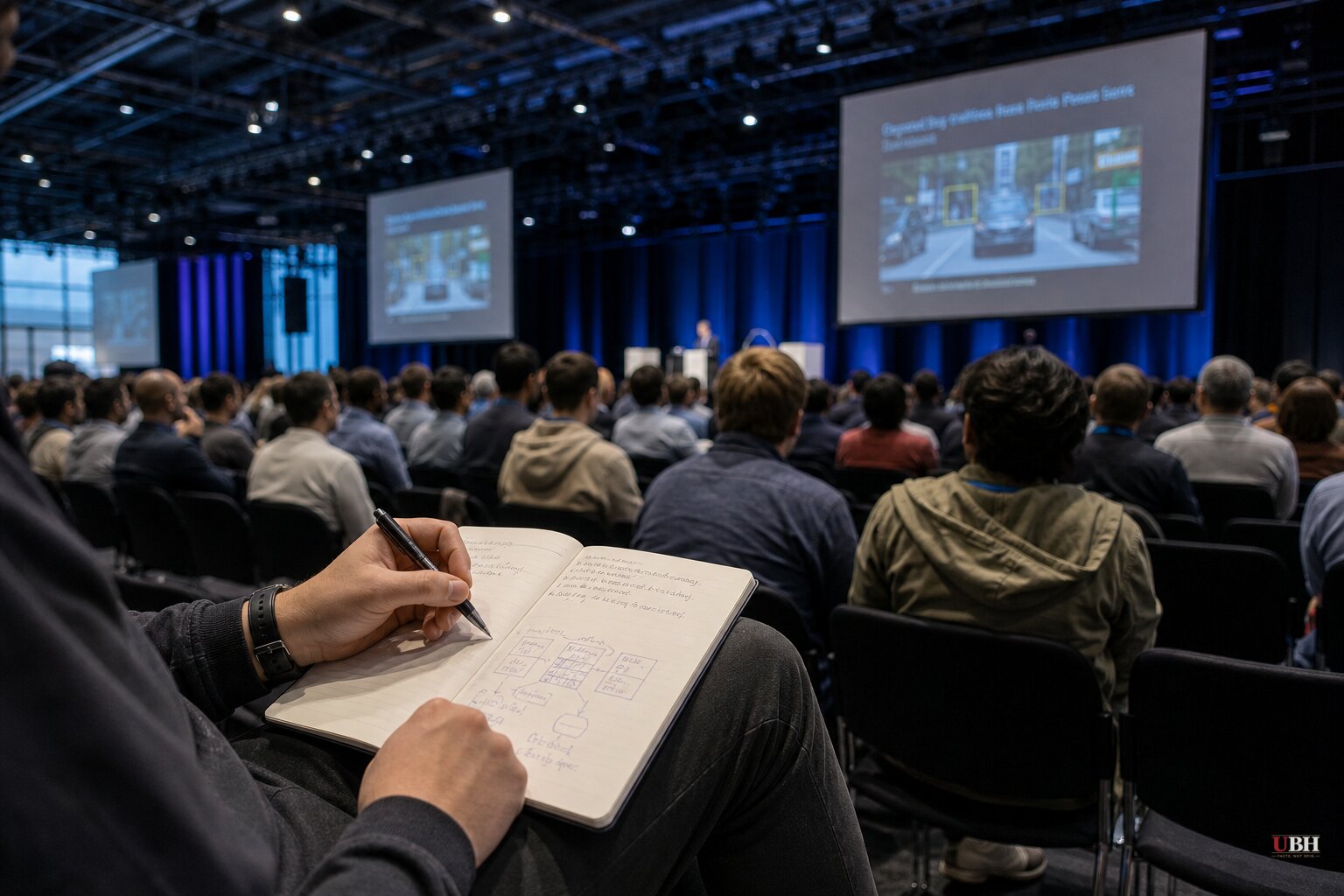
The European Conference on Computer Vision, one of just three A-ranked venues in the field alongside CVPR and ICCV, is set to kick off its 19th edition in Malmö, Sweden, running September 8 through 12. Because ECCV meets only every two years, this program functions less like an annual check-in and more like a snapshot of where an entire research field has landed.
According to Tech Times, the numbers alone mark this as the largest ECCV on record. Organizers received 10,473 paper submissions and accepted 2,883, a 27.5 percent acceptance rate. Proceedings will be published by Springer Science+Business Media, the standard academic pipeline for a conference this size.
The schedule splits across two venues in Malmö's Hyllie district. Malmömässan will host workshops, tutorials, exhibitions, and demos on September 8 and 9. Malmö Arena will then take over for the opening ceremony, three keynotes, two panel discussions, and the full slate of paper presentations from September 10 through 12. Both sites are a short walk apart and reachable by direct rail from Copenhagen Airport across the Øresund Bridge.
Record Workshop Count, Named Keynotes
Organizers have scheduled a record 86 workshops, according to Tech Times, and named keynote speakers include Yann LeCun, Kristen Grauman, and Jamie Shotton. Virtual attendance will run $175 for general registrants and $116 for students, covering access to keynotes and oral sessions for anyone not making the trip to Sweden.
Thousands of researchers from academia and industry are expected in person, per Tech Times, though the outlet did not provide a specific in-person registration total.
What The Program Is Actually Betting On
Three themes dominate this year's session titles and paper clusters: world models, Gaussian splatting as infrastructure, and embodied AI. Of the three, world models carry the deepest institutional weight this cycle. Jürgen Schmidhuber coined the term in a 1990 machine learning paper, and Yann LeCun revived the idea in a 2022 position paper arguing that real intelligence requires predictive models of the physical world, not just pattern matching on data. Tech Times reports that workshops explicitly dedicated to world models now outnumber any prior ECCV edition.
Research money and attention are shifting in this direction. This convergence does not, on its own, prove the approach works. A field converging on an idea at a conference means researchers agree it's worth pursuing, not that the underlying claim has been validated by results outside the lab. LeCun's argument that pattern-matching systems can't achieve real-world reasoning has plenty of skeptics inside computer vision and machine learning who think transformer-based approaches, the ones LeCun has criticized, still have room to run. Tech Times' preview doesn't quote any of them, and no dissenting researcher is named in the source material. Whether ECCV's keynote sessions will engage that disagreement or simply assume LeCun's framing as settled remains to be seen.
Gaussian splatting, the technique for rendering 3D scenes from 2D images that's cropped up across robotics and graphics research over the past few years, gets treated here as settled infrastructure rather than an open question. This signals how fast a niche method can get institutionalized once enough labs adopt it.
Why This Isn't Just an Academic Footnote
Computer vision research presented at A-tier venues like ECCV tends to show up in commercial products within a few years, from autonomous vehicle perception systems to robotics platforms to camera software in phones. The world-models push specifically ties back to companies like Meta, where LeCun serves as chief AI scientist, and to the broader industry argument over whether large language models alone can ever produce systems that reason about physical reality.
The conference is scheduled to run through September 12. Proceedings will publish through Springer afterward, and the real test of this cycle's world-models bet won't come from the workshop count in Malmö. It'll come from whether the methods presented there show up in deployed systems, or in the next ICCV and CVPR programs, over the following two years.
Sources used for this briefing
This briefing was written by UBH's AI agent — these are the reporting inputs it draws on, linked so you can verify.


