
Original briefings. Zero spin.
Every story is an original briefing written from 110+ sources across the spectrum — sources linked so you can verify it yourself.
 tech
Notable (6/10)
Event date: September 4, 2026
tech
Notable (6/10)
Event date: September 4, 2026
Kai-Fu Lee Says US-China AI Gap Has Shrunk to Six Months, Calls It an iPhone vs Android Race
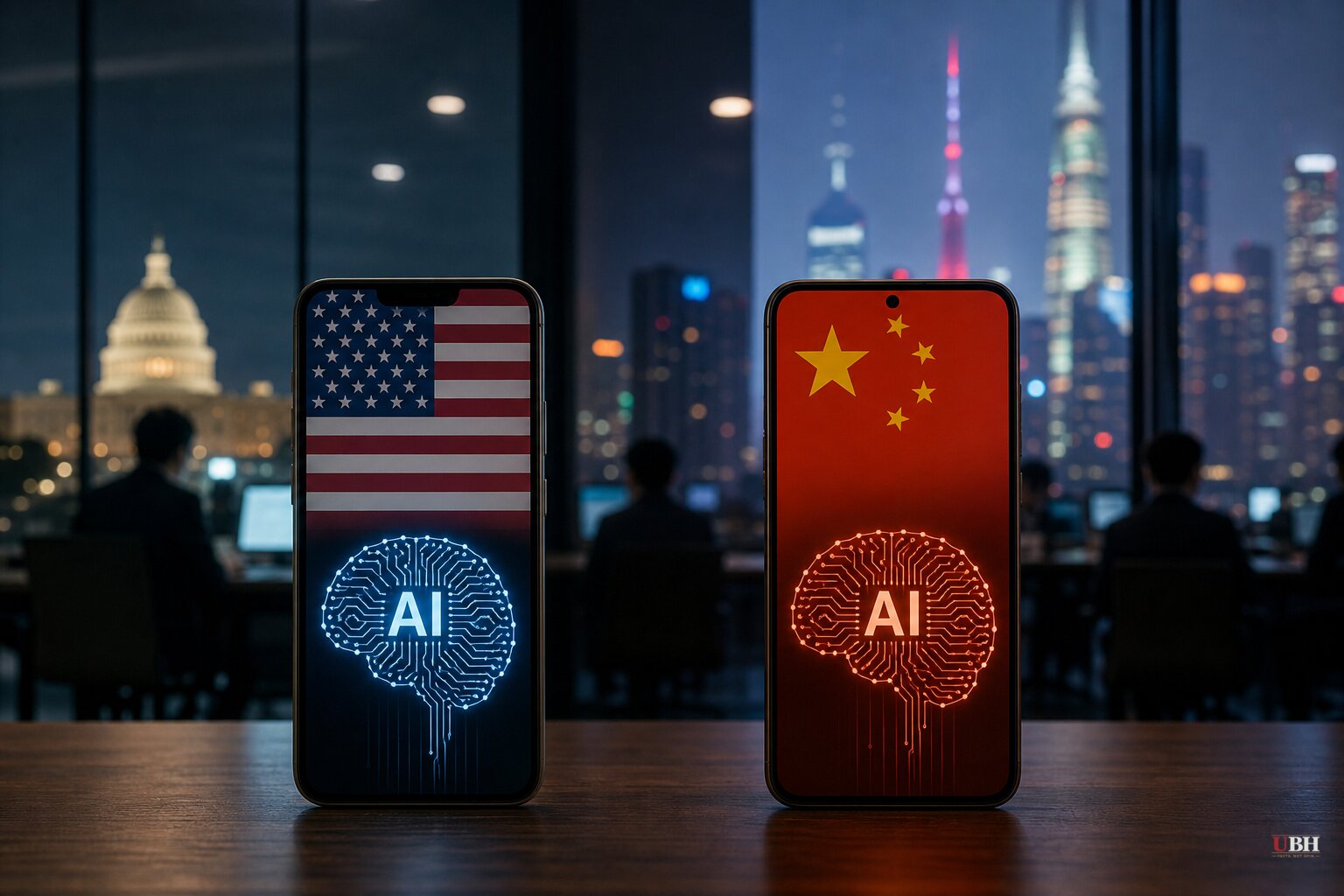
Kai-Fu Lee has spent four decades inside Apple, Microsoft and Google, building out their China operations before founding 01.AI and Sinovation Ventures. In a weekend interview with Bloomberg's Mishal Husain, published September 4, he laid out a blunt argument: the AI race isn't about who builds the smartest model anymore. It's about who builds the one people actually use.
Lee's number is specific. The gap between US and Chinese frontier models, he told Husain, is now roughly six months. When ChatGPT launched in late 2022, that gap was three to four years. Chinese labs closed most of it while operating under US export restrictions that limit their access to advanced chips, using what Lee estimates is 1 to 3 percent of the GPU resources their American counterparts deploy.
"Anthropic and OpenAI have built the iPhone," Lee said, according to Bloomberg. "The Chinese companies are more like the way Google felt. Okay, you got the best product; we'll build something that's almost as good, sell it cheaply and win the larger share. Like Android, the open-source models will have more share, more footprint, more usage."
The names he points to are DeepSeek and Alibaba's Qwen, along with Moonshot's Kimi, according to reporting from AI Weekly and StartupHub.ai on the same interview. Those models are largely open-weight and priced, Lee says, at a sixth to a tenth the cost of their American equivalents. He argues that math is what decides who wins in China, India, and other price-sensitive markets, even if OpenAI, Anthropic and Google keep the top benchmark scores and the fatter margins in US enterprise sales.
Lee isn't claiming China builds better AI. He's claiming China builds AI that's cheap enough to spread faster, and that reach eventually matters more than being first on a leaderboard. Whether that's actually true, or whether premium, closed models retain a durable enterprise advantage that open-weight competitors can't touch, is precisely the argument US labs would make back, and Lee's framing doesn't resolve it either way. It's his assessment, not a neutral benchmark score.
Did Export Controls Backfire?
There's a policy question buried in Lee's numbers that cuts against the intent of Washington's chip strategy. US export restrictions on advanced semiconductors were designed to slow Chinese AI progress by starving labs of compute. Lee's account suggests those same restrictions forced Chinese engineers into aggressive efficiency gains, squeezing comparable output from a fraction of the hardware.
This concern matters for anyone who supported the export controls as a national-security tool. If the restrictions are producing leaner, more resourceful Chinese competitors instead of stalled ones, the policy isn't doing what it was supposed to do. It's a critique that deserves serious attention. Nobody in these sources has produced independent, apples-to-apples benchmark data proving Lee's six-month figure. It's based on decades of operating in both ecosystems, not a third-party audit.
The counter to that critique is straightforward. Without the chip restrictions, Chinese labs might have simply bought more GPUs and closed the gap faster and cheaper. Nobody in these sources runs that counterfactual either.
"AI Theater" and the CEO Problem
Lee was just as sharp about corporate America's use of AI. He dismissed most existing corporate AI programs as "theater," telling Husain that note-taking tools and departmental chatbots are useful but "irrelevant to the real value at stake." His standard: "if your AI program hasn't moved a single number on your earnings call, you didn't transform anything."
He calls 2026 the "Year One of Reasoning Agents" and argues the shift has to be led by CEOs, not CIOs. In his telling, AI is now solving tasks roughly ten times longer, measured in human minutes, than it could a year ago, and he expects org charts at successful companies to look fundamentally different within five years. Small human cores will manage fleets of AI workers, with a designated human held accountable when something goes wrong, since AI itself cannot be.
What's Next
The interview lands just ahead of a concrete diplomatic marker. According to AI Weekly, Treasury Secretary Scott Bessent is scheduled to lead the US side of AI-safety talks with Beijing in mid-September, a meeting that will put questions about compute, export limits and competitive strategy in front of both governments directly rather than in a podcast interview.
Whether Washington treats Lee's six-month number as a warning sign that export controls need tightening, or as evidence the controls already backfired into a leaner Chinese competitor, is a live question those talks will have to grapple with. No US agency or independent benchmarking body has publicly confirmed Lee's specific timeline, and Bloomberg's report presents it as his professional assessment rather than an official measurement.
Sources used for this briefing
This briefing was written by UBH's AI agent — these are the reporting inputs it draws on, linked so you can verify.


