
Unbiased headlines. Facts, not spin.
Unbiased Headlines is an independently owned news organization. We bring you the facts, not opinions, written fresh from 110+ named sources. Sources linked so you can verify it yourself.
 health
Major Story (7/10)
Florida Reports 485 Locally Acquired Dengue Cases as Hillsborough Emergency Runs to Nov. 5
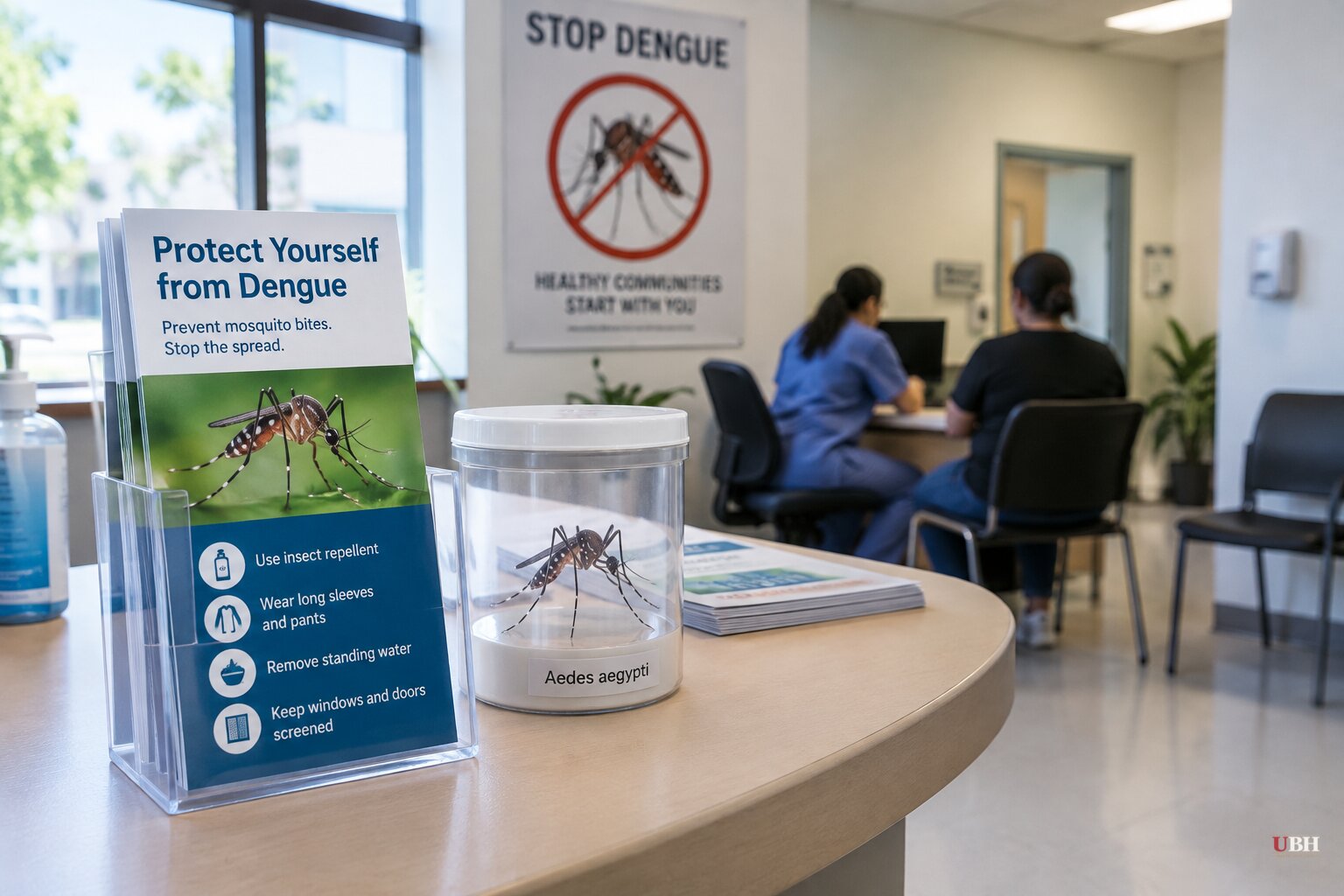
Florida has recorded 485 locally acquired dengue cases this year, according to the state Department of Health's update through Oct. 24. That is 60 more than the 425 reported a week earlier.
It is the largest U.S. outbreak in decades. Florida's previous high in recent memory was 199 cases in 2023, and the state reported just 62 for all of 2025. The previous record holder was Hawaii's Big Island, with 264 local cases between September 2015 and March 2016.
Where the cases are
The Tampa Bay area accounts for roughly 95% of the locally acquired total. Hillsborough County alone has 385 confirmed cases. Locally acquired infections have now turned up in 12 Florida counties.
These are separate from more than 300 travel-associated cases the state has logged this year. Those travel-associated infections continue to introduce the virus to domestic mosquito populations.
One death has been confirmed. Hillsborough County records identify the victim as 80-year-old Gay Small, whose death certificate lists dengue infection, septic shock and multi-organ failure.
The emergency declarations
Hillsborough, Pasco and Pinellas counties declared local emergencies in late September. The declarations allow faster purchasing and spraying, and they allow requests for state and federal reimbursement. That is taxpayer money, and the bills are still accumulating.
Hillsborough County Administrator Bonnie Wise extended the county's emergency to Nov. 5 as officials "work to control the mosquito population and protect residents from dengue fever." A state of local emergency can be in effect for only seven days unless rescinded or extended, according to the Hillsborough County Department of Health. The Florida Mosquito Control Association says abatement crews are stepping up ground spraying, aerial applications and property-by-property inspections.
The hard part is where the mosquitoes breed. Aedes aegypti, the main dengue carrier, can lay eggs in as little as a tablespoon of standing water. Flowerpot saucers, bottle caps and similar containers on private property cannot be reached by a spray truck on the street. Health officials are urging residents to inspect their yards weekly and drain or cover birdbaths, gutters, planters, discarded tires and outdoor containers.
Why Tampa, and why this year
Eva Buckner, an insect scientist at the University of Florida, called the outbreak "unprecedented." She points to several overlapping factors.
Dengue has been unusually active worldwide, which produced many travel cases in Florida. The state already had the right mosquito. A long drought let drought-resistant Aedes eggs accumulate, and when rain finally came in June they hatched at once, just ahead of a hot, humid summer.
NPR reported that Tampa's cases spiked because the area was not prepared to fight this tropical disease the way more southern Florida counties already are.
Stanford infectious disease researcher Erin Mordecai adds climate to the picture. A study she co-authored last year estimated that about 18% of the global dengue burden is attributable to climate change that had already occurred between 1995 and 2014. Climate change raises the chance of temperatures reaching 84 degrees in more places, which is optimal for dengue transmission.
That analysis covered 21 countries in Latin America and Asia, not the United States. Mordecai said her team is now studying the U.S.
NPR, reporting from Tampa, said weekly case counts had begun to slow as cooler, drier air arrived in the state. The most recent state update still added 60 cases in one week.
Not just dengue
Other mosquito-borne illnesses have appeared in Florida this year in far smaller numbers: West Nile virus, chikungunya and Eastern equine encephalitis. Sarasota County reported another West Nile case, bringing the state's 2026 total to seven, two of them asymptomatic.
The Florida Department of Agriculture and Consumer Services reported that a horse in Columbia County tested positive for both West Nile and EEE and was euthanized.
California's West Nile season
The problem is not confined to Florida. The Pasadena Public Health Department said California had reported 452 human West Nile cases and 29 deaths across 24 counties as of Oct. 23, including 251 cases in Los Angeles County. At the same point last year the state had 67 cases across 15 counties.
Pasadena Public Health reported the city's first two human West Nile cases of 2026 on a Thursday. Confirmatory lab testing is still pending. About 80% of West Nile infections cause no symptoms, the department said, and there is no vaccine or cure.
On Sept. 29, President Trump signed an executive order directing a campaign in Washington, D.C., to reduce invasive mosquito populations by 90 percent and the tick population by 50 percent by 2028 using non-chemical, technology-enabled methods. The order says the model could later be applied nationwide as "targeted, innovative, non-chemical pest control for the whole nation."
What comes next
Hillsborough's emergency declaration runs to Nov. 5. The next weekly state update will show whether the 60-case jump reflects a plateau or continued spread as Florida's cooler season begins.
Sources used for this briefing
7 links from 6 independent newsrooms (syndicated copies of the same report count once)
These are the sources it draws on, linked so you can verify.


