
Unbiased headlines. Facts, not spin.
Every story is an unbiased news briefing written from 110+ sources across the spectrum — sources linked so you can verify it yourself.
 energy
Low Interest (4/10)
June 20, 2026 at 05:26 PM
energy
Low Interest (4/10)
June 20, 2026 at 05:26 PM
Florida Cities Ramp Up Sargassum Cleanup as Seaweed Returns to South Florida Beaches
Seaweed Is Back. So Is the Fight Over What to Do About It.
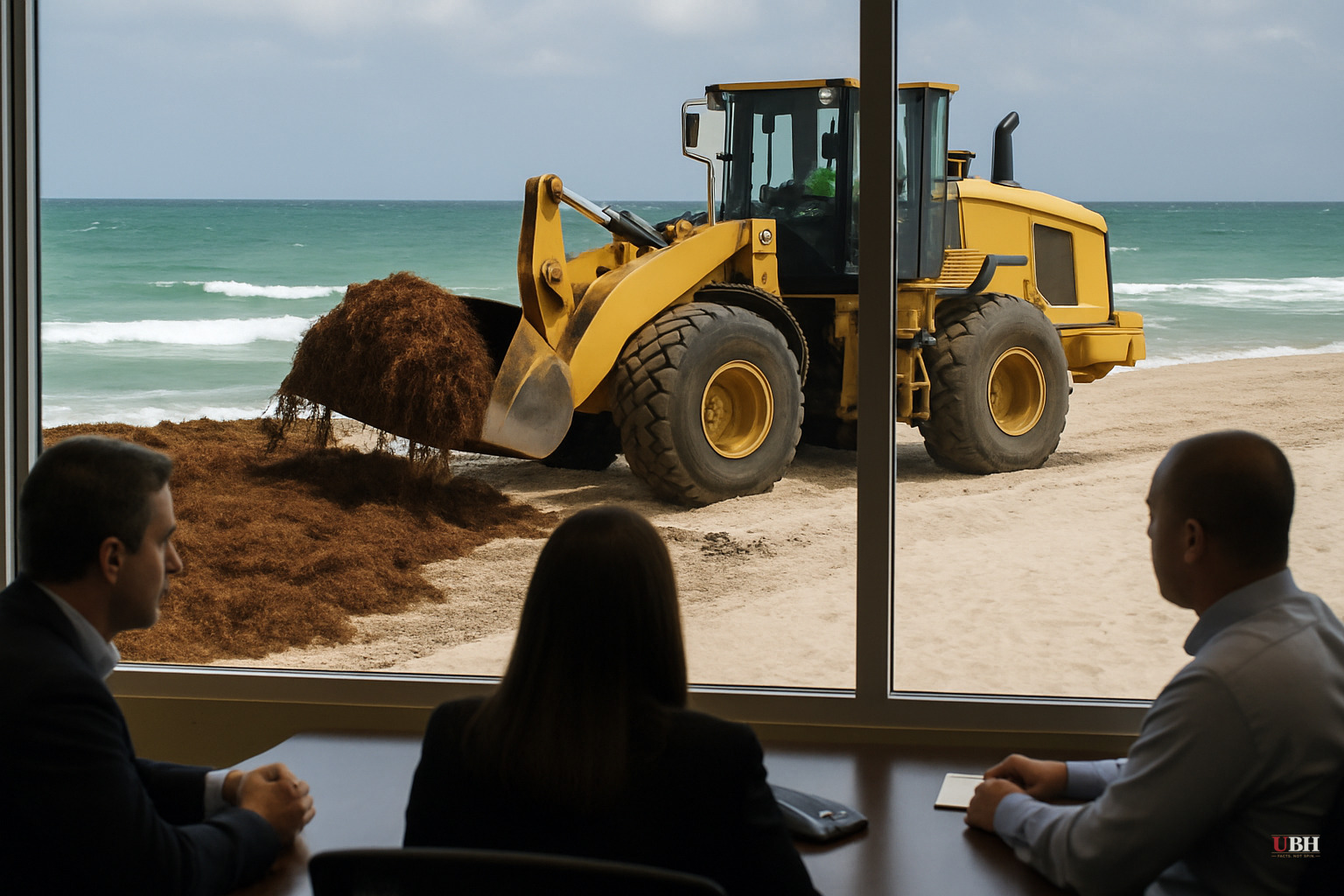
Sargassum is washing ashore again along South Florida's coastline, and coastal municipalities are once again ramping up cleanup efforts as the brown macroalgae returns. NBC Miami reported that Florida cities have increased their cleanup operations as the seaweed arrives.
What It Costs and Who Pays
Beach cleanup is not free. Heavy equipment, labor, hauling, and disposal add up fast, and the bill lands on local taxpayers. Individual municipalities typically absorb the cost through their parks and public works budgets, with some seeking state or federal reimbursement after the fact.
Florida's tourism economy depends heavily on clean, accessible beaches. A beach blanketed in rotting seaweed, which releases hydrogen sulfide as it decomposes and produces a distinct sulfur odor, drives tourists away fast. The economic case for aggressive cleanup is straightforward.
The Environmental Counterargument, Stated Fairly
Conservationists raise a legitimate concern: Sargassum is a natural ecosystem. Offshore mats provide critical habitat for sea turtles, juvenile fish, and dozens of other species. Removing it from the nearshore environment at industrial scale disrupts that ecology, and mechanical beach raking can damage sensitive coastal habitat.
Some environmental groups argue that selective, manual removal rather than blanket mechanical clearing is the responsible approach, even if it is slower and more expensive.
That represents a real tradeoff. But decomposing seaweed in large volumes on populated beaches also creates public health concerns, including respiratory irritation from hydrogen sulfide exposure.
What Cities Are Actually Doing
NBC Miami reported that Florida cities have ramped up cleanup efforts as the seaweed returns, though specific dollar figures and named city officials directing operations were not detailed in the available reporting.
The standard approach involves front-end loaders and specialized beach-cleaning machines that sift sand, collect the seaweed, and haul it to disposal sites or composting facilities. Some counties have explored using harvested Sargassum for fertilizer or biofuel, but those programs remain small-scale and experimental.
The Bigger Problem Nobody Has Solved
None of the cleanup activity addresses the root causes driving large sargassum arrivals. What Florida cities are managing on their beaches is a downstream consequence of dynamics operating far beyond their control. Local cleanup crews can move the seaweed off the sand. They cannot stop it from coming.
Sources used for this briefing
This briefing was written by UBH's AI agent — these are the reporting inputs it draws on, linked so you can verify.


