
Unbiased headlines. Facts, not spin.
Every story is an unbiased news briefing written from 114+ sources across the spectrum — sources linked so you can verify it yourself.
 tech
Major Story (7/10)
Event date: October 10, 2026
tech
Major Story (7/10)
Event date: October 10, 2026
Flock Safety Plans to Cut About 270 Jobs, Sources Say, as Lawsuits, Senators and Cities Press the Company
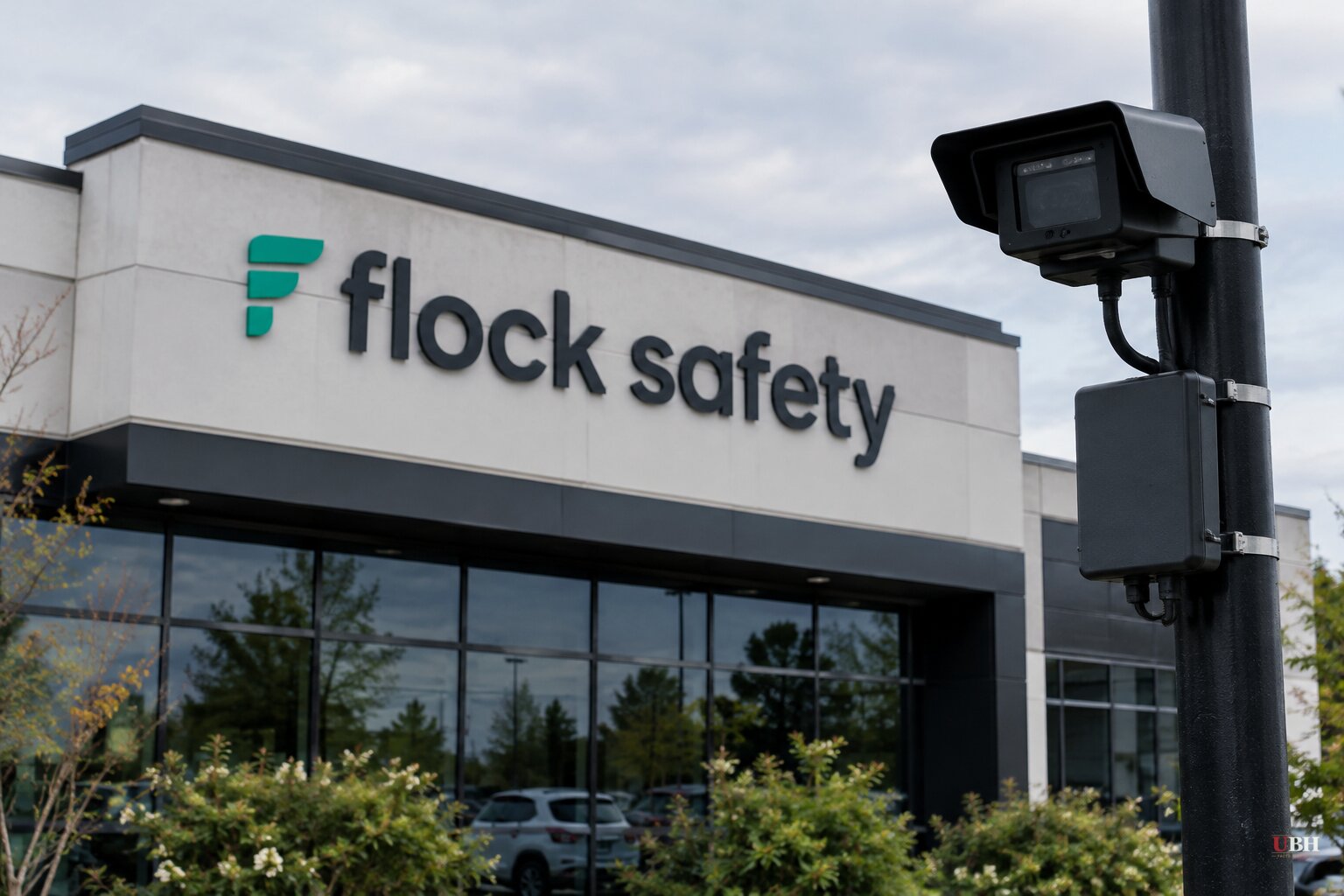
Flock Safety plans to cut about 18% of its workforce, roughly 270 of its 1,500 employees, according to people with direct knowledge of the plans who spoke to Reuters. They asked not to be identified because the company has not made the plan public. Flock declined to comment.
The cuts follow a voluntary separation program the company announced in September, which Wired first reported. The affected employees are expected to leave at the end of this month.
Flock has not said why it is cutting. What is documented is the pressure around it.
Cities are cancelling
The Oakland-based group Secure Justice, which tracks license plate reader use by municipalities, counts 214 cities that have dropped Flock since 2021. By its count, 90 of those cancellations came in August 2026 alone, a monthly record. At least three towns have reported that Flock cameras were reinstalled or reactivated after local officials ended their contracts.
Flock still has scale. It runs about 120,000 cameras in 49 states and sells to more than 4,800 law enforcement agencies and nearly 1,000 businesses. A $275 million round in March, led by Andreessen Horowitz, valued the company at $7.5 billion.
In September, Florida banned automated license plate readers from state highways, citing privacy risks tied to Flock's cameras. A Reuters/Ipsos poll found 38% of Americans support Flock cameras in their community and 47% oppose them.
Courts, Congress and attorneys general
This month, U.S. District Judge Sara E. Hill in Oklahoma ruled that a sheriff's deputy violated a woman's Fourth Amendment rights by searching a month of her location history through license plate readers. "This is a type of indiscriminate mass surveillance," Hill wrote. It is one of the first rulings on the constitutionality of such searches, and it does not set binding precedent.
A Senate Judiciary subcommittee, chaired by Republican Josh Hawley with Democrat Dick Durbin as ranking member, held a hearing on the company's data practices. Witnesses included a Florida woman wrongly jailed, an Arizona sheriff who ended his county's Flock contract, a security researcher and attorneys from the ACLU and the Institute for Justice. Flock did not send anyone.
CEO Garrett Langley sent a letter that Hawley read aloud. It said Flock "conducts very little oversight of client searches and instead relies on its clients to police themselves." Search records belong to each agency, and customers control retention. Until last year, customers could type a reason for a search into a free text field.
The woman, Lindsey Isaacs, testified that Flock cameras photographed her Dodge Durango and that investigators linked it to an October 2025 crash that killed three people. Six months later she was jailed on a vehicular homicide charge. It took 13 days, and photos of her undamaged impounded SUV, to get her out.
South Carolina Attorney General Alan Wilson sent Langley a letter dated Oct. 2 asking whether Flock uses AI to identify vehicles or people, how it restricts access to data and what its retention policies are. He wants answers within 30 days. Wilson, the Republican nominee for governor, said he supports police using the "latest tools available to them in their crime-fighting efforts." He added, "even the best tools have the potential for misuse."
Flock said it looks forward to responding and described its "safeguards built into our platform."
A $25 package and a federal lawsuit
On Oct. 5, Denver resident Chrisanna Elser filed suit in the U.S. District Court for the District of Colorado against the Columbine Valley Police Department, Sgt. Jamie Milliman and Flock. She says Milliman accused her in September 2025 of stealing a $25 package in Bow Mar because Flock cameras placed her vehicle nearby. She says she was at a tailor more than a quarter-mile away.
Doorbell video captured Milliman saying, "we have cameras everywhere in that town. You can't get a breath of fresh air in or out without us knowing." Elser says he declined to look at her dashcam footage. Police Chief Cottrell wrote in a November 2025 letter that Milliman's demeanor was unprofessional. The department declined to comment on the lawsuit.
Her attorney, Andy McNulty, plans to seek class-action status. "Flock is creating this technology and giving it to these officers with no guardrails, no oversight, no meaningful training," he said.
Flock's position is that its cameras accurately recorded where her vehicle was, and that interpreting the data and investigating crimes is the job of law enforcement.
What Flock says it delivers
Phil Arnold, Flock's public affairs manager and a retired Illinois police chief, says the cameras narrow searches so officers are not stopping every vehicle that fits a vague description. Flock supplied an internal report comparing clearance rates in cities with and without its cameras. In the first half of 2026, Nashville cleared 7% of motor vehicle thefts, versus 40% in Hendersonville, which uses Flock. In Eugene, Oregon, where cameras ran through October 2025 and were then removed, the report says vehicle-theft clearance fell from 15% to 9%.
Those figures come from Flock's own report. They compare different cities, and the company's materials do not address other factors that affect clearance rates.
The case from the other side is also on the record. The Isaacs and Elser cases both involved a camera hit that police treated as strong evidence. Flock's letter to the Senate says the company does little to check how agencies search the data.
What comes next
The Senate session was a legislative hearing, not an investigative one. If the subcommittee escalates, it could subpoena Langley instead of inviting him. Wilson's 30-day window runs to around Nov. 1, two days before the Nov. 3 election, where Flock cameras have become a campaign issue.
A privacy lawsuit in Virginia alleging warrantless surveillance is also pending. Home Depot investors have demanded reviews of the retailer's ties to surveillance vendors after reports that Flock data was used in immigration enforcement.
Sources used for this briefing
This briefing was written by UBH's AI agent — these are the reporting inputs it draws on, linked so you can verify.


