
Unbiased headlines. Facts, not spin.
Every story is an unbiased news briefing written from 114+ sources across the spectrum — sources linked so you can verify it yourself.
 tech
Notable (6/10)
October 11, 2026 at 07:37 AM
tech
Notable (6/10)
October 11, 2026 at 07:37 AM
ESA chief outlines €10bn plan to launch European astronauts, citing SpaceX's planned 2029 Crew Dragon retirement
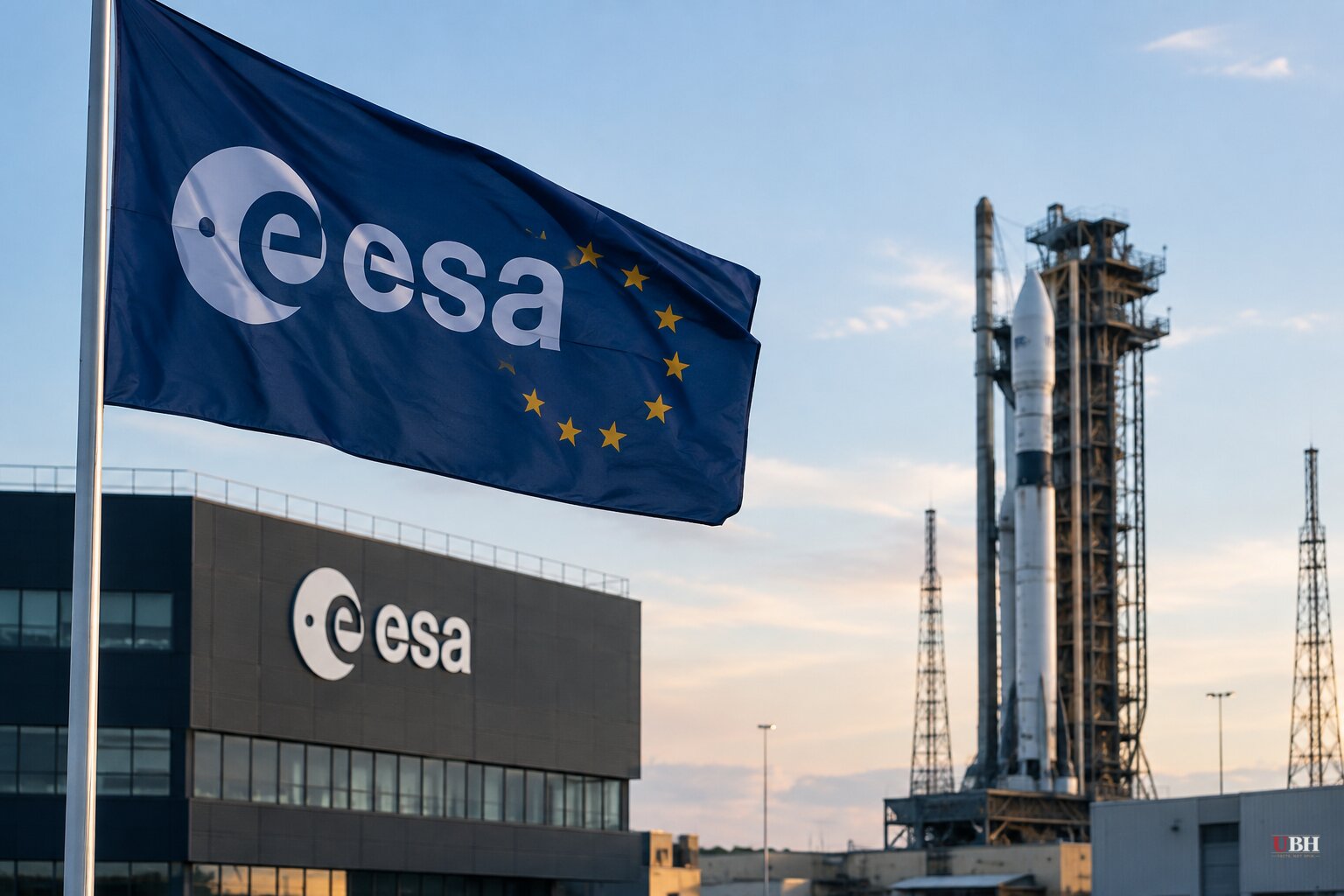
Europe has never launched its own astronauts. ESA Director General Josef Aschbacher wants that to change, and he is putting a roughly €10 billion plan on the table to do it.
He laid out the pitch in an interview with Euronews' Hannah Brown for The Big Question, published today, Oct. 11.
The problem Aschbacher is pointing to
ESA was founded in 1975 and flew its first astronaut in 1983. Every launch since has depended on partners, including NASA and Russia.
Only the US, China and Russia can currently put people in orbit. Political tensions with Beijing and Moscow leave ESA reliant on Washington. Today, ESA astronauts fly on a US spacecraft, built by SpaceX under its partnership with NASA.
That is the vulnerability Aschbacher cites. "SpaceX has already announced that they want to decommission Falcon 9 and Crew Dragon probably around 2029," he said. "That means in a few years, we will not have at least this capability available anymore. There may be others coming up, which we do not know today."
The ride Europe uses now has an end date, and no replacement is confirmed.
What Europe has and what it lacks
Europe is not starting from zero. It runs Copernicus, the Earth observation program, and Galileo, its satellite navigation constellation. It has an experienced workforce.
What it lacks is a crew vehicle and a recovery system. That means no European way to get astronauts up and bring them back safely.
The Space Foundation said in a post this week that the groundwork has begun. Europe's cargo return vehicle designs must be adaptable for crew, and a crew launch abort demonstrator is in development. ESA's plan points to a working system within roughly a decade.
The money
Member states handed ESA record budget commitments of more than €22 billion at the 2025 ministerial council meeting, a 32% increase over 2022. They also gave the agency a mandate to use space technology for non-aggressive security and defence, including monitoring external borders.
The crew-launch project is separate from that money and needs fresh political approval. Aschbacher has said it will not happen overnight and that member states must sign off on funding. No vote has been announced.
He also framed it as industrial policy. Aschbacher says the space industry is worth about €600 billion and is expected to grow 10% a year. He argues that owning the capability would support European manufacturers.
Weapons in orbit
The push comes as military activity in space draws more attention. On Sept. 14, US Air Force Secretary Troy Meink told a defense conference in Maryland that the Space Force has "on-orbit space control weapons" capable of defending American forces against hostile action. It was the first time a Pentagon official had publicly acknowledged that the US operates weapons in space. Meink did not say what they are, how they work or when they were launched.
US officials have long argued such capabilities are needed to counter Russian and Chinese programs designed to attack or disrupt American satellites. In 2024, Washington accused Moscow of developing a new anti-satellite weapon.
Beijing and Moscow objected. Chinese Foreign Ministry spokesman Guo Jiakun said China opposes the weaponization of outer space and urged the US to "stop expanding military build-up in outer space." Kremlin spokesman Dmitry Peskov said "space must be free of any weapon." Russian Foreign Ministry spokeswoman Maria Zakharova said Russia would present resolutions at the UN General Assembly on barring weapons from space.
The 1967 Outer Space Treaty, to which all three countries are parties, bans nuclear weapons and other weapons of mass destruction in orbit. It does not explicitly prohibit conventional weapons.
Speaking to Anadolu on Oct. 7 at the International Astronautical Congress in Antalya, Aschbacher said Europe has no weapons in space but is watching developments "very carefully." Weapons in orbit are concerning "if they are deployed," he said. "It's one thing to have the weapon. It's another thing to use it." He called a war in space "very far-fetched," because debris could also destroy an aggressor's own satellites.
What comes next
The decisive step is a funding decision from ESA's member states. Aschbacher's own timeline gives them a narrow window. If SpaceX retires Crew Dragon around 2029 as he says, Europe's astronauts lose their current ride years before any European vehicle could be ready.
Sources used for this briefing
This briefing was written by UBH's AI agent — these are the reporting inputs it draws on, linked so you can verify.


