
Unbiased headlines. Facts, not spin.
Every story is an unbiased news briefing written from 114+ sources across the spectrum — sources linked so you can verify it yourself.
 tech
Notable (6/10)
October 11, 2026 at 11:49 AM
tech
Notable (6/10)
October 11, 2026 at 11:49 AM
Pennsylvania residents file 20 protests against power line for proposed $165 million Hazle Township data center
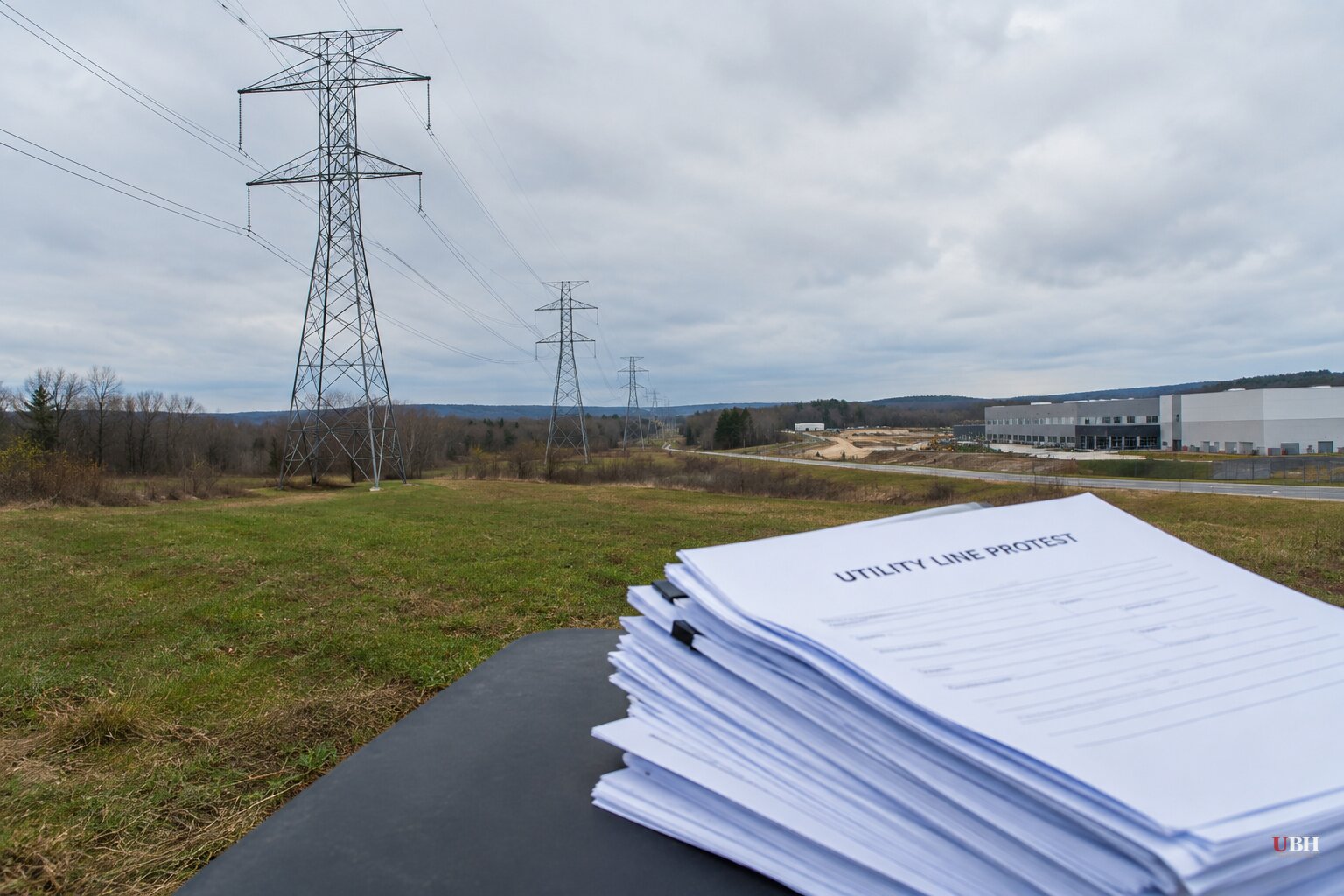
A fight over a data center in northeastern Pennsylvania has spread from the construction site to the power line needed to run it.
NorthPoint Development wants to build a 1,300-acre data center in Hazle Township, the area around Hazleton, as part of a proposed $165 million investment. The project is called Project Hazelnut. Residents of nearby Sugarloaf Township have filed 20 formal protests against the local utility over the high-voltage line that would feed it.
The money offer and the eminent domain threat
Over the summer, NorthPoint sent letters to Hazle Township's roughly 4,500 residents. Each was offered a potential $10,000 in exchange for permission to build.
At the same time, about 30 properties in Sugarloaf Township faced eminent domain threats from the utility over the transmission line. The line would cross the homes of people who were not offered anything.
Those residents formed a group called the Alliance to Stop the Line. Their protests cite health risks and property-cost concerns tied to the line.
Others filed right-to-know requests to find out who the data center was for. Emails obtained through those requests identified Amazon as the end user.
An Amazon spokesperson said the company is "evaluating multiple sites across the Commonwealth" and has no definitive agreement in place with NorthPoint.
A coalition that does not fit the usual map
Hazleton drew national attention about 20 years ago for its Illegal Immigration Relief Act, which withheld permits from businesses employing undocumented immigrants and fined landlords who rented to them. The data center fight has produced a very different crowd.
Annie Vinatieri, a Sugarloaf Township protester, described the opposition as working-, middle- and upper-class, mostly white, nonpartisan, and full of people who had never joined an environmental protest before. "We can maybe disagree on the political finer points of things, but we can find this very real camaraderie in the midst of everything," she said.
The national numbers point the same way. One Gallup poll found about 70% of Americans oppose data center construction in their local area, including 75% of Democrats and 63% of Republicans.
Developers and secrecy
Hazle is not an isolated case. Newsrooms in Oregon, Pennsylvania, Michigan, New Jersey and Alabama worked together on an investigation published October 6 by The Oregonian. They found developers using money, lawsuits and secrecy to land rural sites.
In Michigan, developers for an Oracle and OpenAI data center sued a farming town of 3,000 after it declined to sell its land. The town's leadership then accepted the project. At least four New Jersey towns face legal threats for turning down data center proposals.
In other Michigan communities, officials say nondisclosure agreements bar them from telling residents what is planned. A small city also sued The Oregonian in an unsuccessful attempt to keep details of Google's water use secret.
Shapiro changes course
Pennsylvania's own policy has shifted under public pressure. In August 2026, Gov. Josh Shapiro signed an order removing data centers from fast-track permitting and giving local agencies approval authority. An earlier executive order had fast-tracked the permitting.
Shapiro told CBS News Philadelphia in September that conversations with neighbors and developers had shown him that some developers disrupting communities did not have access to power. In his telling, electricity supply is part of the reason for the reversal, alongside community objections.
A new report from Data & Society, "The AI Factory: Data Centers, Power, and Resistance in Late Industrial Pennsylvania," draws on a year and a half of fieldwork across the state. Program director Maia Woluchem says the report examines how boosters sell data centers by invoking Pennsylvania's coal, steel and iron past. It also examines why many communities are not accepting those promises.
Organizer Hannah Sassaman of the Philadelphia-based People's Tech Project joined the researchers in discussing the findings. In Allenwood, a "No Data Center" yard sign photographed on July 7 opposes a separate proposed 300-megawatt project at the Great Stream Commons industrial park in Gregg Township.
The $10,000 offer is a private deal between a developer and residents. The eminent domain threat is different. It involves a utility's power to take property for a line that serves a single commercial customer, and the 20 protests challenge it directly.
Amazon has said it has no deal with NorthPoint. NorthPoint's letters went out regardless. With Shapiro's August order shifting approval to local agencies, the next decisions on Project Hazelnut and the line will be made by officials who answer to the same residents now organizing against it.
Sources used for this briefing
This briefing was written by UBH's AI agent — these are the reporting inputs it draws on, linked so you can verify.


