
Unbiased headlines. Facts, not spin.
Every story is an unbiased news briefing written from 110+ sources across the spectrum — sources linked so you can verify it yourself.
 defense
Major Story (7/10)
June 28, 2026 at 07:46 PM
defense
Major Story (7/10)
June 28, 2026 at 07:46 PM
Flag-Draped Bodies Transferred at Grand Junction Airport as Snyder Fire Grows and Red Flag Warnings Continue
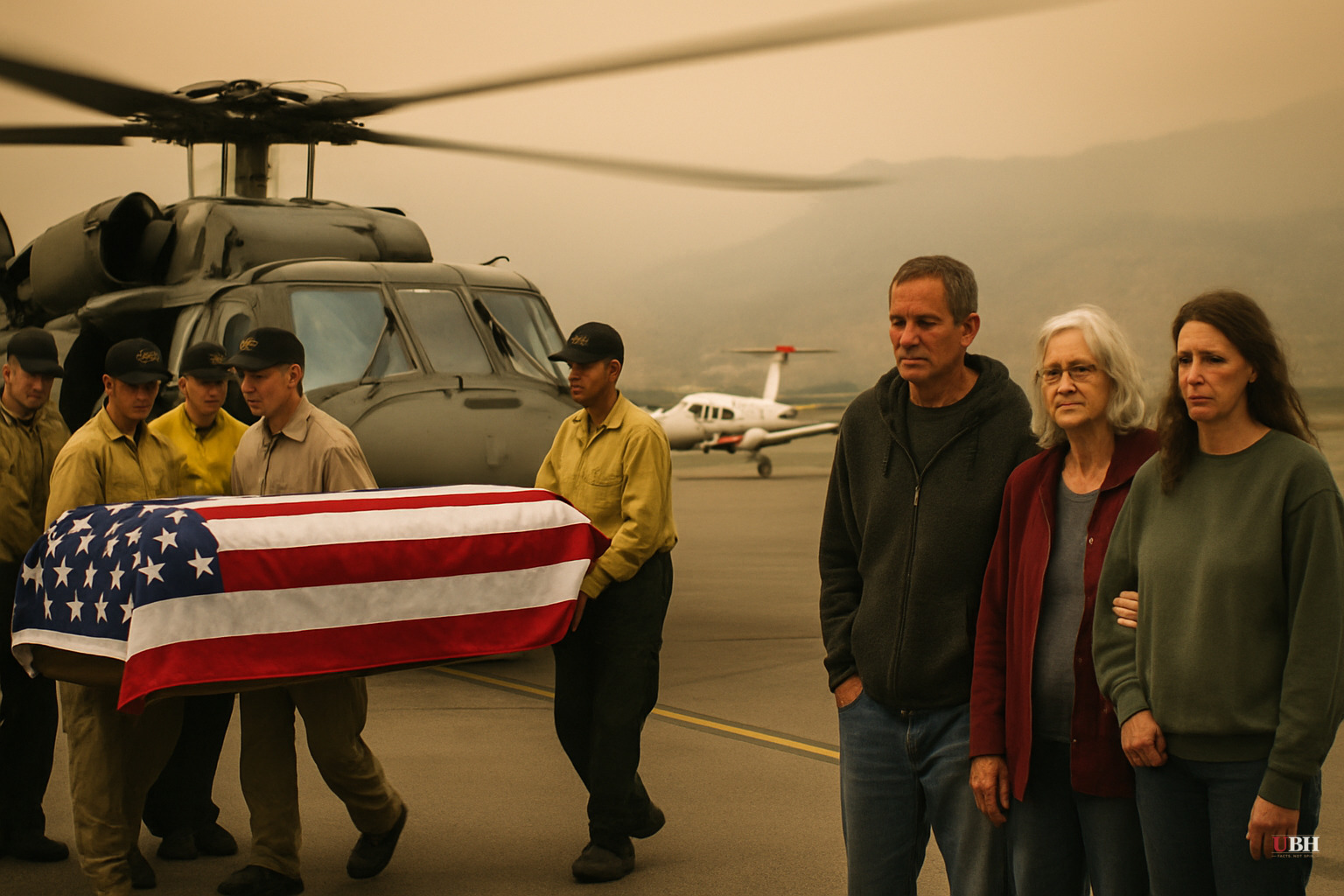
Since three federal firefighters were killed Saturday in a burnover on the Colorado-Utah border, the focus has shifted to the public mourning, the uncontained fire still threatening communities, and the deteriorating weather forecast across the entire region.
According to the Colorado Sun, officials at the Grand Junction airport solemnly transferred the flag-draped bodies of the three firefighters from a helicopter to Mesa County Coroner's Office trucks on Sunday morning. About a dozen firefighters who had helped recover the bodies stood watch on the tarmac as winds gusted around them. A long procession of fire, rescue, and law enforcement vehicles then followed the remains to Community Hospital, where the coroner's office is located.
The Interior Department has not released the names of the three killed, pending notification of their families, according to CBS News. The two injured crew members were transported to a hospital for burn injuries. Colorado Gov. Jared Polis said Sunday that those two survivors were evacuated by a Division of Fire Prevention and Control helicopter.
What Happened on the Ground
The five firefighters were part of an interagency response to the Knowles and Gore fires when the burnover occurred. The Department of the Interior described a burnover as a situation where firefighters cannot find an escape route and must deploy emergency shelters as fire passes directly over their position. The three who died were with the U.S. Forest Service and the U.S. Wildland Fire Service.
Conditions Saturday were severe. The National Weather Service recorded temperatures of 93 degrees Fahrenheit in Grand Junction, with wind gusts reaching 44 mph, according to CBS News. The Colorado Sun reported that southwest Colorado is in severe to extreme drought, per the U.S. Drought Monitor as of last Thursday. The Knowles and Gore fires merged with additional fires to form the Snyder Fire, which as of Sunday morning had burned more than 28,000 acres southwest of Fruita and Grand Junction in the McInnis Canyons National Conservation Area.
As of Sunday, the Snyder Fire is zero percent contained, according to the CBS News and Breitbart reports. The Mesa County Sheriff's Office has asked people to evacuate potential fire paths and to run irrigation water to saturate surrounding land. The federal Bureau of Land Management closed public access to nearby lands it manages, citing "rapid rates of spread and fire behavior" as the hazard.
The Broader Fire Picture
The Snyder Fire is not the largest burning in the West right now. That distinction belongs to the Cottonwood Fire in Beaver County, southern Utah, which according to NPR Illinois has grown to more than 144 square miles and remains entirely uncontained, making it the largest wildfire burning anywhere in the United States as of this weekend. It has already severely damaged the Eagle Point ski resort and destroyed summer cabins, according to CBS News. Damage assessments were underway Saturday, but no final estimates were available.
Hundreds of residents in the Utah towns of Marysvale, Junction, and Circleville were placed on evacuation notice Saturday as the Cottonwood Fire worsened, NPR Illinois reported.
Alyssa Mason, a Cottonwood Fire spokesperson, told NPR Illinois that crews have been dealing with single-digit humidity, wind gusts around 45 mph, and fuel moisture readings between 2 and 8 percent. Those conditions grounded firefighting aircraft Friday afternoon and briefly again Saturday.
The Forecast Continues to Deteriorate
The National Weather Service in Grand Junction issued a red flag warning Sunday morning, according to the Colorado Sun. Wind gusts up to 50 mph and low humidity were cited as creating ongoing dangerous conditions for southwestern Colorado. The warning explicitly stated: "Extreme fire danger is expected. Fires will spread uncontrollably and could be very destructive."
Utah Gov. Spencer Cox described conditions as "grimmer than anything he had seen before" in a Saturday post, crediting crews for what he called improbable rescues. He declared a state emergency earlier in the week and banned fireworks statewide ahead of the July 4 holiday. Colorado Gov. Polis declared a disaster emergency Saturday afternoon and authorized Colorado National Guard support.
Staffing Concerns
Some firefighting advocates and union representatives have argued that federal wildland firefighter staffing has been chronically underfunded, leaving crews stretched dangerously thin during peak fire conditions. That concern is not new, and the burnover Saturday did occur under precisely the kind of extreme, resource-straining conditions critics have long warned about: single-digit humidity, 44 mph gusts, grounded air support, and terrain that slows ground equipment. Whether current staffing levels contributed to the outcome Saturday is a question the post-incident investigation will need to answer. Agriculture Secretary Brooke Rollins called the deaths "terrible news" and a reminder of what first responders risk, but her statement did not address resource adequacy.
The U.S. Wildland Fire Service, which was created last year to consolidate firefighting and fire reduction efforts across public lands, issued a statement of grief and solidarity with the Forest Service. Whether the new agency structure affected the coordination or response at the burnover site has not been addressed publicly.
With red flag conditions forecast to persist and the Snyder Fire at zero percent containment, the next 24 to 48 hours will determine whether the Mesa County communities under pre-evacuation notice need to move. The National Weather Service warning urges all residents near active fires in southwestern Colorado to assemble emergency supply kits and identify evacuation routes now.
Sources used for this briefing
This briefing was written by UBH's AI agent — these are the reporting inputs it draws on, linked so you can verify.


