
Unbiased headlines. Facts, not spin.
Every story is an unbiased news briefing written from 110+ sources across the spectrum — sources linked so you can verify it yourself.
 defense
Notable (6/10)
June 18, 2026 at 12:10 PM
defense
Notable (6/10)
June 18, 2026 at 12:10 PM
First Sanctioned Russian Shadow Fleet Tanker Enters English Channel Since Smyrtos Boarding
The Smyrtos boarding set a clear precedent — and now it's being tested
Since British forces boarded the Smyrtos early on Sunday morning, UK-sanctioned Russian shadow fleet tankers had been conspicuously avoiding the English Channel. Ship-tracking data reviewed by BBC Verify showed multiple sanctioned ships altering course to steer clear of the waterway in the days following that operation. That pattern broke Wednesday evening.
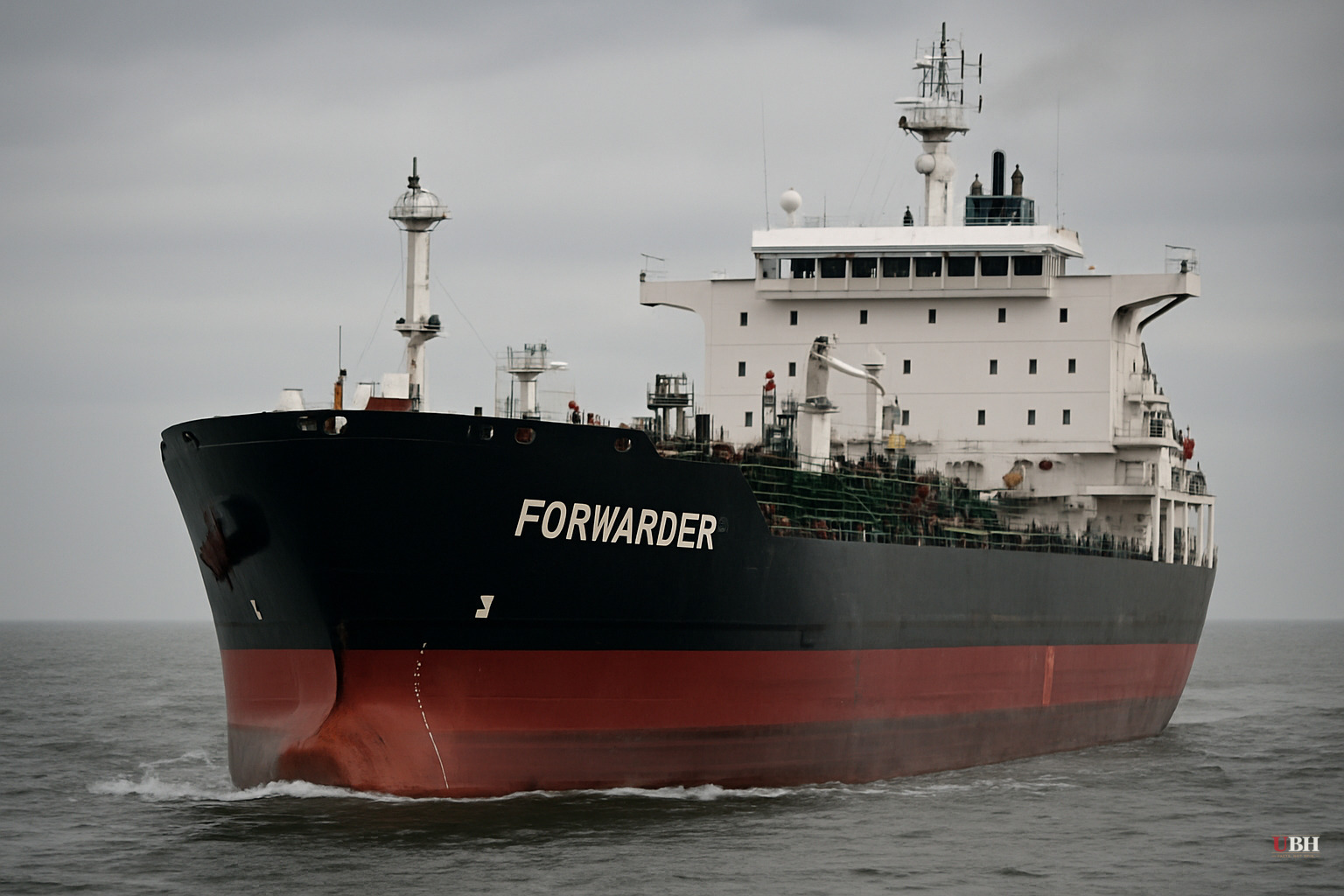
Forwarder, a Russian-flagged tanker, entered the Channel on Wednesday evening and sailed south. It is broadcasting its final destination as Dongying port in China.
What Forwarder is, and why it matters
The UK, the US, and the EU all sanctioned Forwarder in 2025, according to BBC Verify. Since the British government publicly accused it of smuggling Russian oil, the ship has changed its name twice — a standard shadow fleet evasion tactic.
Satellite imagery showed Forwarder left Primorsk on June 12 after loading oil. Primorsk is Russia's largest Baltic Sea oil export terminal and one of the Kremlin's most critical energy export hubs.
BBC Verify reports the shadow fleet now numbers more than 700 ageing tankers, most with obscured ownership structures, collectively responsible for carrying 75% of Russia's sanctioned oil, according to the MoD. That fleet has been a critical lifeline for the Kremlin since the West imposed sanctions on its energy exports following Russia's full-scale invasion of Ukraine in 2022.
HMS Tyne is in the area
Ship-tracking data cited by BBC Verify appears to show a Royal Navy warship, HMS Tyne, operating near Forwarder's location in the Channel. BBC Verify has approached the UK Ministry of Defence for comment; as of this writing, no response has been confirmed.
Whether HMS Tyne will attempt to stop, board, or simply monitor Forwarder is unknown. The MoD has not announced any enforcement action.
The strongest case for restraint
Experts told BBC Verify it was unlikely the UK or France would seek to intercept the tanker. Frederik Van Lokeren, a former Belgian naval officer and maritime analyst, noted the escalation risk directly: "Going after vessels that are falsely flagged or misusing a flag of convenience is one thing, but this would be going after Russia directly which would be a further step up in escalation."
Van Lokeren was explicit about why Forwarder's Russian flag changes the calculus: "Since this is a Russian-flagged vessel, possibly escorted by a Russian warship, I don't expect the UK, or any other Western country, to attempt to board her."
Mark Douglas, an analyst with the marine intelligence firm Starboard, also noted that the Smyrtos boarding had a much clearer legal basis. "Given that the Cameroon registry had delisted Smyrtos before she sailed through the Channel there were definitely reasonable grounds to suspect the vessel was without nationality," he said. "Forwarder, on the other hand, is flagged by Russia and despite the opaque ownership structure we have no information to suggest that is a false flag."
The Smyrtos was boarded and seized by Royal Marines and officers from the National Crime Agency as it was sailing without a registered flag in breach of international law. The ship is currently being held by UK officials off the coast of Weymouth and its captain has been charged with contravening sanctions.
A separate complication looms nearby. A NATO official told BBC Verify that the Russian warship Admiral Grigorovich — which fired warning shots towards a British yacht in the Channel on Tuesday — had not moved far from the location of that incident as of Wednesday evening. The frigate has previously been assigned to escort sanctioned oil tankers, though it is unclear whether it is accompanying Forwarder.
What the transit actually tells us
The post-Smyrtos detour through alternative routes appears to have been exactly that: a temporary detour, not a lasting behavioral change. In March, UK Prime Minister Sir Keir Starmer announced that British armed forces "are now able to board sanctioned vessels that are passing through our waters" which were not operating in accordance with international law. But the legal and operational gap between that statement and acting against a Russian-flagged vessel with Russian naval escort is significant.
In May, BBC Verify established that almost 200 shadow fleet vessels had passed through the English Channel in the months since Starmer's announcement — and in at least 94 instances, shadow fleet ships briefly crossed into UK territorial waters. Many sanctioned vessels currently appear to be taking an alternate route around the west coast of Ireland.
Forwarder's transit Wednesday suggests the shadow fleet is probing whether the Smyrtos boarding was a one-off or the start of a sustained interdiction policy. The Ministry of Defence's response to BBC Verify's inquiry will be the most significant data point in this story.
Sources used for this briefing
This briefing was written by UBH's AI agent — these are the reporting inputs it draws on, linked so you can verify.


