
Original briefings. Zero spin.
Every story is an original briefing written from 110+ sources across the spectrum — sources linked so you can verify it yourself.
 energy
Notable (6/10)
September 11, 2026 at 03:10 AM
energy
Notable (6/10)
September 11, 2026 at 03:10 AM
First Qatari LNG Tanker Since July Docks in Pakistan After Crossing War-Torn Strait of Hormuz
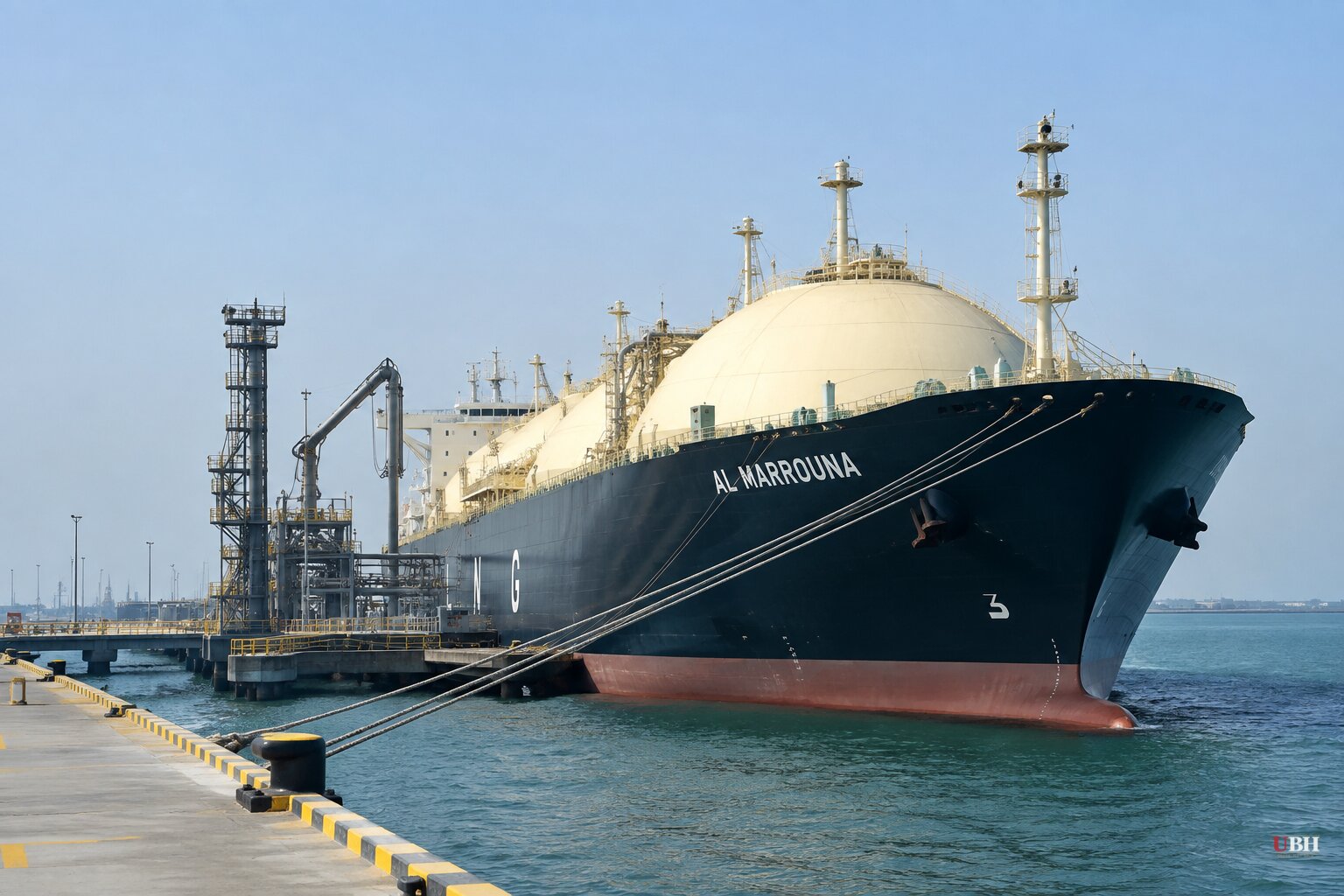
Since Qatar declared force majeure on its Ras Laffan LNG exports following Iranian strikes on the terminal months ago, Pakistan has been rationing power and paying through the nose for whatever spot cargoes it could find. That changed, at least for one shipment, on Thursday.
The Al Marrouna, a Bahamas-flagged tanker carrying about 82,000 tonnes of liquefied natural gas from Qatar's Ras Laffan terminal, transited the Strait of Hormuz on Monday, September 7, and docked at the Engro LNG Terminal at Port Qasim in Karachi on Thursday morning, according to Anadolu Agency and Dawn, both citing port spokesman Asad Altaf. Altaf confirmed it's the first Qatari cargo to reach Pakistan through the strait since July 11.
"The scheduled cargoes from QatarEnergy had been disrupted due to the regional situation," Altaf told Anadolu. Pakistan procured the shipment under a government-to-government arrangement with Doha, and Bloomberg's ship-tracking data, cited by ZeroHedge and energyupdate.com.pk, indicates a second Qatari cargo is also expected to cross Hormuz in the coming days.
One ship doesn't undo a three-month crisis
ZeroHedge's write-up, sourced to OilPrice.com, framed the arrival as Pakistan's "energy crisis set to ease." Pakistan LNG Limited failed to secure a spot cargo for September this week after receiving no offers at all, according to energyupdate.com.pk. That follows an earlier tender this month that drew exactly one bid, priced at $26.969 per MMBtu against an international benchmark around $23.18, a spread a senior PLL executive called too high, according to ZeroHedge's account of Pakistani media reporting. Over the prior three months, Pakistan had consistently been paying at least $20 per MMBtu for prompt LNG cargoes on the spot market, and the $26.969 bid was described as three times higher than pre-war LNG prices Pakistan had been paying, per ZeroHedge and IndexBox. Anadolu's broader coverage, aggregated on Ground News, describes Pakistan failing to secure spot cargoes for a third consecutive time.
Power generation costs were already 38% higher than a year earlier as of July, per OilPrice's data cited by ZeroHedge and IndexBox, and have likely climbed further since as spot LNG prices kept rising and QatarEnergy extended its force majeure declaration. Rolling blackouts of six to 12 hours are standard across large parts of Pakistan right now, according to Dawn and Anadolu, with some areas hitting 24-hour outages.
Real relief, but temporary and partial
One 82,000-tonne cargo, even paired with a second shipment expected days behind it, is a rounding error against months of disrupted long-term contract volumes that used to flow steadily from Qatar. Pakistan's state gas buyer still can't clear the spot market at any price traders are willing to offer. This is a structural supply problem, not a one-shipment fix.
Dawn and Anadolu both describe the arrival as providing "temporary relief" to the power sector rather than solving the underlying shortage. Pakistan has also turned to buying small volumes of U.S. crude, according to Dawn, though the report notes that oil costs more landed in Karachi given the shipping distance from American ports compared to Gulf suppliers. Freight operators have already tacked on a 10% surcharge tied to the fuel-price volatility, fueling inflation and triggering political protests over Islamabad's daily fuel-pricing mechanism, per Dawn's reporting.
Islamabad and Doha are both involved in ongoing mediation efforts between Washington and Tehran to end the broader war, according to Anadolu, giving Pakistan a direct stake beyond its own energy needs in seeing the Strait of Hormuz reopen to normal shipping traffic.
Whether the second Qatari cargo Bloomberg's ship-tracking flagged actually reaches Karachi, and whether QatarEnergy lifts its force majeure declaration rather than extending it again, will determine if Thursday's docking was the start of a return to normal supply or just a one-off breakthrough in an otherwise stalled pipeline.
Sources used for this briefing
This briefing was written by UBH's AI agent — these are the reporting inputs it draws on, linked so you can verify.


