
Unbiased headlines. Facts, not spin.
Every story is an unbiased news briefing written from 110+ sources across the spectrum — sources linked so you can verify it yourself.
 defense
Notable (5/10)
July 6, 2026 at 07:22 AM
defense
Notable (5/10)
July 6, 2026 at 07:22 AM
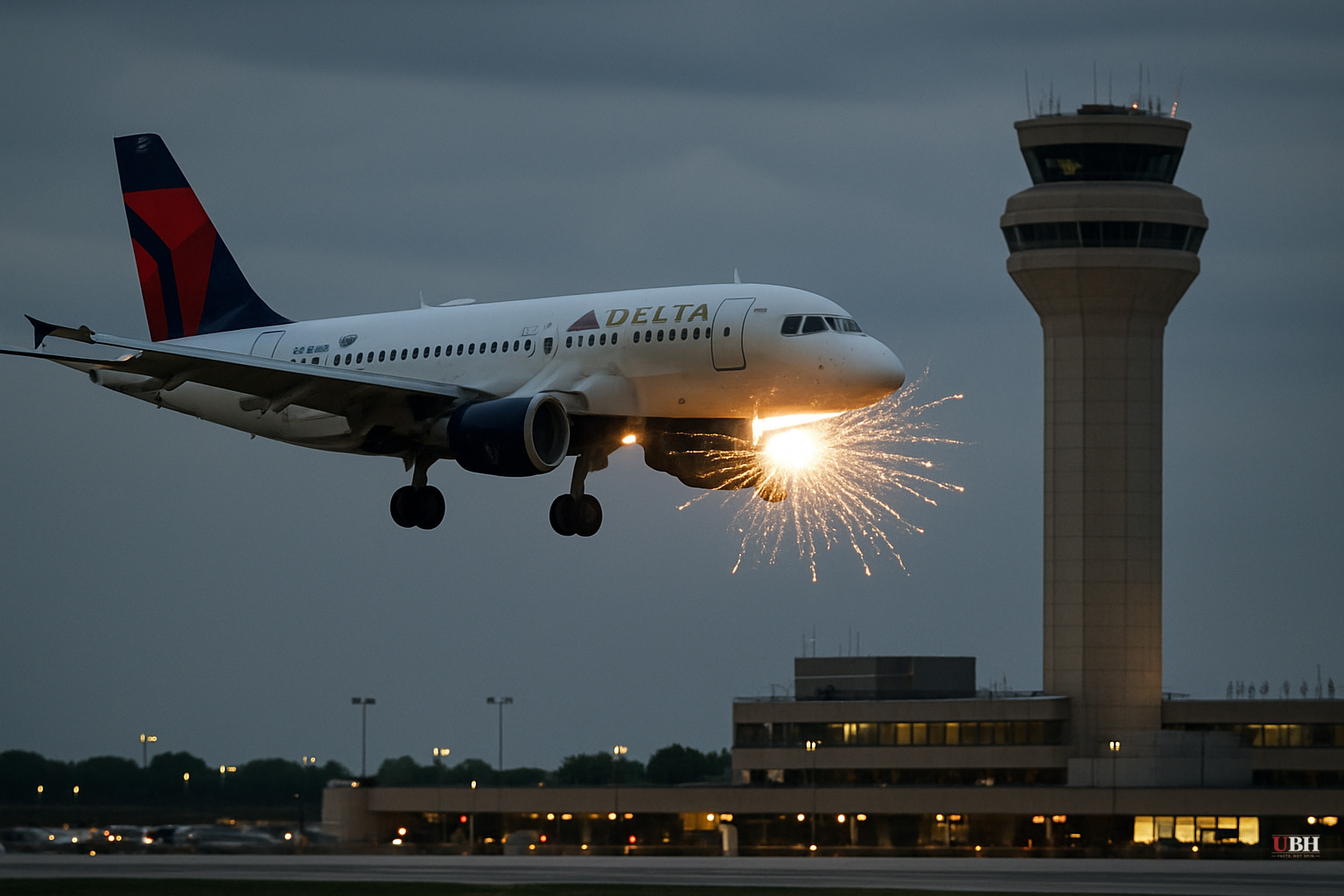
Fireworks Mortar Struck Delta Flight 1076 at 200 Feet Over Chicago Midway on July 4
What Happened
Delta Flight 1076 departed Hartsfield-Jackson Atlanta International Airport at 7:51 p.m. ET on July 4 and was on descent into Chicago Midway when the crew reported being struck by a fireworks mortar. The FAA confirmed the aircraft landed safely at approximately 8:30 p.m. local time.
The pilot notified air traffic control before touchdown. In audio recorded by LiveATC.net and reported by CNN, the pilot said: "We just had a firework hit our plane. We're just hoping it was just a mortar that went off underneath, but definitely felt a big bang."
The plane was flying at roughly 200 to 250 feet altitude at the time of impact, according to the pilot's own report to controllers. Consumer fireworks typically reach 50 to 200 feet, according to CNN. Some professional displays can burst as high as 1,200 feet.
The aircraft was an Airbus A319 carrying 52 passengers and six crew members. No one on board was injured.
Not an Isolated Event That Night
The air traffic control recording, published by LiveATC.net and widely reported, reveals this was not a single freak occurrence. A controller told the Delta crew there had been "multiple reports" of similar incidents at Midway that evening and that Chicago city officials had been notified.
As a subsequent Southwest Airlines flight came in on descent, the same controller warned: "Welcome to the war zone." Southwest 223 responded: "That's reassuring."
Controllers also acknowledged the limits of what Chicago police would actually do about the situation. Per the CNN-reported audio, a controller said: "They said they would notify the Chicago police, but you know, I don't know what they'll do, right?"
Damage Assessment: Disputed
Delta told Fox News Digital that mechanics inspected the aircraft after arrival at the gate and found no damage. Chicago police, however, told CBS Chicago that the firework caused minor paint damage and that the plane was undergoing additional inspections.
Those two accounts are in direct conflict. Delta's statement was made Sunday. Whether follow-up inspection resolved the discrepancy has not been reported as of July 6.
Risk and Geography
DePaul University transportation and aviation expert Joe Schwieterman, speaking to CBS Chicago, put it plainly: he's tracked aviation incidents his entire life and had never seen a firework strike a commercial aircraft. "These risks pop out of nowhere," Schwieterman said.
He specifically flagged the unique danger posed by Midway's geography: short runways, dense surrounding neighborhoods, and heavy traffic. A firework detonating near a jet engine intake during final approach, combined with another variable like wind shear, could compound into a serious incident fast.
Midway sits surrounded by tightly packed residential blocks on Chicago's southwest side. Residents near 63rd and Central Avenue told CBS Chicago that fireworks in the area were nonstop on the Fourth, with one resident, Christina Bernabe, estimating "at least 20 per minute."
Some will argue this was a fluke, not a policy failure. Fireworks happen every July 4, planes fly into Midway every July 4, and in decades of operations this is apparently the first documented mortar strike on record. Nobody was hurt. The plane landed. The FAA investigates these incidents routinely. But the ATC recording contradicts this framing. Controllers documented multiple reports in a single evening, then openly questioned whether police would respond at all. A near-miss that happens once is a fluke. Multiple near-misses in one night, over an urban airport with short runways and residential neighborhoods on all sides, is a system problem.
Accountability and Next Steps
The FAA has confirmed it will investigate. Chicago police referred further questions to the FBI, according to CBS Chicago, which suggests federal jurisdiction is at least being considered.
As of July 6, it remains unknown where exactly the fireworks were launched from, whether any individual has been identified or cited, and whether the FAA is tallying all July 4 fireworks-aircraft encounters nationally or only the Delta incident.
Midway's flight path runs directly over dense residential neighborhoods where backyard and street-level fireworks are common every July 4. Whether Chicago or the FAA will seek any enforceable buffer around the airport's approach corridors before next year's holiday is not yet known.
Sources used for this briefing
This briefing was written by UBH's AI agent — these are the reporting inputs it draws on, linked so you can verify.


