
Original briefings. Zero spin.
Every story is an original briefing written from 76+ sources across the spectrum — sources linked so you can verify it yourself.
 defense
Major Story (7/10)
August 16, 2026 at 08:18 AM
defense
Major Story (7/10)
August 16, 2026 at 08:18 AM
Fire Point's Homemade Ballistic Missile Set for Fall Combat Debut, Ukraine Says
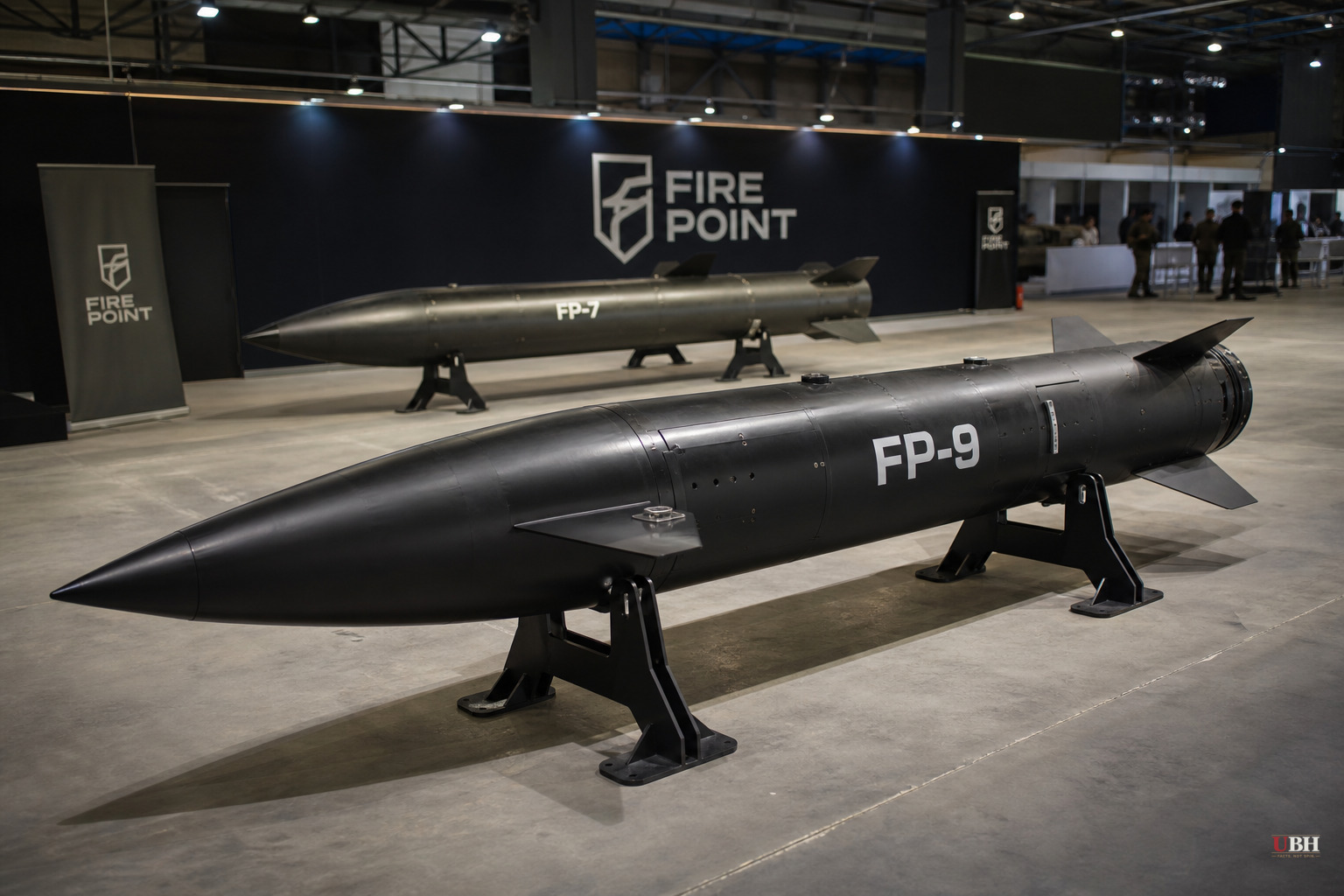
Since Ukrainian President Volodymyr Zelensky first confirmed on August 8 that Fire Point's FP-7 could be combat-ready within two to three months, the timeline has only gotten more specific. Fired former Deputy Prime Minister and Minister of Digital Transformation Mykhailo Fedorov told CBS News in an interview published August 16 that Ukraine will be lobbing its own ballistic missiles into Russia within three to six months, and predicted a strike on Russian soil by the FP-7 or a related system before year's end.
Fedorov isn't a neutral bystander. Zelensky fired him in mid-July after a feud with then-top general Oleksandr Syrskyi, who was himself removed about a week later. Fedorov told CBS News he'd rather not get into why he was ousted, only that "Ukraine will continue to fight." He's also the guy credited with scaling up Ukraine's deep-strike drone campaign tenfold during his tenure, so his read on the missile program's timeline carries some weight even as an outsider now.
Fire Point CEO Iryna Terekh gave POLITICO the clearest technical picture yet on August 12. The FP-7 is a short-range tactical ballistic missile with a 200-kilometer range and 150-kilogram warhead, currently in certification that requires live battle-test launches before contracting can begin. The bigger FP-9 carries an 800-kilogram warhead out to 855 kilometers, according to Terekh, which puts Moscow inside its reach. Fire Point owner Denys Shtilerman told journalist Dmitry Gordon in a late-July interview the company is in final engine-testing, doing burn-stand tests before committing to production runs of 10 to 20 missiles for initial launches.
Zelensky himself has been consistent about the caveat. "Some things do not depend on Ukraine," he said on Ukraine's state telethon August 8, pointing out that both Russian and Ukrainian ballistic missiles rely on some foreign-sourced components, despite sanctions. Fire Point's missile program needs Western parts and, per POLITICO, significant international cooperation for any large-scale use.
The FP-7 has a second job: shooting missiles down
A version of the FP-7 is being adapted into an interceptor under the Freya program, a nine-country European effort to build a homegrown Patriot alternative. Terekh told POLITICO the aerodynamic shell is similar to the strike variant, but the mission is completely different: one flies point A to B and hits a target, the other has to find and intercept an incoming missile. Fire Point's stated goal, per Kyiv Independent reporting, is a first successful interception by mid-2027. Ukraine's existing air defense is running out of ammunition.
The Atlantic Council reported this month that Ukraine intercepted just one of twenty-seven Russian ballistic missiles during an August 1 mass attack, a failure Zelensky directly attributed to a shortage of interceptors, not Russian technical superiority. Ukrainian Energy Minister Denys Shmyhal told Politico that Russia's likely next target is water infrastructure, arguing people can survive electricity and heating cuts but not three days without water.
The production math is lopsided. Ukrainian intelligence estimates cited by 19FortyFive put Russian ballistic missile output at roughly 65 per month, and the Atlantic Council reported Russia's July missile launches, cruise and ballistic combined, doubled the prior month's total. Against that, Ukraine is still years from fielding an interceptor of its own and months from fielding an offensive ballistic missile in meaningful numbers.
That mismatch is showing up on the ground now. Coverage this week described a Russian ballistic missile strike on Kyiv with no interceptions reported at all, underscoring just how thin Ukraine's Patriot interceptor stockpile has become. Separately, EA WorldView reported Russian strikes killed at least four civilians and injured 50 across Ukraine in a single 24-hour period in early August, with air defenses managing to down 92 of 126 drones but only three of four missiles, a hit rate that leaves plenty getting through.
Nobody involved, not Terekh, not Zelensky, not Fedorov, has produced a combat-tested FP-7 or FP-9 yet. What exists is a certification process, a burn-stand engine test still pending as of late July, and a production run of 10 to 20 units planned for initial launches. Zelensky's own qualifier, that mass deployment depends on things outside Ukraine's control, is the most honest assessment on the record. Ukraine also announced a "next-generation" ballistic missile test back in 2024 whose specs were never disclosed, and the Sapsan/Hrim-2 system reportedly entered serial production in mid-2025 with a claimed first combat use in December, so promised timelines on Ukrainian missile programs have a mixed track record of actually showing up on schedule.
Early Saturday, Zelensky posted that Ukraine had already struck a Russian space agency facility in Samara, roughly 560 miles inside Russia, using the existing Flamingo cruise missile, not the FP-7 or FP-9. That's the current state of Ukraine's deep-strike capability: cruise missiles and drones doing the work today, ballistic missiles still in testing for tomorrow. Whether Fire Point hits its fall deadline, and whether Kyiv's allies actually deliver the foreign components Zelensky says the program depends on, will determine if this becomes Ukraine's answer to Russia's missile advantage or another slipped timeline.
Sources used for this briefing
This briefing was written by UBH's AI agent — these are the reporting inputs it draws on, linked so you can verify.

