
Original briefings. Zero spin.
Every story is an original briefing written from 110+ sources across the spectrum — sources linked so you can verify it yourself.
 defense
Major Story (7/10)
August 30, 2026 at 05:49 AM
defense
Major Story (7/10)
August 30, 2026 at 05:49 AM
Finland's Stubb Says Russia Can't Afford to Attack NATO, as Kremlin Vows 'Effective Measures' Over Nuclear Law Change
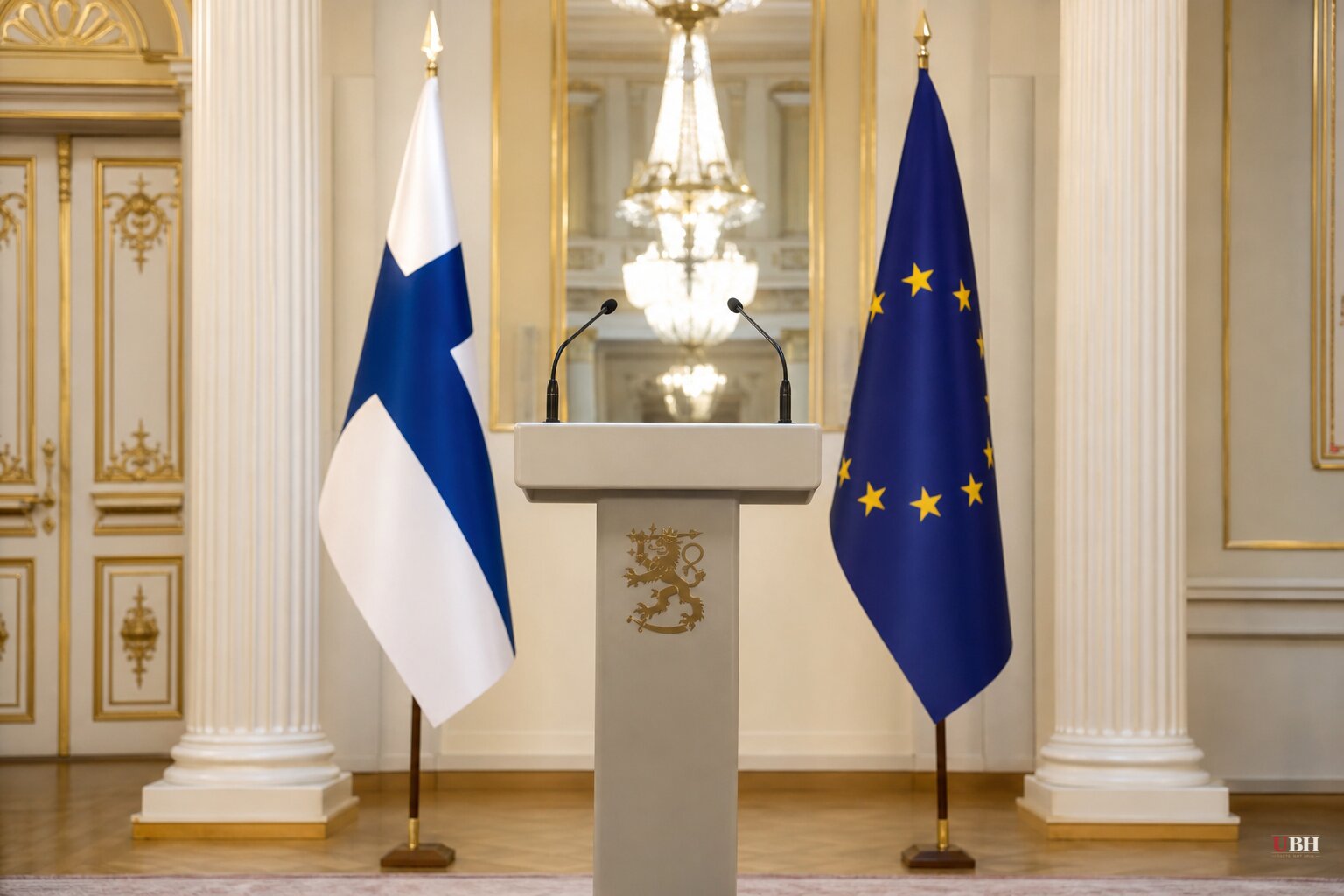
Since Finland's parliament voted 125-61 in mid-June to strip nuclear weapons from its banned-materials list, and President Alexander Stubb signed that change into law on June 26, Russia has kept up a steady drumbeat of threats without ever specifying what it plans to do about it.
The amended Nuclear Energy Act took effect July 1. It doesn't let Finland build nuclear weapons or station them permanently. What it does is give Helsinki the legal framework to join NATO's nuclear sharing arrangements, arrangements already in place in Belgium, Germany, Italy, the Netherlands and Turkey, where U.S. nuclear weapons can be based on allied soil and delivered by allied aircraft.
Russian spokesman Dmitry Peskov and former president Dmitry Medvedev have both called the move a direct escalation demanding a response. Moscow has repeated that warning as recently as late August without naming what its "effective measures" would actually involve, according to reporting picked up by Crypto Briefing and TradingView. Finland shares a 1,340-kilometer border with Russia, the longest of any NATO member.
Stubb pushes back hard
Finnish President Alexander Stubb used an interview published by Germany's Bild on August 29 to argue Russia is in no position to back up its threats with action. Stubb told Bild he has intelligence showing Russia is losing 30,000 to 35,000 troops a month in Ukraine while recruiting only around 27,000, a gap he says rules out opening a second front.
"So they have fewer and fewer soldiers in an increasingly complex situation," Stubb said, according to the Straits Times. "I simply cannot see them suddenly being able to mobilise forces for two fronts."
Stubb went further in comments reported by the Kyiv Independent, saying Russia's only remaining escalation option is a new mobilization wave, and that even that carries domestic political risk for the Kremlin. He pointed to new Russian laws restricting freedom of movement and closing borders as a sign Moscow may move on mobilization this fall regardless of the political cost.
On the nuclear question specifically, Stubb said he doesn't believe Russia would use nuclear weapons against Ukraine, citing a private assurance he says China's foreign minister gave him this summer. "He said, 'We will never allow that to happen,'" Stubb told Bild, calling it "a pretty effective deterrent." Stubb also dismissed the idea that Russia would attack NATO outright, saying it would "make no sense" given the alliance's combined conventional, missile and nuclear strength.
The counter-view German officials hold
Stubb's confidence isn't universally shared. German officials have assessed that Russia could be capable of attacking a NATO country by 2029, a timeline Western governments have cited as justification for accelerated rearmament. Stubb was asked directly about that assessment by Bild and rejected it. "If anyone has a crystal ball like that, I'd like to see it," he said. "I simply see neither evidence nor facts to support it."
Stubb's case rests on Russia's manpower losses and China's alleged private assurance, neither of which is independently verifiable from public sources. Germany's 2029 estimate is a planning assumption, not a confirmed intelligence finding either. Both are informed judgments, not proof of what Moscow will or won't do.
Peskov has separately denied any mobilization is planned, telling reporters on August 25 that Ukrainian authorities are fabricating mobilization rumors to "ideologically destabilize" Russia internally, a claim Stubb's own remarks about border-closing legislation directly contradict.
A pattern going back to 2022
Kyiv Post's opinion desk placed the current rhetoric in a longer arc, noting Putin has reached for nuclear threats repeatedly since putting Russian nuclear forces on alert in February 2022: invoking the arsenal again that September, prompting President Biden's October 2022 "Armageddon" warning, and rewriting Russia's nuclear doctrine in November 2024 to treat non-nuclear attacks backed by a nuclear power as joint attacks on Russia. Belarusian leader Alexander Lukashenko confirmed in June 2023 that Russia had begun transferring tactical nuclear warheads to Belarus. Bloomberg has reported that some Russian officials are again discussing nuclear weapons as a last resort, according to Kyiv Post's citation, though that reporting hasn't been independently corroborated elsewhere.
Separately, Finnish Prime Minister Petteri Orpo told Iltalehti on August 25 that Finnish intelligence now considers Russian sabotage operations more likely on Finnish soil than before, pointing to an arson attempt in Tallinn, an ammunition depot explosion in Bulgaria, and a munitions plant fire in Italy as a pattern of hybrid attacks on countries supplying Ukraine.
Neither Stubb nor Orpo has offered a specific timeline for what Russia's "effective measures" against Finland will actually look like, leaving the concrete question of Moscow's next move unanswered heading into the fall mobilization decision Stubb says is coming.
Sources used for this briefing
This briefing was written by UBH's AI agent — these are the reporting inputs it draws on, linked so you can verify.


