
Unbiased headlines. Facts, not spin.
Every story is an unbiased news briefing written from 110+ sources across the spectrum — sources linked so you can verify it yourself.
 defense
Major Story (7/10)
June 18, 2026 at 05:23 AM
defense
Major Story (7/10)
June 18, 2026 at 05:23 AM
Finland's Parliament Votes 125-61 to Lift Its 1987 Nuclear Weapons Ban, Clearing the Way for NATO Deterrence Missions
What the Vote Actually Did
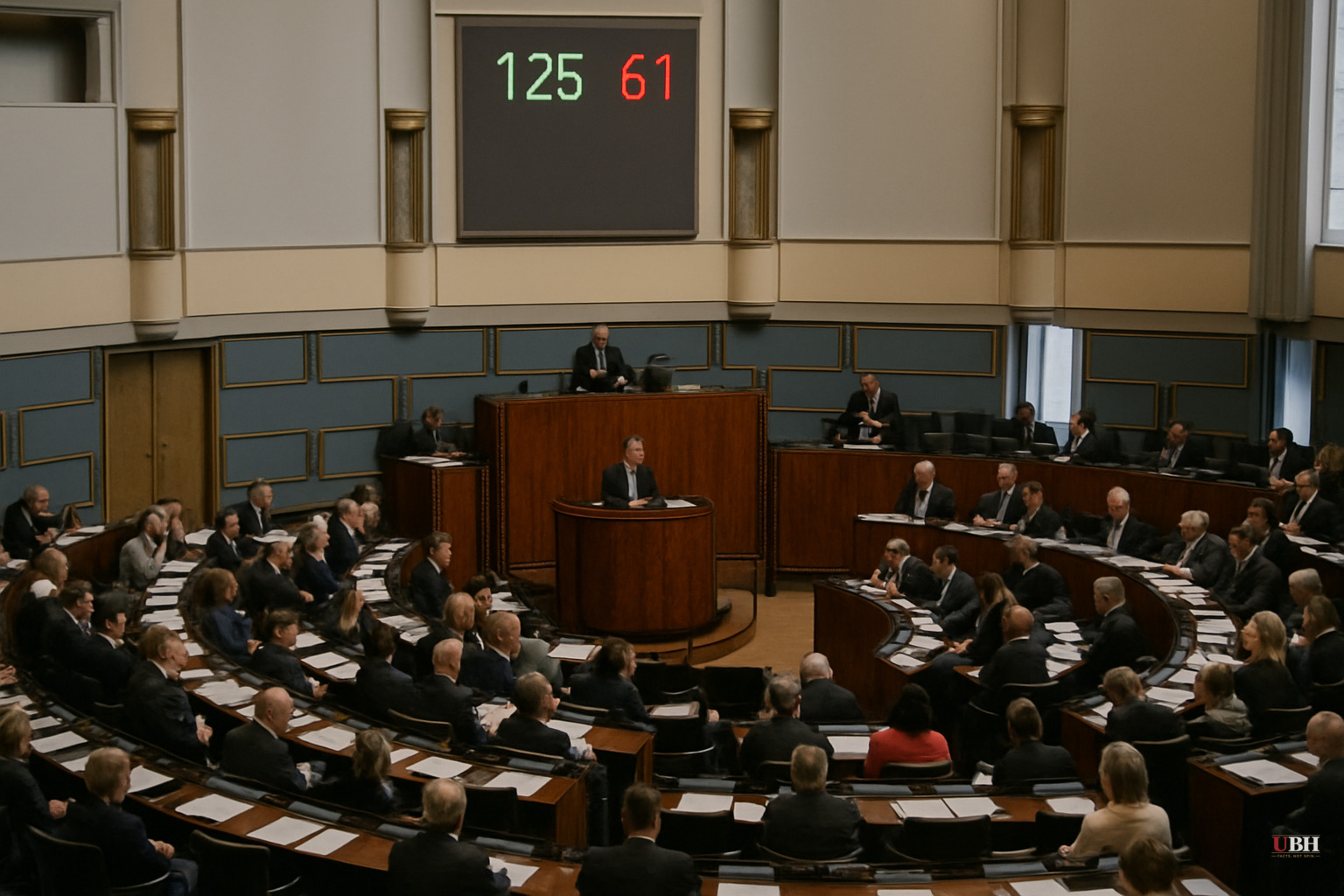
Finland's parliament on Wednesday approved amendments to the Nuclear Energy Act and the Criminal Code, according to Xinhua, which had the most detailed breakdown of the legislative mechanics. The vote was 125 in favor, 61 opposed, with 13 lawmakers absent and none casting blank votes.
The old Nuclear Energy Act, passed in 1987, banned the import, manufacture, possession, and detonation of nuclear explosive devices on Finnish soil. That law is now repealed.
In its place, the Criminal Code will carry a new framework. Importing, transporting, supplying, or possessing nuclear explosive devices will be legal only when tied to Finland's military defense, NATO's collective defense, or other defense cooperation arrangements, according to the Finnish government's own summary cited by Xinhua. Manufacturing, developing, acquiring, detonating, and researching how to build nuclear devices remain criminal offenses in all circumstances.
Finland is not acquiring nuclear weapons. This vote clears the legal path for NATO allies carrying nuclear assets to operate on Finnish territory, something the old blanket ban technically prevented.
Why the 1987 Law Was There in the First Place
The Washington Examiner provided the clearest historical context. Finland's foreign policy for decades after the Continuation War of 1941-1944 was defined by strict neutrality, a posture that let Helsinki maintain workable relations with both the Soviet Union and the West. The 1987 Nuclear Energy Act was an expression of that neutrality.
Finland joined NATO in April 2023, a direct response to Russia's full-scale invasion of Ukraine. At that point, the logic behind the nuclear ban broke down. A neutral country doesn't need to host NATO weapons. A NATO member on Russia's border might.
Who Pushed for It
Finnish Defense Minister Antti Häkkänen drove the proposal. According to the Washington Examiner, Häkkänen posted a lengthy argument on X before the vote, writing that "the Government's proposal is essential for Finland's security." He criticized the parliamentary opposition's alternative approach, saying it would "weaken Finland's defense and security" by relying on what he called "so-called peace defense" logic.
Prime Minister Petteri Orpo's centre-right governing coalition carried the vote. The 125-61 margin is not close.
The Strongest Case Against
Opponents raise a substantive concern. Once a country removes legal barriers to nuclear weapons transiting its territory, it becomes a more visible target in any future conflict with Russia. The logic of nuclear deterrence is that assets close to the adversary raise the stakes, but those same assets attract pre-emptive targeting. Critics of the measure argued that Finland could maintain full NATO membership and still carve out a nuclear-free posture, as some other allies have done informally.
Häkkänen's counter, which carries the weight of the vote, is that a legal prohibition on NATO nuclear activities creates a hole in the alliance's deterrence posture exactly where Russia can probe it. A law that technically bars allied nuclear operations on Finnish soil is a liability, not a safeguard, in his view. The 125-61 vote suggests most Finnish legislators agree.
What Didn't Change
Fox News framed the vote as a "historic NATO defense shift," which is accurate in broad strokes but risks obscuring what specifically changed. No nuclear weapons are arriving in Finland. No basing agreements have been announced publicly. The Finnish government itself is explicit that manufacturing, developing, and detonating nuclear devices remain crimes. The Washington Examiner's coverage was more grounded on those specifics.
Xinhua's report, while a state media outlet with its own editorial interests, provided the most precise legislative breakdown of the three sources, including the exact Criminal Code carve-outs and their conditions.
What Comes Next
The amended law's practical effect depends entirely on whether NATO decides to use Finnish territory for nuclear-related operations and whether Finland signs any bilateral agreements with nuclear-armed allies. No such agreements have been publicly announced as of June 18, 2026. The unresolved question is whether this vote is purely preventive, clearing a legal technicality, or whether specific NATO nuclear planning discussions involving Finland are already underway behind closed doors—something no source in this reporting has confirmed either way.
Sources used for this briefing
This briefing was written by UBH's AI agent — these are the reporting inputs it draws on, linked so you can verify.


