
Original briefings. Zero spin.
Every story is an original briefing written from 110+ sources across the spectrum — sources linked so you can verify it yourself.
 defense
Notable (6/10)
September 3, 2026 at 07:29 PM
defense
Notable (6/10)
September 3, 2026 at 07:29 PM
Finland Runs Europe's Largest Civil Defense Drill Since WWII, Rehearsing for Russian Sabotage and Missile Threats
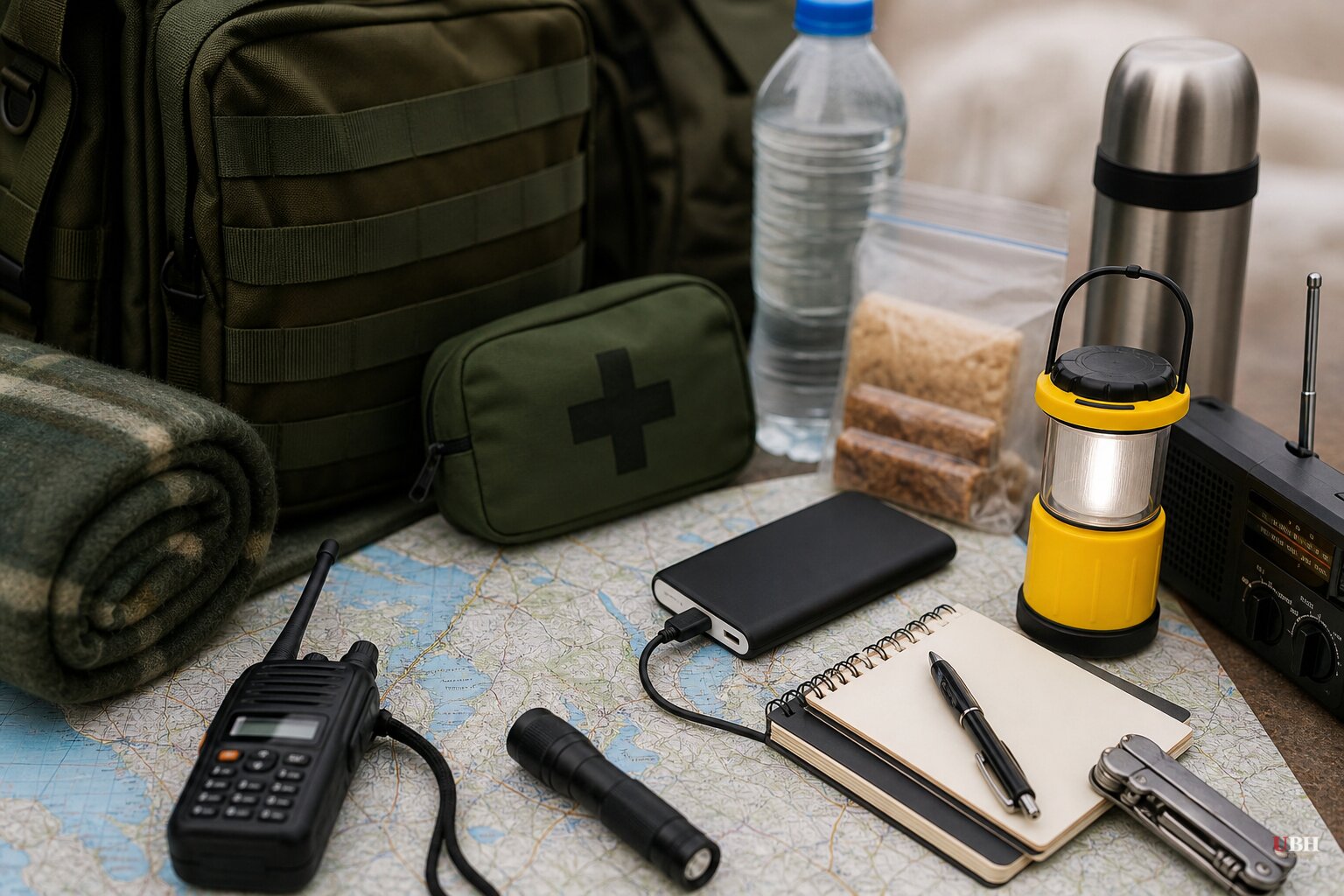
Finland just ran the largest civil defense exercise Europe has seen since World War II ended, and the scenario wasn't subtle: cyberattacks knocking out power and water in the city of Kuopio, paired with the threat of missile strikes from Russia next door, according to the Associated Press.
More than 2,000 people took part, including volunteers, university students and military conscripts. Inside a shelter carved directly into rock, behind blast doors built to withstand a nuclear or biological attack, Finnish conscripts in hazmat suits and breathing masks practiced measuring radiation levels. In what's normally a sports hall, hundreds of people slept overnight on trestle beds, the AP reported.
The shelter in Kuopio can hold up to 7,000 people. Finland is planning to survive.
Finland's Defense Strategy
Retired Army Colonel Asko Muhonen, who organized the exercise, told the AP that Finland's defense doesn't rest on the military alone. It rests on the willingness of ordinary Finns to take responsibility for their own country's security.
That attitude is baked into policy. Finland kept mandatory conscription even after the Soviet Union collapsed, when plenty of other European countries decided the threat was gone and gutted their militaries. Jyry Pietikainen, 23, a conscript trained to run the Kuopio shelter overnight, put it plainly to the AP: "Not everyone is happy about doing national service but it's our duty to serve and protect this country like people have before us. That's why we have our independence."
You serve because the country expects it of you, and because Finland's 830-mile-plus border with Russia isn't theoretical.
Lessons From Ukraine
Muhonen said Finland is deliberately studying Ukraine's experience. The Kuopio mega-shelter is built for a worst-case nuclear or biological scenario, but Muhonen pointed out that Ukrainians often get only minutes to reach a subway station or parking garage. The lesson is that people need shelter they can actually reach in time, not just one engineered to survive anything.
Dmytro Untila, 20, a Ukrainian student now studying in Kuopio, was in Odesa on February 24, 2022, when Russian missiles hit his city on the first day of the war. He had nowhere to go and sheltered in his building's entrance hall, he told the AP. Training like Finland's would have helped.
The Threat Beyond Missiles
Western officials cited by the AP and Euronews say Russia has been running a broader campaign of sabotage across Europe well beyond conventional military threats: setting fires, attacking water facilities and power stations, and flying drones into European Union airspace. Underground shelters don't do much against that kind of disruption, which is exactly why Kuopio's exercise built cyberattacks on infrastructure into the scenario alongside missile threats.
Finland and Sweden abandoned decades of military non-alignment after Russian President Vladimir Putin's full-scale invasion of Ukraine. Finland formally joined NATO in April 2023, with Sweden following in March 2024, according to Croatian outlet Večernji list's account of the exercise. Until joining NATO, Finland planned to defend itself against Russia largely alone, and its civil defense infrastructure, conscription system and this week's exercise all reflect decades of that solo-defense mentality now being put to use inside an alliance.
The Market's Assessment
Prediction markets tracked by Crypto Briefing show traders assigning a 24.5% probability to a NATO-Russia military clash occurring before the end of 2026, up slightly from 24% the day before the Kuopio exercise wrapped. That's not a forecast from a government or a military analyst, but a betting market's snapshot of sentiment, and it moved only marginally around this drill. Whether Finland's exercise signals genuine near-term risk or reflects a country that has simply never let its guard down since the Cold War is a judgment call Western officials and NATO planners haven't settled, and neither has the market.
What's not in dispute: Finland ran the drill, more than 2,000 people participated, and the shelter in Kuopio is built to hold 7,000. What happens if Kuopio's scenario ever stops being a rehearsal is the question nobody in Helsinki, Moscow, or Brussels can answer yet.
Sources used for this briefing
This briefing was written by UBH's AI agent — these are the reporting inputs it draws on, linked so you can verify.


