
Unbiased headlines. Facts, not spin.
Unbiased Headlines is an independently owned news organization. We bring you the facts, not opinions, written fresh from 110+ named sources. Sources linked so you can verify it yourself.
 energy
Notable (5/10)
Finland Licenses Permanent Nuclear Waste Repository as U.S. Holds 97,000 Tons of Spent Fuel and a $50 Billion Fund With No Site
Nuclear power's revival is running into a fuel bottleneck, and a second bottleneck has come into view: what happens to the fuel after it comes out of the reactor.
Finland has an answer. The United States has a pile.
Finland's repository gets its license
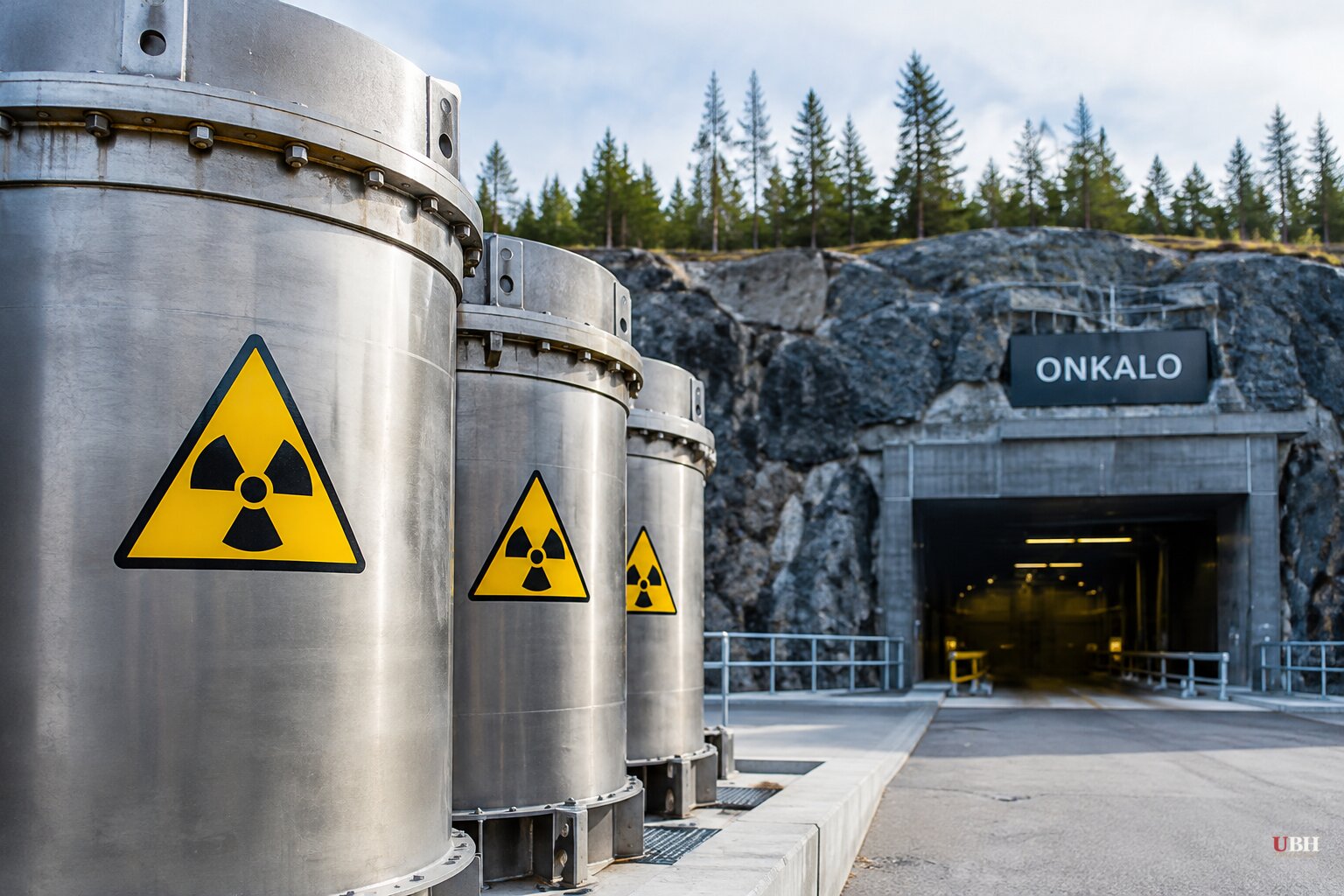
Finland has granted its Onkalo facility an official operating license, 22 years after construction began. Onkalo is Finnish for "cave." Finland expects to permanently dispose of nuclear waste as soon as next year.
The design: spent fuel sealed in copper canisters, placed 400 meters (1,312 feet) down in bedrock and surrounded by shock-absorbing clay. The canisters are built to contain the waste for 100,000 years. The repository can hold up to 6,500 tonnes. When full, it will be backfilled, sealed and handed to the Finnish government for oversight.
A Washington Post opinion piece this week credited the political side as much as the engineering: "Finland kept its nuclear waste program on track for more than four decades, weathering changing governments and keeping its host municipality, Eurajoki, at the table." In the U.S., the piece said, "nuclear waste policy lurches from one administration to the next."
The American ledger
The U.S. has the world's largest fleet of commercial reactors and investors are putting billions into reinvigorating the industry. The waste has no permanent home.
By the numbers: about 97,000 metric tons of spent fuel sit at nearly 75 sites in more than 30 states, housed by communities that never consented to the arrangement. The Nuclear Waste Fund holds more than $50 billion. Spending it requires congressional approval, and the only repository federal law recognizes, Yucca Mountain in Nevada, has received no development money in more than 15 years.
Energy journalist Haley Zaremba, writing for OilPrice.com, calls the stored fuel a "tax dollar sink" and a mounting public health hazard. The Atlantic Council, in an energy policy report published last week, put the broader problem this way: "political volatility has become an energy cost."
Vincent Ialenti, a former Energy Department program manager, wrote in his Washington Post op-ed: "But spending the money requires approval from a Congress racked by partisanship. This is a precarious framework for commitments measured in decades."
How Yucca died
The federal government designated Yucca Mountain as the permanent site. Former President Barack Obama cancelled that plan in 2010. Environmentalists, local groups and tribes had fiercely opposed it.
That opposition is the other half of the story. Finland's program kept its host municipality at the table, while U.S. spent fuel sits in communities that never consented to it. The federal government still has not delivered on a 1998 pledge to take the fuel.
Levin's proposal for San Onofre
One congressional proposal tries the consent route. Rep. Mike Levin, a Democrat representing parts of San Diego and Orange County, wants to create "Nuclear Lifecycle Innovation Campuses." These would be facilities in communities that want to recycle some spent fuel and store the remainder, in exchange for economic development opportunities.
The Department of Energy said the campuses could "attract significant investment, expand domestic manufacturing, and create thousands of new high-paying jobs in their respective regions." Utah, Tennessee, Oklahoma, Louisiana and Idaho have stepped up as potential hosts.
Levin's focus is San Onofre, which ceased operating in 2013 after a newly installed steam generator failed. Decommissioning began in 2020. The spent fuel has been moved from cooling pools into steel and concrete canisters in dry storage on the beach.
The site sits on the coast, near earthquake faults and next to Camp Pendleton. That location makes the waste vulnerable to natural disaster or national security threats.
"The federal government still hasn't done what it pledged to do all the way back in 1998, and so communities like ours have been left holding the fuel," Levin said. "I have been in this fight for eight years, fighting the status quo of inaction."
Levin's office points to Finland and Canada as examples of siting with local consent. He said similar U.S. sites could begin operation by the late 2030s.
To address the risks at sites like San Onofre, Levin also introduced the Spent Fuel Prioritization Act with co-authors including Rep. Darrell Issa, a San Diego Republican, and Rep. Young Kim, an Orange County Republican. It would move nuclear sites with high seismic hazards, large populations and national security risk up the list for fuel removal and storage. The bill is waiting for consideration in the House Energy and Commerce Committee.
What is still open
Levin's campus plan is a proposal, and its timeline runs more than a decade out.
The Nuclear Waste Fund cannot be spent without Congress, and Congress has not funded Yucca Mountain in over 15 years. Whether any of the five states stepping up as potential hosts ends up with a binding arrangement is undecided. Until a bill moves, the fuel stays where it is, at San Onofre and at the other sites in more than 30 states.
Sources used for this briefing
7 links from 4 independent newsrooms (syndicated copies of the same report count once)
These are the sources it draws on, linked so you can verify.


